The city of Málaga has raised red flags and banned swimming at six beaches. Water samples have shown elevated levels of E. coli. According to the city authorities, the contamination was caused by sewage system overflows following the severe storm over the weekend.
Spain Expat Press Editorial Team
by Marlon Gallego Bosbach
In mid-August, Málaga is facing an unusual disruption to its bathing season. Swimming is currently prohibited at a total of six beaches in the Andalusian capital after water samples detected elevated levels of the bacterium Escherichia coli (E. coli).
The beaches affected are Campo de Golf-San Julián, Guadalmar, La Misericordia, Sacaba, San Andrés and El Palo. The city council has raised red flags at all six beach areas. Further tests in the coming days are expected to determine how water quality is developing and when the beaches can be reopened. No specific date for reopening has been given so far.
The six affected beaches at a glance
The scale of the closures is significant. The affected stretches of coastline cover a large part of Málaga’s shoreline, from the western area near the airport to El Palo in the east of the city. The beaches currently closed are Campo de Golf-San Julián, Guadalmar, La Misericordia, Sacaba, San Andrés and El Palo. This means that several beaches in the west and south of the city, as well as a popular stretch of coastline in the east, are affected.
The measure has been taken to protect bathers after recent water samples detected elevated levels of bacterial contamination, with the recorded levels exceeding the permitted limits.
What the water samples revealed
The key water samples were taken on Sunday, 16 August, by the city’s water company, Emasa. They detected concentrations of Escherichia coli at the affected sites that exceeded the safe or recommended levels set out under Spain’s bathing water quality regulations.
The city council is referring to Spain’s Royal Decree 1341/2007, which regulates the monitoring and quality of bathing waters.
Swimming will remain prohibited until the levels have returned to a safe level. The authorities therefore plan to repeat the tests and monitor changes in water quality.
E. coli is an indicator of faecal contamination
E. coli is a bacterium that naturally occurs in the intestines of humans and animals. In bathing waters, elevated levels are considered an important indicator of possible faecal contamination.
This does not automatically mean that contact with the water will cause illness. However, elevated levels can indicate contamination from sewage and therefore pose a potential health risk.
Possible symptoms following contact with contaminated water can include gastrointestinal problems and infections. It is therefore particularly important to take the bathing ban imposed by the authorities seriously and not enter the water despite the red flag.
The cause appears to be linked to Saturday’s storm
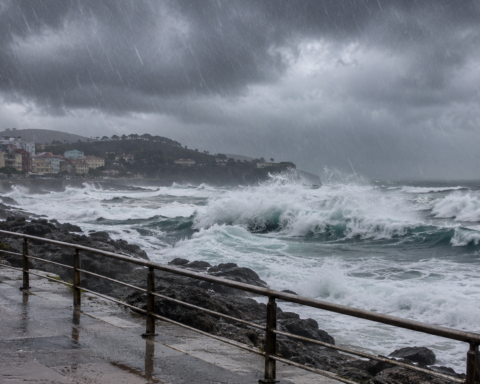
According to the city authorities, the current contamination is directly linked to the storm that hit Málaga overnight on Saturday, 15 August. The heavy rainfall caused so-called overflows from the drainage and sewage system at various points across the city, allowing water from the overloaded system to flow into the sea.
The city had already reported the discharges over the weekend. Emasa initially described them as short-lived and limited in volume. At the same time, cleaning crews were deployed along the beaches to remove debris and waste washed ashore.
The problem therefore appears to have developed with a delay: although the discharges themselves were short-lived, subsequent water samples continued to show bacterial contamination.
Some beaches had temporarily reopened
What is particularly notable is the sequence of events at several of the beaches that have now been closed again. San Julián, La Misericordia and Sacaba had been given the green flag again on Sunday morning. The immediate effects of the discharges initially appeared to have been dealt with, and cleaning of the affected stretches of beach was largely complete.
However, the subsequent analysis of the water samples led to a reassessment of the situation. The red flag was therefore raised again on Monday and swimming was prohibited. San Andrés, which had also been under close observation due to the effects of the storm, is also affected.
Why can heavy rain lead to sea pollution?
The current incident highlights a problem that can arise particularly during heavy rainfall. Under normal conditions, rainwater can be safely channelled through the drainage system. However, when exceptionally large amounts of rain fall within a short period, the existing infrastructure can reach its capacity limits.
This can make so-called relief discharges or overflows necessary. When water escapes from a system that is also connected to sewage, organic matter and bacteria can be released into the environment.
This is precisely the link cited by Málaga City Council in the current case. Elevated levels of E. coli were detected following the storm, after overflows and discharges into the sea occurred at several locations.
Criticism of the sewage infrastructure
However, the incident is likely to trigger a debate that goes beyond the immediate impact of the storm. Opposition politicians have already warned against blaming the situation solely on the weather. Critics also point to structural problems with the city’s underground infrastructure and are calling for investment in the sewage system.
The issue is whether the existing infrastructure is adequately equipped to cope with the demands of a city like Málaga – particularly during the summer months, when the population increases significantly due to tourism and holidaymakers.
The current situation is therefore more than just a temporary swimming ban: it once again raises questions about how resilient the Costa del Sol’s sewage system really is when faced with heavy rainfall.
Benalmádena also affected
Málaga is currently not the only place on the Costa del Sol where authorities have had to take action over possible contamination. In Benalmádena, five beaches were also closed as a precaution over the weekend after around 20 bathers reported skin reactions.
The affected beaches were Las Gaviotas, Bil-Bil, Arroyo de la Miel, Santa Ana and Los Melilleros. On Monday, Bil-Bil, Arroyo de la Miel and Los Melilleros were reopened for swimming, while Santa Ana and Las Gaviotas initially remained closed.
However, the exact cause of the symptoms has yet to be established. The relevant authorities are currently investigating both possible biological and chemical causes.
No all-clear for Málaga’s six affected beaches
For the six affected beaches in Málaga, the authorities have taken clear action: red flags are flying and swimming is prohibited.
The city plans to carry out further water quality checks in the coming days. The ban can only be lifted once the levels have returned to within the prescribed limits.
It is currently impossible to say with any certainty how long this will take. The city council has not given a specific date for the beaches to reopen.
What holidaymakers need to know now
For tourists and residents, one rule is particularly important: where a red flag is flying, swimming should be avoided. The water does not necessarily have to look visibly polluted. Bacterial contamination cannot reliably be detected by the colour or smell of the water.
Anyone visiting one of the affected beaches should therefore pay close attention to the flags and instructions from lifeguards. Even if a beach appears clean or was open the previous day, new laboratory results can lead to it being closed again.
Particularly after heavy rainfall, seawater quality can change more rapidly than can be detected with the naked eye.
A problem in the middle of the peak season
For Málaga, the incident comes at an particularly unfortunate time. The city is in the middle of the peak tourist season and is also in the midst of the Feria de Málaga celebrations. The beaches are among the most popular destinations for both residents and visitors during this period. The fact that six beach areas have been affected makes the situation all the more noticeable.
More important than the short-term disruption to bathing, however, is the question of whether incidents like this can be prevented in the future. The current situation shows how quickly a single storm can trigger a chain of problems: overloaded infrastructure, overflows, clean-up operations, bacterial contamination and, ultimately, a widespread swimming ban.
The key questions over the coming days will therefore be how quickly the E. coli levels return to normal and whether the authorities subsequently take measures to prevent similar situations during future episodes of heavy rainfall.