The ground beneath Granada has been shaking for days. More than 420 seismic events have been recorded since 14 August. Two stronger earthquakes, measuring 5.0 and 4.8 in magnitude, have put residents on high alert. Homes have been damaged, around 600 people have been evacuated as a precaution, and parts of the famous Alhambra have been closed. Experts are warning that further tremors could occur, although it is impossible to predict exactly when or how strong the next earthquake will be.
Spain Expat Press Editorial Team
by Marlon Gallego Bosbach
Granada is currently experiencing one of the most intense periods of seismic activity in recent years. Since Friday, 14 August, the province has been repeatedly shaken by earthquakes. Most of them have been weak and were not felt by the public. However, several stronger tremors have now highlighted just how sensitive the region is to movements beneath the surface.
Particularly concerning: the seismic activity is not over yet.
First a 5.0-magnitude earthquake in Alhendín, then a 4.8 in Gójar
One of the strongest earthquakes recorded so far struck in the early hours of Saturday, 15 August. A magnitude 5.0 earthquake shook the region, with its epicentre near Alhendín, south of Granada. The tremor was clearly felt in Granada and numerous surrounding towns and villages. It was followed by a series of further tremors. However, the seismic activity was far from over.
On Tuesday, 18 August, the earth shook strongly once again. At around 10.37 am, a magnitude 4.8 earthquake was recorded. This time, the epicentre was near Gójar, also south of the city of Granada. The earthquake was relatively shallow, making it particularly noticeable to residents. Several further tremors followed within a short period, including a number with magnitudes above 4.
For many residents, it was clear by this point that the unusual activity was not simply a single aftershock.
More than 420 earthquakes in just a few days
Since the start of the intense period of activity, more than 420 seismic events have now been recorded. The figure may sound alarming, but it needs to be put into context. The vast majority of the earthquakes were very weak and were not felt by people at all.
However, the stronger tremors make it clear that unusual activity is currently taking place beneath the surface. Experts are therefore considering the possibility of what is known as a seismic swarm. This occurs when numerous earthquakes strike within a relatively limited area, without there necessarily being a single event that can clearly be identified as the mainshock. Granada has experienced a similar phenomenon in the past.
Fear is growing – but there is still no way to predict what comes next
For people in Granada, it is the uncertainty that is proving particularly unsettling. Will there be another, stronger earthquake? Was the magnitude 5.0 tremor already the strongest event in the sequence? Or could the earth shake even more violently again? At present, there are no reliable answers to these questions.
Earthquakes cannot be predicted with precision. Scientists can monitor seismic activity, analyse patterns and assess probabilities. However, no one can reliably say when the next stronger earthquake will occur or what magnitude it will reach.
For this very reason, authorities are urging people not to panic while advising them to remain vigilant and follow official safety instructions.
Three people sustain minor injuries
Tuesday’s earthquake had already had tangible consequences. At least three people sustained minor injuries, including a child. However, most of the incidents reported did not involve serious injuries. At the same time, emergency services received hundreds of reports of damage and falling debris from buildings.
Reports included cracks in buildings and homes, damaged façades and cornices, as well as fallen roof tiles and other parts of buildings. Vehicles and public facilities were also damaged in some cases. Damage was also reported to historic buildings.
However, initial inspections have found no evidence of widespread or serious structural damage. Nevertheless, authorities continue to carry out precautionary checks on numerous buildings to rule out any potential risks to the public.
Around 600 people forced to leave their homes
The public’s anxiety was particularly evident in Las Gabias, where around 600 people were evacuated as a precaution after it could not initially be ruled out that buildings had been affected by the repeated tremors. Many residents left their homes voluntarily and sought out open spaces.
The fear was also palpable in Granada itself. Some people chose to spend the night outdoors or left the city altogether. Roads towards the coast were heavily congested at times. At the same time, authorities sought to reassure the public. The message was clear: caution, yes; panic, no.
The Alhambra also affected
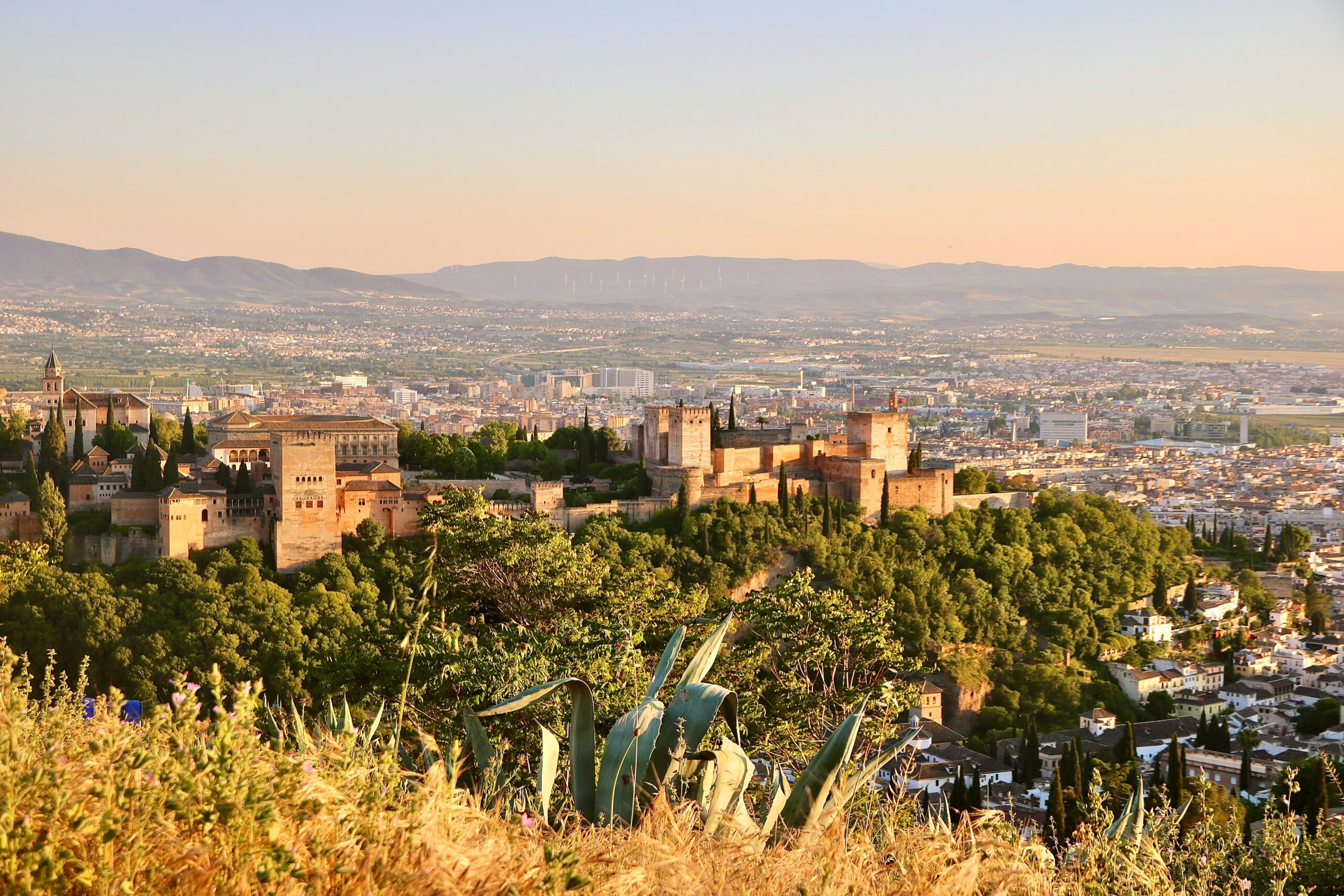
Particularly significant was the precautionary closure or evacuation of parts of the Alhambra. Granada’s world-famous landmark was inspected following the tremors. Other public buildings, museums, churches and facilities were also checked as a precaution or temporarily closed.
The measures do not mean that the Alhambra was at immediate risk of collapse. Rather, the authorities wanted to ensure that falling debris or previously undetected damage could not pose a danger to visitors.
Operations partially resumed on Wednesday. However, certain areas initially remained closed, while visitor routes were adjusted as a precaution.
The Nuevo Los Cármenes stadium is also being inspected
The earthquakes have even affected the Nuevo Los Cármenes, home of Granada CF. Damage was reported to fixtures including display cabinets and lighting. Staff were sent home as a precaution while the damage is assessed.
This is particularly significant for the club, as renovation work at the stadium had already been planned. Authorities must now also assess whether the recent tremors have had any impact on the condition of the building.
Why Granada in particular?
Granada is one of the most seismically active regions of the Iberian Peninsula. The reason lies deep beneath the earth: in the western Mediterranean, the African and Eurasian tectonic plates meet. The resulting stresses can be released along various geological faults.
The region around Granada is home to numerous active faults and has therefore experienced stronger earthquakes repeatedly in the past. The current sequence is consequently not entirely unexpected from a geological perspective. However, the unusual intensity of the activity over such a short period has raised considerable concern.
Granada has experienced seismic swarms before
The current situation bears some similarities to previous seismic swarms in the region. One of the best-known examples is the intense earthquake sequence of 2020 and 2021, when a large number of tremors were also recorded.
Back then, too, many people lived for weeks with fears that an even stronger earthquake could occur. However, there is no evidence to suggest that such a sequence will automatically culminate in a major earthquake.
No comparison with the 1884 disaster
The current earthquakes have understandably brought back memories of one of the worst earthquakes in Spanish history: the 1884 Arenas del Rey earthquake. At the time, the quake is estimated to have reached a magnitude of between 6.2 and 6.5, causing widespread destruction and numerous deaths.
The current earthquakes, measuring 4.8 and 5.0 in magnitude, are significantly weaker. A comparison with the 1884 disaster would therefore be inappropriate. Nevertheless, the damage reported so far shows that even a moderate earthquake can have significant consequences, particularly when it occurs relatively close to the Earth’s surface.
The ground continued to shake overnight
Even after Tuesday’s strong earthquake, the ground did not fully settle. Further tremors were recorded overnight into Wednesday. The strongest of these overnight earthquakes reached a magnitude of 3.4, with its epicentre near Ogíjares, around seven kilometres south of Granada.
A total of at least ten further seismic events were recorded overnight, several of which were felt in towns and municipalities around Granada. Authorities are therefore continuing their inspections. The Andalusian regional government is also maintaining the pre-alert phase of its regional seismic risk plan.
What happens next is crucial
For the coming days, one question remains above all: how will the earthquake sequence develop? Experts expect further tremors to occur, but this does not necessarily mean that an even stronger earthquake is on the way.
Seismologists will continue to monitor how the situation develops. And that is currently the most important message for the public: earthquakes cannot be predicted down to the exact hour. What scientists can monitor are movements beneath the surface – but not the precise timing of the next tremor. Granada therefore remains on alert.
The past few days have shown how quickly initially barely noticeable tremors can develop into a situation capable of disrupting everyday life across an entire region. More than 420 recorded earthquakes, a magnitude 5.0 earthquake, another measuring 4.8, injuries, damaged buildings and hundreds of evacuated residents are now part of this extraordinary seismic sequence. It is still unclear when the ground beneath Granada will finally settle. One thing is certain: the region remains on alert.