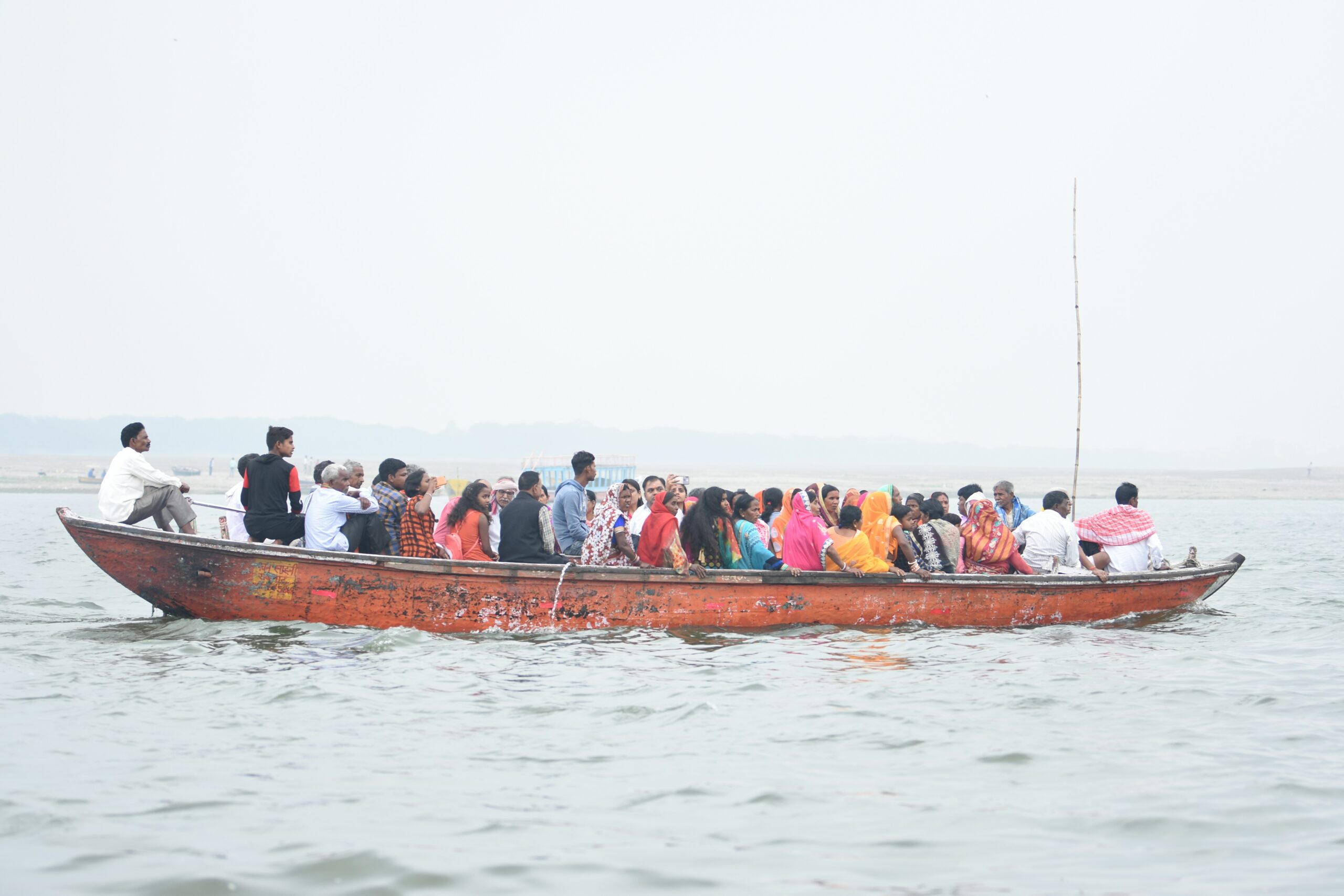
One of the deadliest tragedies on the Atlantic route to Spain: A cayuco that departed from Gambia was discovered south of Gran Canaria after 26 days at sea. Only around 45 of the original 128 people survived. A baby is also believed to be among the dead.
Spain Expat Press Editorial Team
by Marlon Gallego Bosbach
A cayuco carrying 128 people when it set off has been found and rescued after spending weeks adrift in the Atlantic, south of the Canary Islands. When an aircraft operated by Salvamento Marítimo located the completely exhausted group on Wednesday evening, only around 45 people were reportedly still on board. Five bodies were also discovered. In total, more than 80 people are believed to have died during the crossing.
Rescue teams discovered the boat at around 6.40 pm on Wednesday, approximately 120 kilometres south-west of Gran Canaria. The maritime rescue service then dispatched the Guardamar Urania to the scene. The rescue vessel reached the cayuco around midnight. Difficult conditions in the Atlantic made the rescue operation considerably more challenging.
The boat departed from Gambia on 7 August
According to the Spanish Guardia Civil and the NGO Caminando Fronteras, markings on the hull of the cayuco match those of a boat that departed from Gambia on 7 August. There were 128 people on board at the time, including four women and a baby. The accounts given by those rescued also confirm that the group had set off with well over 100 people.
This meant that the people spent more than three and a half weeks at sea in the Atlantic. For a small, basic boat, such a prolonged journey places an extreme strain on both the vessel and those on board. According to the survivors, numerous people died during the crossing.
When the rescue team reached the cayuco, around 45 people were still alive. Five others were found dead on board.
Five bodies could not be recovered
Recovering the bodies proved particularly difficult. Due to the rough sea conditions, rescue crews were unable to transfer the five bodies they had found onto the rescue vessel. They therefore had to remain on the cayuco for the time being.
The figure of more than 80 deaths does not mean that more than 80 bodies have been recovered. Rather, the estimated number is based on the number of people originally on board, the number rescued and accounts given by the survivors.
With 128 people on board and around 45 survivors, more than 80 people are unaccounted for. The actual death toll could therefore change as the Spanish authorities receive further information.
Survivors left completely exhausted
The rescued people were in an extremely poor physical condition upon arrival. Several required medical treatment, while three people who were particularly seriously ill were airlifted to Gran Canaria by helicopter. Other survivors were taken to Arguineguín, where they received medical and humanitarian assistance.
Aid workers reported that some of the people were barely able to stand after arriving. The combination of weeks at sea, a lack of drinking water, insufficient food and the physical strain of the journey had apparently pushed the passengers to their limits.
A mother and her baby were also on board
The fate of the youngest passenger is particularly tragic. Among the 128 people who left Gambia was a baby. According to the information currently available, the child is believed to be among those who did not survive the journey.
Several women were also on board. According to the information available so far, all of the survivors were men from sub-Saharan Africa.
The Atlantic route is considered one of the world’s most dangerous migration routes
The Canary Islands have been reached from West Africa via the so-called Atlantic route for years. The journeys from Gambia, Senegal and Mauritania in particular are long and dangerous.
The problem is that many of the boats used are not designed for weeks at sea in the open Atlantic. If engines fail, fuel runs low or navigation systems stop working, the boats can be carried far off course by winds and ocean currents.
The current case shows in particularly stark terms the consequences such a situation can have. A boat that originally set off for the Canary Islands with 128 people on board was not found until almost four weeks later – with only a fraction of its original passengers still alive.
Renewed debate over Spain’s migration policy
The tragedy is also likely to intensify the political debate over migration in the Canary Islands. The President of the Canary Islands, Fernando Clavijo, has long called for greater involvement from the Spanish central government and the European Union.
The Canary Islands government argues that the archipelago cannot cope with the impact of migration along the Atlantic route on its own. At the same time, the route itself is extremely dangerous for those who attempt the journey.
The latest case once again highlights this dilemma: while the number of boats arriving can fluctuate, the risks associated with the long Atlantic crossing remain.
A tragedy whose exact death toll is not yet known
It is not yet known exactly how many people died during the journey. What is known so far is that five people were found dead on the cayuco and around 45 people were rescued. However, the original number of 128 passengers, together with accounts from the survivors, indicates that more than 80 people may have died or gone missing.
The tragedy adds to a series of deadly incidents along the Atlantic migration route. As recently as July, another cayuco travelling from Gambia towards the Canary Islands was found after weeks at sea, with only a few dozen survivors on board. At the time, more than 140 deaths were reported.
For the Canary Islands, the latest rescue is therefore far more than a single maritime rescue operation. It once again highlights the humanitarian dimension of a migration route on which people can spend weeks exposed to the Atlantic – and where many never reach their destination.