

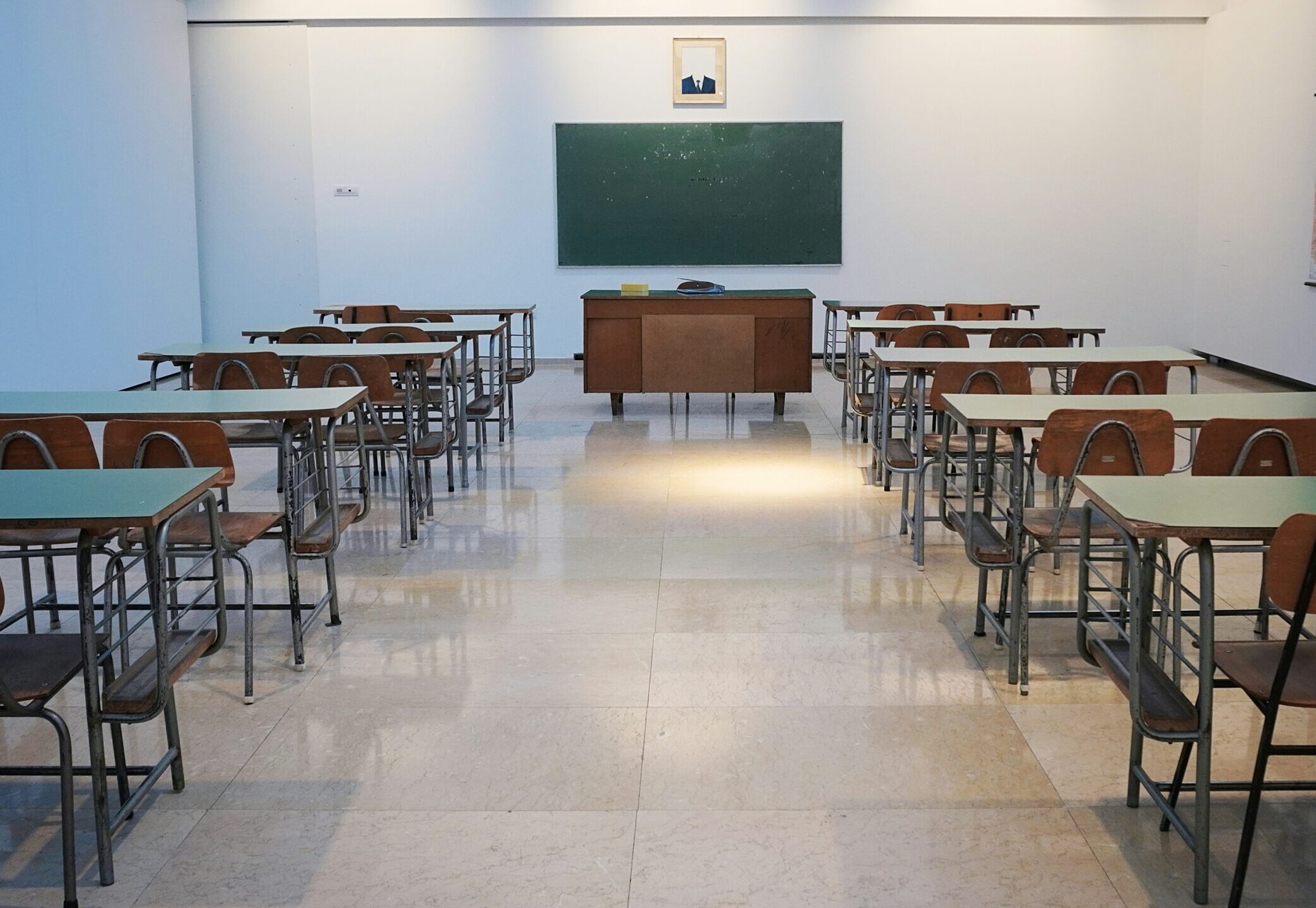
Millions of children across Spain are returning to their classrooms. But in Ceuta, the new school year is beginning in circumstances far removed from an ordinary first day back. Some parents are considering keeping their children at home, while police, the Guardia Civil, military personnel and civil protection officers are being deployed along school routes. Yet for many families, one question remains: is Ceuta really ready to return to normal?
Spanien Press Editorial Team
Across much of Spain, September once again means timetables, textbooks and the familiar routines of a new school year. In Ceuta, however, the return to the classroom presents an altogether different challenge.
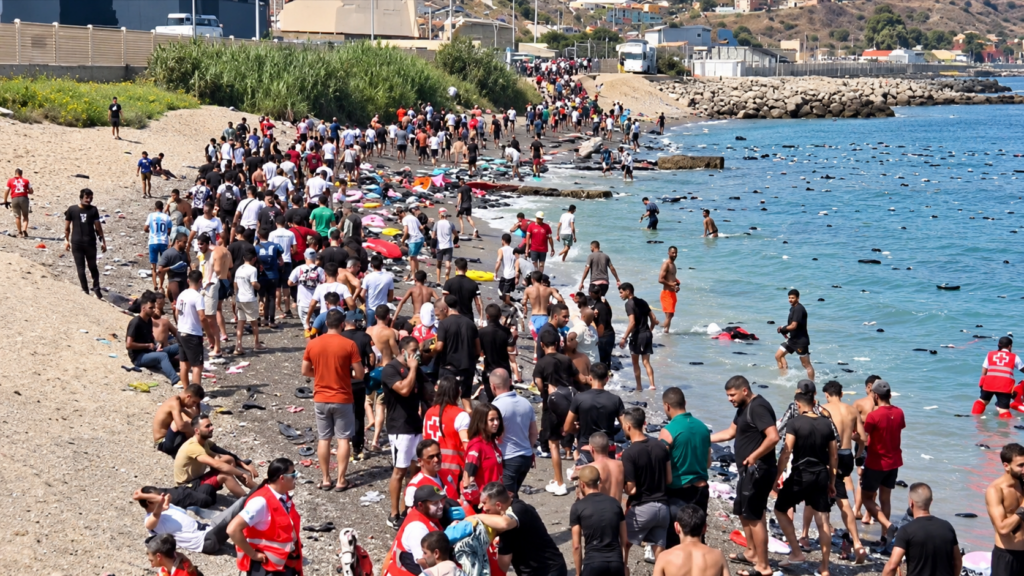
Schools in the Spanish enclave are due to reopen on Tuesday, 8 September. But the start of term is being overshadowed by the consequences of the severe border crisis that began on 30 July.
Since then, the city has been trying to recover a sense of everyday life.
Now that effort has reached one of the places where stability and routine matter most: its schools.
Security forces deployed along school routes
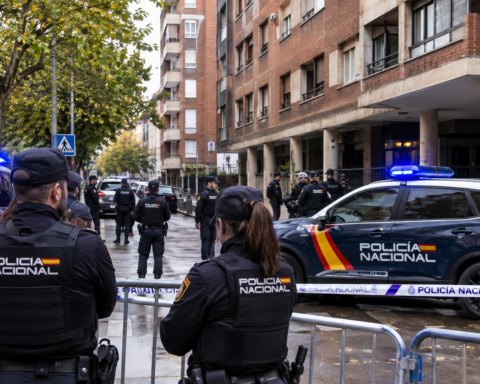
The government has announced an exceptional security operation for the start of term.
Police, the Guardia Civil, military personnel and civil protection officers are expected to be present along school routes, at bus stops and around educational establishments. Particular attention will be paid to the times when pupils arrive and leave, as well as break periods.
Schools are also expected to be monitored outside teaching hours to prevent unauthorised entry.
The measures are intended to make something resembling an ordinary school day possible. But for some parents, the very need for such an extensive security presence is not reassuring. Instead, it serves as a reminder of how far Ceuta remains from normality.
Children once walked to school. Now parents are planning every journey
Perhaps nowhere is the change more visible than on the daily journey to school.
Where many pupils once simply walked to class, that option has effectively disappeared for numerous families. A journey that used to be an unremarkable part of daily life is now being treated as a question of safety.
The vast majority of parents are reorganising their routines. Children are to be driven or accompanied to school in the morning and collected again when lessons finish. Families are adjusting working hours, arranging lifts and coordinating with other parents in an effort to ensure that children do not have to travel alone.
A question that would ordinarily barely merit a second thought – how will my child get to school and back? – has suddenly become one of the central concerns surrounding the new term in Ceuta.
The situation is particularly difficult for older pupils. Many teenagers were accustomed to walking to school or taking the bus on their own.
For many families, allowing them that same independence now feels almost unthinkable.
Security officers at the school gates may protect the immediate surroundings of a building.
But what happens on the way there? And what happens after lessons, once pupils leave the area under surveillance?
Those questions are troubling many families.
Some parents may keep their children at home
Parents’ associations expect absenteeism to be higher than usual when schools reopen. Some families have already indicated that, despite the security measures, they may keep their children at home for at least the first few days.
The issue is no longer simply about the security arrangements themselves.
It is about trust.
And for part of Ceuta’s population, that trust appears to have been badly damaged.
An agonising choice for parents
Mothers and fathers are being confronted with a decision no family should have to make at the beginning of a school year.
Do they keep their children at home because they believe they will be safer there?
Or do they send them back precisely because, after weeks of uncertainty, children urgently need their friends, their routines and the structure of everyday life?
Many parents and teachers share the same concern: children have already lost part of their summer, their usual leisure time and their familiar routines. They should not now lose their education as well.
It is a sentiment that captures the mood in Ceuta.
Because in these circumstances, school represents far more than lessons.
It represents normality.
Schools themselves were affected by the crisis
Parents’ concerns have not emerged in a vacuum.
During the first days of the crisis, educational establishments were also affected by the extraordinary situation. Migrants entered some school buildings, including the Ortega y Gasset school.
The premises have since been cleaned and prepared for pupils to return.
But buildings can be restored more quickly than public confidence.
For parents, pupils and teachers, the experiences and images of recent weeks have not simply disappeared.
The psychological effects may last longer
Attention is therefore turning to another concern: the psychological impact on children and teenagers.
Teachers and trade unions are calling for additional psychological support in schools.
Reopening a classroom does not, by itself, restore normality.
Pupils also need to feel safe inside it.
Teachers, meanwhile, are being asked to deal not only with lessons, academic pressure and the everyday difficulties of school life, but also with the consequences of an extraordinary crisis.
Education representatives argue that this burden cannot be left to teachers alone.
Spain goes back to school. Ceuta searches for normality
For millions of Spanish children, September means what it always does: early mornings, seeing friends again, meeting new teachers and settling back into a timetable.
In Ceuta, considerably more is at stake this Tuesday.
The 8 September will not simply mark the first day of school. It will be a test of whether a city that has spent weeks under extraordinary pressure can recover one of the most fundamental parts of ordinary life.
Security forces can guard school buildings. They can patrol routes and maintain a presence at bus stops.
But trust cannot be imposed.
And perhaps nothing illustrates the change in daily life more clearly than the school run itself. Where children once picked up their bags and walked to school, parents are now planning who will take them – and who will be there to bring them home.
As schools reopen across Spain, Ceuta is fighting for something that elsewhere is taken for granted: an ordinary first day back.

Great information! I’m always interested in discovering new places and travel experiences in Spain. Thanks for sharing these useful travel insights.