The migration crisis in Ceuta has become about far more than border controls and humanitarian assistance. It is now one of Spain’s most polarising political battles. While the left warns against describing those crossing the border as “invaders”, conservatives accuse the government of placing the rights of irregular migrants above the interests and security of Ceuta’s own residents. At the heart of the argument lies a much bigger question: how should Spain reconcile its humanitarian obligations with the need to control its borders?
Spain Expat Press Editorial Team
Events on Spain’s border with Morocco have transformed the country’s already fraught debate over migration. The arrival of an exceptionally large number of people in a short period placed enormous pressure on Ceuta, the Spanish enclave on the north African coast.
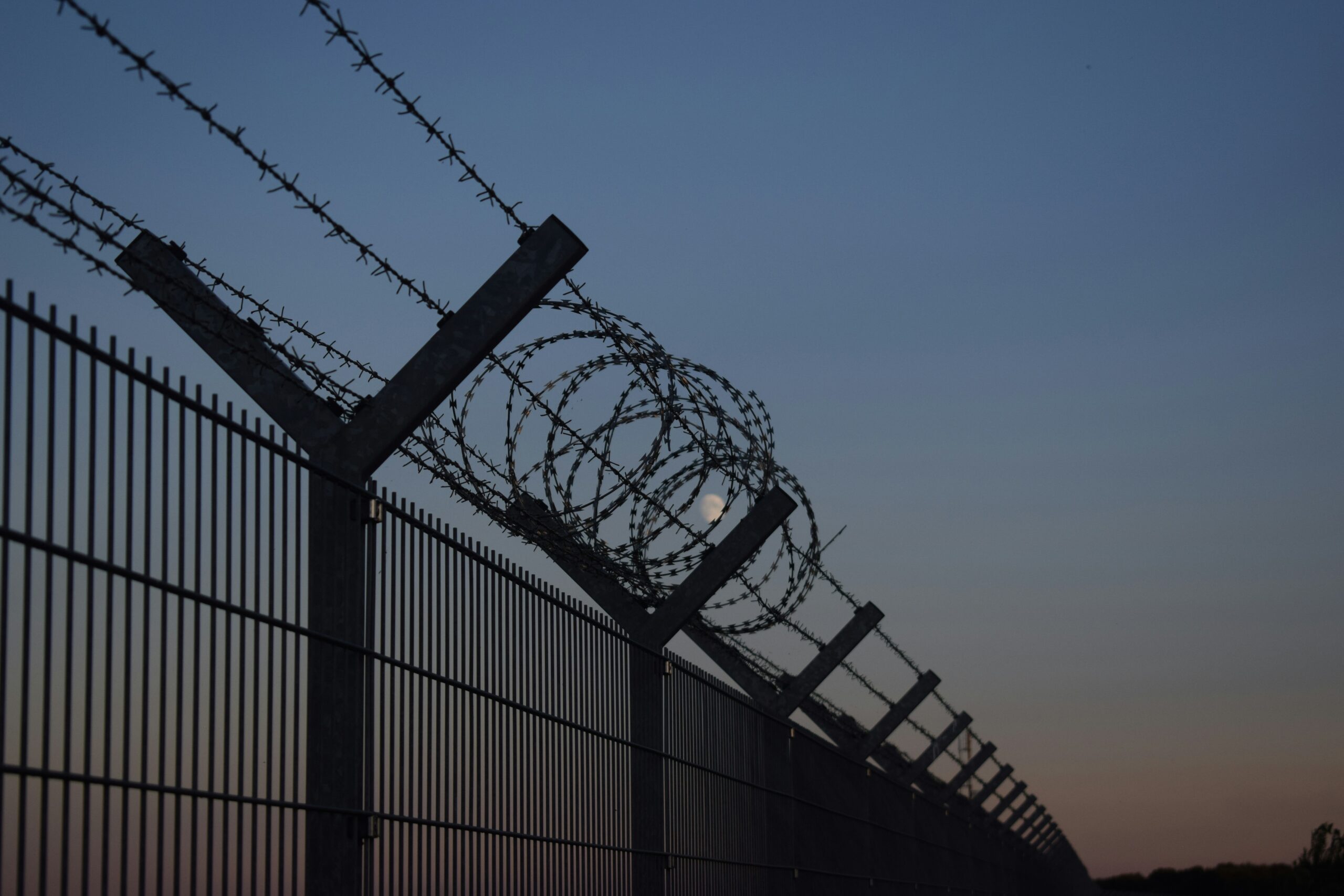
Covering barely 20 square kilometres, Ceuta has neither unlimited space nor unlimited capacity. A sudden influx that would pose a considerable logistical challenge to a large European city becomes an altogether different proposition in such a small and politically sensitive territory.
Questions remain over precisely how the mass crossings came about and what role, if any, Morocco played. But as those circumstances continue to be scrutinised, the political debate has moved on to another question: what should Spain now do with those who entered the country irregularly?
One word, two visions of the crisis
Few words illustrate the depth of the divide better than “invaders”.
Spain’s left strongly rejects the term. Its argument is that crossing a border irregularly does not strip a person of their dignity or their rights under the law.
Leftwing parties and human rights organisations have called for restraint and patience, stressing that individual circumstances must be examined and that particular protection should be afforded to minors and other vulnerable people.
Some on the left have also called for migrants to be transferred from Ceuta to mainland Spain in order to ease the pressure on the enclave.
They argue that describing migrants collectively as “invaders” risks dehumanising them and turning a humanitarian and migration emergency into a political weapon. Critics on the left have accused the PP and Vox of using the language of “invasion” to fuel hostility towards migrants and push the debate towards the far right.
The conservative interpretation could hardly be more different.
The centre-right People’s party (PP), and particularly Vox, argue that what happened cannot be considered solely through a humanitarian lens. For them, it is also a question of national security, territorial integrity and the ability of the Spanish state to control its own borders.
That is why figures on the right have used the word “invasion”, particularly amid suspicions that crossings on such a scale may not have been entirely spontaneous.
But what about the people of Ceuta?
This question lies at the heart of the conservative case: who is looking after the rights and interests of the people who already live in Ceuta?
The PP and Vox accuse the government and parties on the left of devoting considerable attention to migrants’ rights while paying too little attention to the impact of mass arrivals on the enclave’s residents.
Ceuta has limited accommodation, infrastructure and public resources. Its police, emergency services and administration can also come under intense pressure when thousands of additional people need assistance within a very short period.
Residents have taken to the streets to criticise the handling of the crisis, with some expressing concerns about security, overcrowding and the possibility that what began as an exceptional emergency could gradually become a permanent reality.
From the conservative perspective, demanding effective border controls and the removal of people who have no legal right to remain in Spain should not automatically be dismissed as xenophobic or far-right.
“Morocco is not at war”
The argument becomes particularly contentious when it turns to asylum.
Conservative politicians point to what they regard as an essential distinction: Morocco is not at war, nor is it suffering from a generalised famine.
They therefore argue that Moroccan nationals cannot automatically be treated in the same way as refugees fleeing war or a large-scale humanitarian catastrophe. The PP and Vox say those who have no legal entitlement to remain in Spain should be returned to Morocco as quickly as the law allows.
The legal position, however, is more nuanced.
Being Moroccan does not automatically prevent someone from seeking or receiving international protection.Asylum claims are assessed according to individual circumstances. A person from a country that is not at war may still face political, religious or other forms of persecution that can give rise to a legitimate claim for protection.
There is therefore an important distinction between arguing that most Moroccan arrivals are not refugees from war and claiming that no Moroccan national could qualify for asylum.
Fears of a powerful “pull factor”
For Spain’s right, however, the debate is not only about those who have already arrived. It is also about those who may consider coming next.
The PP and Vox warn of what Spanish politicians commonly call the “efecto llamada” – a pull factor.
Their argument is straightforward: if entering Ceuta irregularly ultimately leads to transfer to mainland Spain and a realistic prospect of remaining there, others may conclude that attempting the same journey is worthwhile.
In that view, every decision Spain takes after a migration crisis sends a message beyond its borders.
Conservative parties therefore advocate stronger border controls and rapid returns for those who, after their cases have been examined, are found to have no right to remain.
The left disputes the premise that migration policy should be built primarily around deterrence. It argues that returns must comply with the law, asylum claims must be considered individually and minors and vulnerable people must receive the protections to which they are entitled.
One crisis, two very different interpretations
This is where the political battle over Ceuta becomes particularly stark.
For the left, the crisis is principally a humanitarian and rule-of-law challenge. Individual migrants, it argues, should not be held collectively responsible for a mass movement that may have been encouraged or organised by actors beyond their control.
For the PP and Vox, it is above all a border, security and sovereignty crisis. The state, they argue, must demonstrate that irregular entry does not in itself create a route towards permanent residence.
The language on both sides has become increasingly confrontational.
The left accuses the right of criminalising migrants and encouraging xenophobia. The right, in turn, accuses its opponents of branding demands for tougher border enforcement as “far-right” while paying greater attention to the rights of new arrivals than to the concerns of Ceuta’s residents.
Ceuta becomes a symbol
The argument is therefore no longer simply about migration.
It raises some of the most difficult questions facing Spain and Europe: how far does a state’s humanitarian responsibility extend? How should it enforce its external borders? Who should be allowed to stay? How quickly should those without a legal right to remain be returned? And how much pressure can a small border territory reasonably be expected to absorb?
There is also the unresolved question of how the mass crossings occurred and the extent, if any, of Morocco’s involvement. Until the relevant investigations are concluded, a distinction needs to be maintained between established facts, suspicions and political accusations.
Ceuta has consequently become more than the focal point of a migration emergency.
The small Spanish territory on the African coast has become a symbol of a much wider European dilemma: how to uphold humanitarian principles and the rule of law while maintaining effective control of the continent’s external borders.