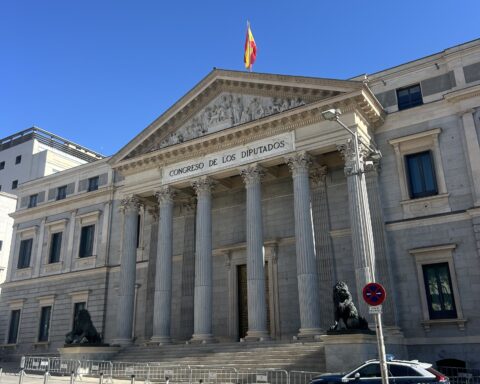
The Spanish government has lost a key parliamentary vote in the dispute over new measures to address the housing crisis. On Friday, the Spanish lower house rejected the first of the government’s two housing decrees. A decisive factor was the stance taken by Junts per Catalunya, which followed through on its previously announced opposition.
Spain Expat Press Editorial Team
by Marlon Gallego Bosbach
The decree was intended, among other things, to strengthen tenant protections, make the eviction of particularly vulnerable households more difficult, and expand the supply of affordable housing. Following the rejection in Congress, the measures it envisaged cannot proceed as planned.
Junts calls for a new draft bill
Even before the vote, Junts had demanded the withdrawal of both housing decrees and the drafting of a new text instead. The Catalan party justifies its position by arguing that the measures proposed by the government would not sufficiently improve access to housing.
According to Junts, the regulations could make it harder to find and afford housing. The party is therefore calling for a new approach that, among other things, takes stronger action against large real estate investors while simultaneously protecting families.
As late as Friday morning, Junts presented its own proposal to the PSOE. This was intended to serve as the basis for new negotiations. However, the party made the withdrawal of the two existing decrees a precondition.
Government tries until the last moment to change Junts’ mind
Pedro Sánchez’s government nevertheless pressed ahead with the vote. Housing Minister Isabel Rodríguez appealed to Junts in parliament not to vote against the first decree, at the very least.
Rodríguez argued that a large portion of Junts’ demands had already been incorporated into the government’s proposal. According to the minister, around 90 percent of the proposals previously submitted by Junts were taken into account in the initial decree.
The minister also offered to negotiate the decree further as a bill following parliamentary approval. This would have allowed MPs to propose amendments. However, Junts stuck to its demand for a completely new text for negotiation.
Numerous measures are affected
The first decree, adopted as Real Decreto-ley 26/2026, contained the bulk of the housing package announced by the government. Measures included, among other things, temporary protection against eviction for particularly vulnerable individuals lacking alternative accommodation, as well as enhanced protections for tenants. In addition, the purchase of certain properties was to be temporarily restricted until the end of 2028, and regulations concerning so-called “large-scale property owners” were to be clarified.
The package was supplemented by various tax measures for the housing market, including changes to income, value-added, corporate, and property taxes. A second decree – Real Decreto-ley 27/2026 – focused primarily on the stability of existing rental contracts. However, this initiative also met with resistance in parliament.
Political pressure on Sánchez is mounting
This defeat is significant for Pedro Sánchez’s minority government, not least because it once again demonstrates how difficult it is for the PSOE to secure stable majorities in Congress for key initiatives. Along with Junts, other parties had also defined their positions on the decrees. Ultimately, the first decree was rejected by the PP, Vox, Junts, and UPN, among others.
This places the government under renewed pressure regarding one of its key domestic policy issues. Tensions surrounding the housing decrees had already been mounting for days. Prior to the vote, there was even talk within the PSOE of the possibility of early elections. Some government and party officials expressed the view that a defeat could significantly increase the likelihood of an early election. However, a decision to hold new elections does not automatically follow from this.
Housing shortage sparks protests on the streets too
Public pressure mounted alongside the parliamentary debate. In Madrid, people protested against the strained housing market situation. A demonstration marched from Puerta del Sol toward Congress. The protesters demanded concrete measures from policymakers to address high rents and the difficulties many households face in finding affordable housing.
Two developments are thus colliding in the current conflict: while the government attempts to push through new protective measures for the housing market, the dispute between the parties is preventing key parts of the package from being implemented for the time being.
For Sánchez, the vote therefore represents not only a setback for housing policy; it also highlights the extent to which his government relies on the support of shifting parliamentary partners for key decisions.