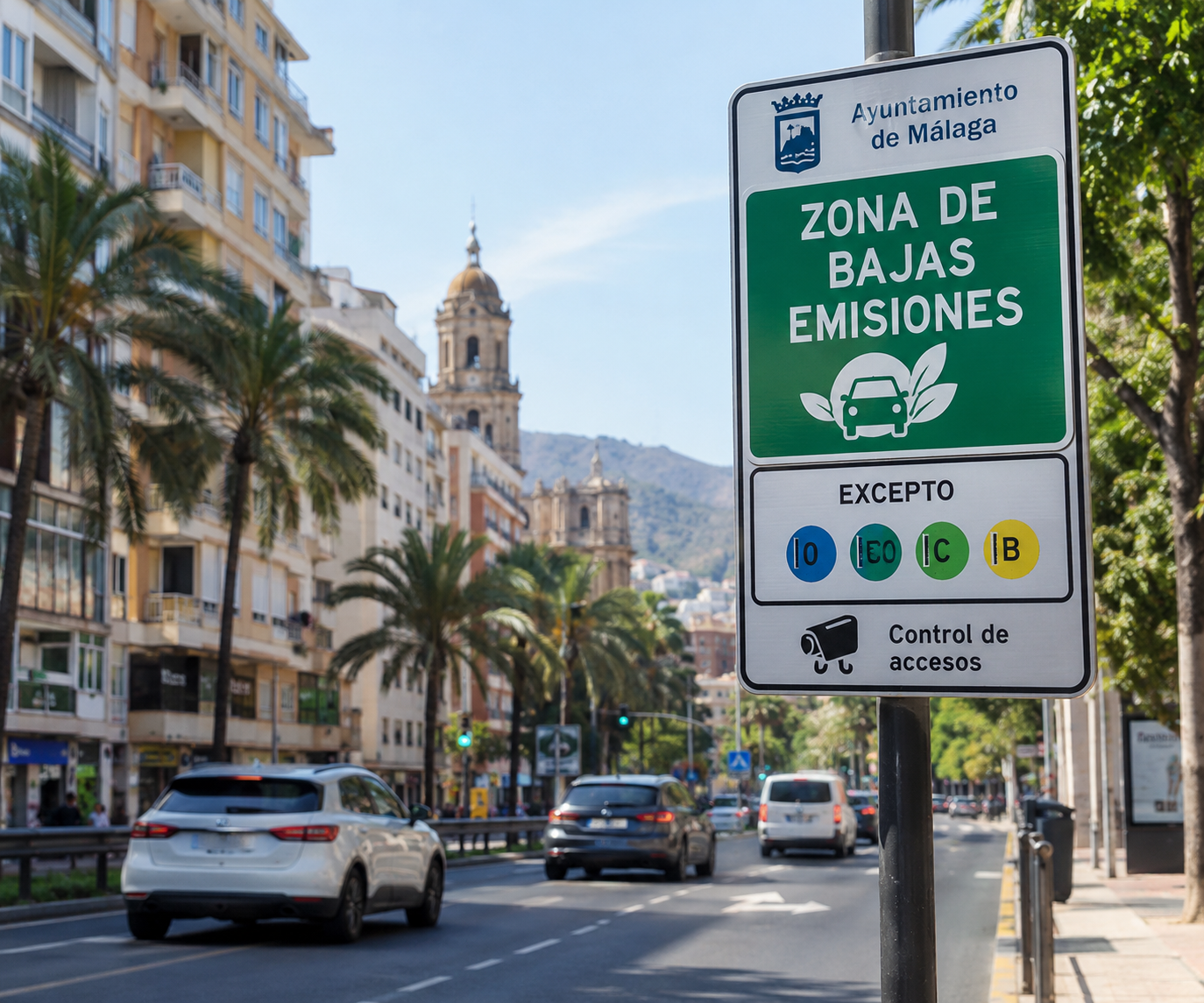
The city of Málaga intends to refund approximately 13,600 fines already paid in connection with its low-emission zone. Furthermore, pending sanction proceedings are to be dropped. In total, the city had initiated nearly 50,000 such cases. This follows a court ruling that declared parts of the existing regulations unlawful, citing discriminatory, unequal treatment of vehicle owners.
Spain Expat Press Editorial Team
by Marlon Gallego Bosbach
The city administration announced this Monday that it would initiate the reimbursement of fines already collected. According to Carlos Conde, the city councillor for economy and finance, the total amount to be refunded is approximately 1.38 million euros. The payouts are set to begin once the court ruling becomes final.
Refund and termination of pending proceedings
Of the 49,652 total proceedings initiated, approximately 13,600 fines have already been paid. The city intends to refund these amounts. Proceedings that have not yet been concluded are to be cancelled. This also applies to cases in which the sanction has already reached the enforcement stage.
To receive a refund, affected individuals must provide their bank account details to the municipal tax and fee administration, Gestrisam. An online form is available for this purpose. Alternatively, the required information can be submitted at the municipal citizens’ service offices. Meanwhile, the termination of any still-pending proceedings is to be carried out automatically by the authorities.
Court identifies unequal treatment of vehicle owners
The decision was prompted by a ruling from the High Court of Justice of Andalusia (TSJA). The court declared the relevant regulation concerning the low-emission zone unlawful, as it treated vehicle owners differently based on their place of vehicle registration.
The previous regulation provided for sanctions against certain vehicles lacking an environmental sticker, specifically those not registered in Málaga or those whose owners paid their vehicle tax outside the city. Comparable vehicles whose owners paid their vehicle tax in Málaga were exempt from these sanctions.
The court deemed this distinction discriminatory. In its view, the regulation disadvantaged drivers from other municipalities and violated the principle of equal treatment.
The legal challenge against the provisions had been filed by the right-wing populist party Vox. In May 2026, the court struck down the regulations in question. Following a subsequent clarification regarding the scope of the ruling, the city ceased issuing new fines based on the previous regulations on October 14.
Repayments only after the judgment has become final
As of the announcement today, October 19, the judgment is not yet final. The deadline for filing an appeal in cassation with the Spanish Supreme Court has not yet expired. Until this period has elapsed, the proceedings cannot be considered definitively concluded.
Should no appeal be filed, the judgment could become final on November 25, 2026. Only then are the actual repayments set to begin. The municipal administration intends to prepare the necessary organizational steps in advance, ensuring that the refunds can be processed as quickly as possible once the time comes.
Málaga must revise its low-emission zone regulations
The decision does not mean that all mobility regulations in Málaga have been lifted. It specifically concerns the provisions for the low-emission zone that were the subject of the legal proceedings. For any future enforcement against such violations, the city will need a new, legally sound regulatory framework.
The municipal administration intends to examine the regulations in place in other Spanish cities and draft a revised ordinance. Developing a new framework could take several months.
The case is also politically controversial. While Vox succeeded in having the regulation overturned through its legal challenge, the left-wing opposition group Con Málaga criticized the city administration for not halting the sanctions sooner. Meanwhile, Carlos Conde, the city councillor for economy and finance, rejected the accusation that the environmental zone had been used primarily to generate revenue. The city maintains that it acted lawfully and with the necessary caution.