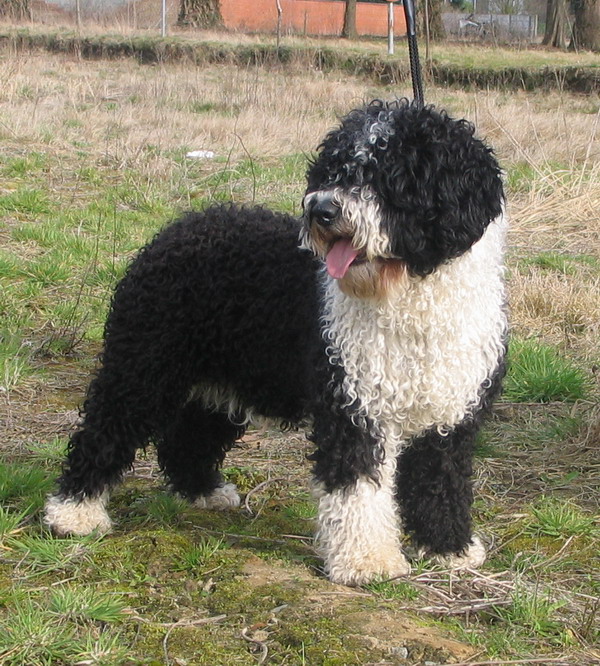
The Spanish Water Dog tops the ranking as demand for native breeds continues to rise
Spain Expat Press Editorial Team
Spanish dog breeds are experiencing a notable resurgence. Increasingly, households across Spain are consciously opting for native dogs over international breeds. What was once seen as traditional is now becoming a modern and deliberate choice.
This is reflected in the latest data from the Spanish Stud Book (Libro de Orígenes Español, LOE) of the Real Sociedad Canina de España (RSCE).
Spaniards’ favourites
At the top of the ranking is the Spanish Water Dog, closely followed by the Spanish Mastiff and the Presa Canario. These three currently form the podium of the most sought-after native breeds in Spain.
The top five is completed by the Catalan Sheepdog (Gos d’Atura Català) and the Andalusian Ratonero Bodeguero, two breeds particularly valued for their intelligence, adaptability and lively temperament.
From working dog to family companion
For centuries, these breeds played essential roles: guarding livestock, controlling pests or assisting fishermen and farmers. Today, they have successfully transitioned into modern life, finding their place in urban households without losing their original traits.
The Spanish Water Dog is perhaps the clearest example of this shift. Intelligent, versatile and highly adaptable, it has become a preferred choice for families seeking an active and responsive companion.
Function meets character
The growing preference for native breeds is no coincidence. Owners increasingly value traits such as resilience, balanced temperament and adaptability — qualities that have been developed over generations.
The Spanish Mastiff remains a symbol of calm and protection, while the Presa Canario is recognised as a reliable guard dog when properly trained. Meanwhile, the Andalusian Ratonero Bodeguero stands out for its energy and sociability, and the Catalan Sheepdog for its intelligence and sensitivity.
A renewed appreciation of heritage
Spain currently has 14 dog breeds officially recognised by the Fédération Cynologique Internationale (FCI). Additional breeds such as the Spanish Alano and the Andalusian Podenco are in the process of recognition.
The RSCE highlights that the rising interest in native breeds is not merely a passing trend, but reflects a growing awareness of the importance of preserving Spain’s cultural and genetic heritage.
At a time when local identity is gaining value over global trends, more Spaniards are choosing what comes from their own land — including when it comes to their dogs.