Almost 20,000 kilometres separate Spain and New Zealand. Two countries that could hardly be further apart geographically — yet they remain connected by one of the most remarkable and little-known migration stories in Spanish history..
Because in the 19th century, a man from Segovia travelled to the other side of the world and eventually became the origin of one of New Zealand’s most fascinating Māori clans with Spanish roots.
Spain Expat Press Editorial Team
A wool trader from Castile who changed his life forever
Manuel José de Frutos Huerta was born in 1811 in the small village of Valverde del Majano. His family worked in the wool trade, which at the time was one of the key industries in central Spain.
However, Manuel José left Spain at a young age. After spending time in Peru for commercial reasons, he eventually boarded an English whaling ship called Elizabeth, which sailed across the South Pacific.
In 1835, the ship reached the east coast of New Zealand’s North Island, in the remote East Cape region. There, surrounded by Māori communities and wild landscapes, Manuel José reportedly made a life-changing decision: he would leave the ship and never return.
The Spaniard who became “Paniora”
Unlike many European settlers of the era, Manuel José did not arrive as a conqueror or military figure. Historical accounts suggest he gradually integrated into the Māori iwi (tribe) Ngāti Porou, one of the most influential Māori communities in New Zealand.
Local Māori people were reportedly impressed by his commercial knowledge and technical abilities. Soon, they began referring to him simply as “The Spaniard”.
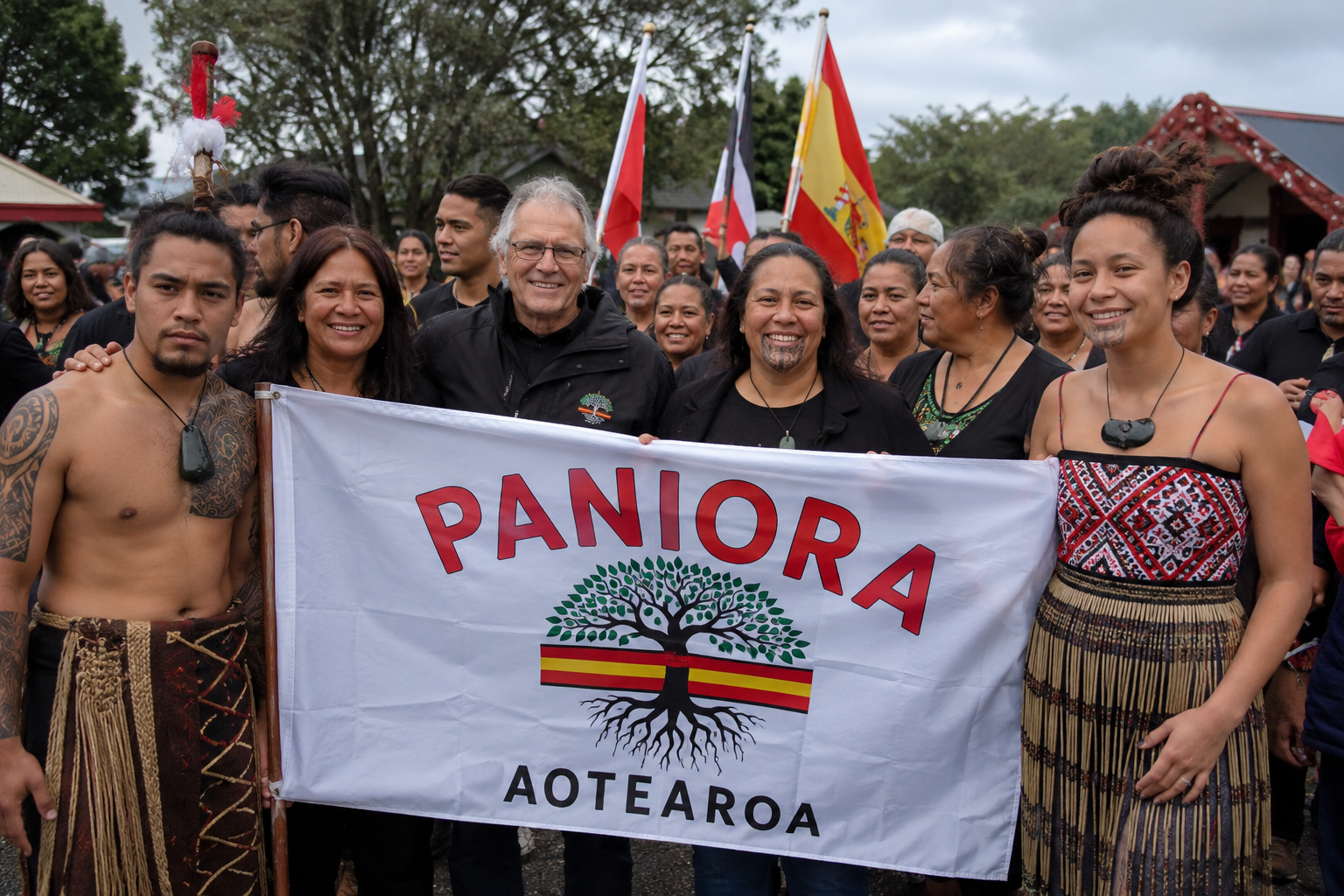
Over time, this evolved into the Māori word “Paniora” — the name by which the family is still known today.
Five wives, many children and thousands of descendants
Manuel José became deeply integrated into Māori society. According to historical records, he married five women from prominent Māori families: Tapita, Te Mihi-i-te-kapua, Koariki, Kahutawhiti and Maraea.
From these unions came numerous children and eventually an enormous family lineage. Historians now estimate that around 20,000 people across New Zealand and Australia are direct descendants of the Spaniard from Segovia.
From these unions came numerous children and eventually an enormous family lineage. Historians now estimate that around 20,000 people across New Zealand and Australia are direct descendants of the Spaniard from Segovia.For many members of the Paniora clan, their Spanish ancestry remains an important part of their identity. Even if many no longer speak Spanish, stories, symbols and memories connected to Spain continue to survive within the family.
Spanish flags alongside Māori traditions
What fascinates many people most is the blending of both cultures. Gatherings of the Paniora clan reportedly combine Māori ceremonies, traditional tattoos and ancestral customs with Spanish flags, Spanish guitars and stories about Spain.
Even the tale of an olive tree planted by Manuel José near the New Zealand coast as a tribute to his homeland continues to be passed down through generations.
When New Zealand returned to Segovia
For decades, the story remained largely unknown in Spain itself. That changed in 2007, when a delegation of Māori descendants travelled to Valverde del Majano in search of their ancestor’s roots.
The emotional reunion attracted significant attention. Descendants were able to see Manuel José’s baptism records and walk through the same village streets their ancestor had left almost two centuries earlier.
Since then, the Paniora story has increasingly become a symbol of how deeply connected distant parts of the world can sometimes be.
Because somewhere on the other side of the planet, thousands of people still carry a small part of Spain within them.