Anyone travelling across Europe by train today often needs patience and careful planning. Different rail operators, multiple apps and separate tickets can make international rail travel complicated. That is exactly what the European Commission now wants to change. A new legislative package aims to make cross-border travel across Europe significantly easier — following the principle of “One Journey, One Ticket”. The goal is for passengers to be able to organise an entire rail journey across Europe with a single booking in future.
Spain Expat Press Editorial Team
by Marlon Gallego Bosbach
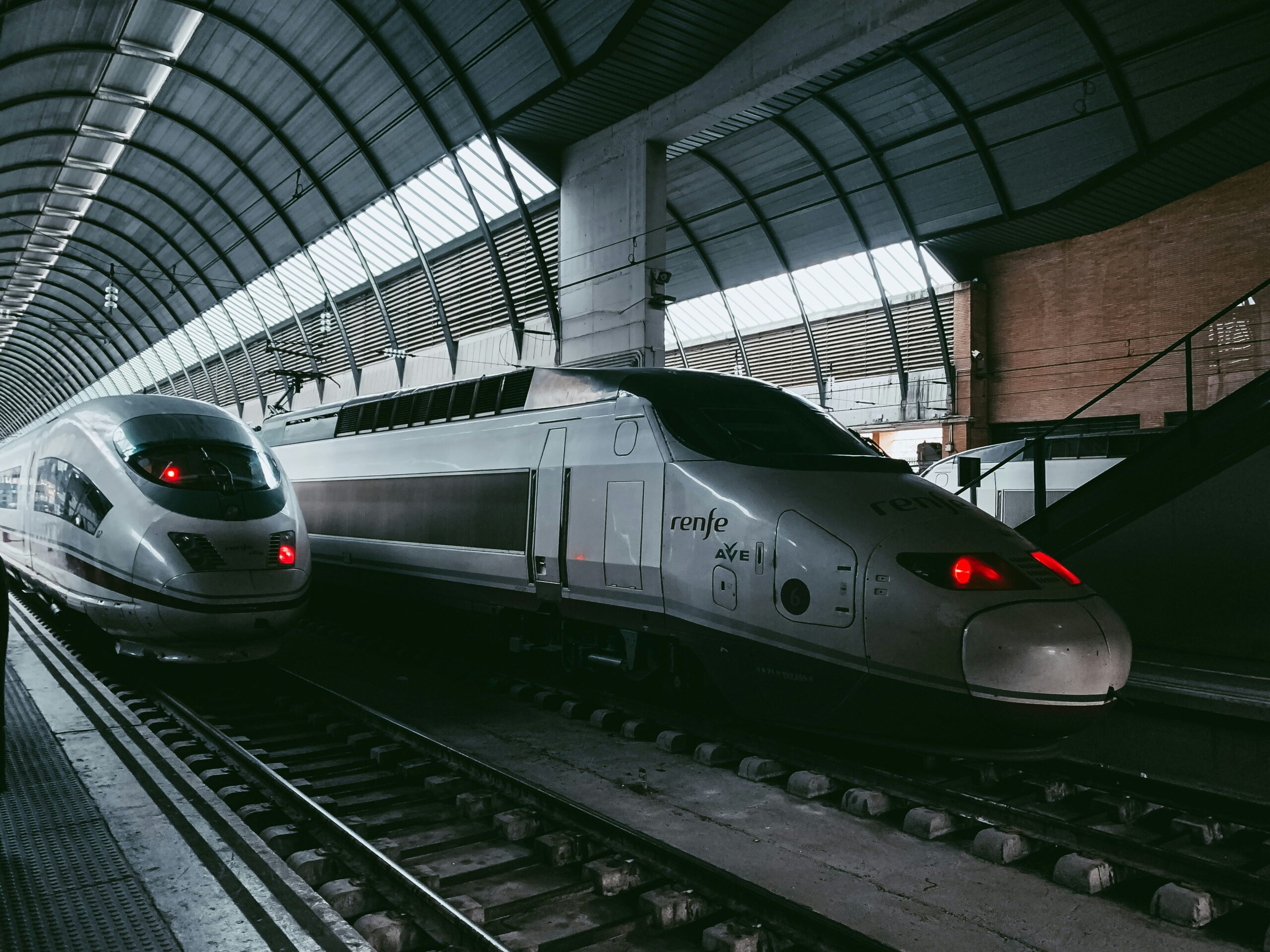
Connections such as Barcelona–Berlin are currently seen as a prime example of how difficult international rail travel can be. Travellers often have to buy separate tickets from multiple operators — for example Renfe, SNCF and Deutsche Bahn. If delays occur and a connection is missed, passengers are frequently left to cover the additional costs themselves, as the individual tickets are legally separate. This is exactly the problem that is expected to be resolved in future.
One ticket instead of five apps
The EU aims to require rail companies to better connect their timetable, pricing and ticketing data. This would allow platforms to automatically combine different European rail connections and sell them as a single journey. For consumers, this would mean that international train travel could become as easy to book as flights. Instead of searching multiple websites, only one booking would be needed.
Consumer protection is also a key element of the plan. Under the EU’s proposals, passengers would be better protected if problems arise during their journey. If someone misses a connecting train due to a delay, rebooking, alternative routes or compensation should be made easier — even when different rail operators are involved. This would significantly reduce a major risk associated with international rail travel.
The EU wants to get more people out of planes
The initiative also has a clear climate objective. The European Union wants to encourage more people to switch to rail travel within Europe and avoid short-haul flights. International train journeys are considered significantly more environmentally friendly than air travel and play an important role in Europe’s climate plans.
European Commission President Ursula von der Leyen has stated that train travel within Europe is often unnecessarily complicated today. For example, anyone wishing to travel from Berlin to Barcelona currently has to purchase several tickets and constantly factor in the risk of missing a connection. The EU aims to remove exactly these barriers.
Spain could benefit in particular
Spain is expected to benefit particularly from the new rules. The country now has one of the largest high-speed rail networks in Europe. International connections to France are continuously being expanded, especially from Barcelona and Madrid. As a result, journeys from Spain to Germany, Belgium or the Netherlands could become significantly easier and more attractive in future.
The EU hopes that cities such as Barcelona, Madrid and Valencia will in the long term be better integrated into the European rail network, encouraging travellers to choose trains over planes more often. For holidaymakers and digital nomads in particular, straightforward direct bookings could represent a major change.
Rail companies criticise the plans.
Despite the positive reactions, there is also criticism. Some major rail companies and industry associations fear additional costs and increased competition from external booking platforms such as Omio or Trainline. Critics also argue that Europe’s main problem is not ticket booking, but rather its sometimes poor infrastructure and slow cross-border connections between individual countries.
When will the new system come into effect?
For now, this is still only a proposal from the European Commission. The legislative package must first be approved by the European Parliament and the EU Member States. Only then would rail companies be required to adapt their systems accordingly. The EU expects a gradual rollout over the coming years.