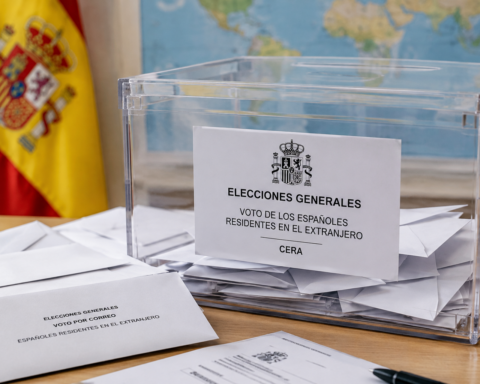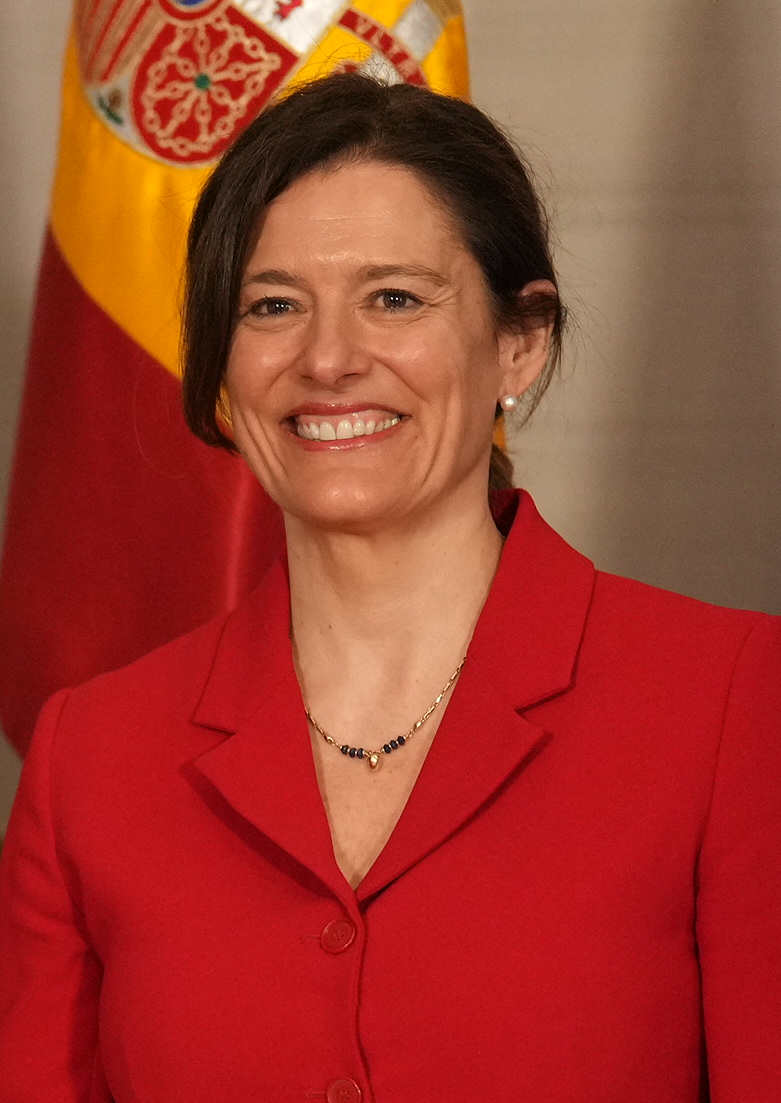
With Spain heading towards a snap general election on 29 November, internationally renowned lawyer Miriam González Durántez has launched a new political party, Democracia 21. Promising institutional reform, a fresh approach to the housing crisis and an end to entrenched political divisions, she hopes to appeal to voters disillusioned with the country’s traditional parties.
Spain Expat Press Editorial Team
Spain has a new political party — and a new figure seeking to challenge the country’s established political order.
Miriam González Durántez, a 58-year-old Spanish lawyer with an extensive international career, officially presented her new party, Democracia 21, in Madrid on Saturday. The party intends to contest the general election on 29 November, initially fielding candidates in Madrid and Barcelona.
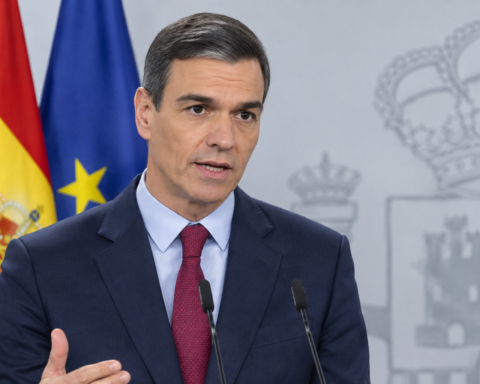
Her ambition is to offer an alternative to the increasingly polarised political landscape dominated by Prime Minister Pedro Sánchez’s Socialist Party (PSOE) and the conservative People’s Party (PP).
Although Democracia 21 has been widely described as a centrist initiative, González herself is reluctant to embrace conventional ideological labels. Instead, she presents her movement as a cross-party reform project designed to bring together people with different political backgrounds.
At its heart is a relatively straightforward argument: Spain needs to spend less time fighting ideological battles and more time addressing the problems affecting ordinary citizens.
Born in 1968 in Olmedo, a small town in the province of Valladolid, González grew up in a family of teachers before pursuing a career in international law.
She went on to establish herself as a specialist in European Union and international trade law, spending much of her professional life abroad.
In Britain, she is perhaps best known as the wife of Nick Clegg, the former Liberal Democrat leader who served as Deputy Prime Minister in David Cameron’s coalition government between 2010 and 2015.
Yet González has long maintained an independent professional and public profile.
She founded Inspiring Girls, an international initiative encouraging young women to pursue their ambitions regardless of traditional gender expectations.
More recently, she established España Mejor (Better Spain), a civic platform aimed at encouraging institutional reform and greater public participation in Spanish political life.
Through that initiative, she says she travelled some 40,000 kilometres across Spain, meeting citizens, businesspeople and community organisations to discuss the country’s challenges.
Those experiences have now developed into a political movement.
Spanish politics has become increasingly divided between competing ideological blocs.
On one side stand the governing Socialists and their parliamentary allies. On the other are the conservative PP and the right-wing Vox party.
González argues that this confrontation has created a political culture in which parties devote too much energy to attacking their opponents and too little to finding workable solutions.
Her criticism extends to both major parties, which she accuses of allowing political interests to interfere with the independence of public institutions.
Democracia 21 proposes reforms to strengthen judicial independence, improve transparency and make public administration more professional.
González also wants to reduce the influence of political appointments and ensure that senior public-sector positions are filled according to merit and professional qualifications rather than party loyalty.
The party’s message is intended to appeal to voters who are dissatisfied with the current political climate but do not necessarily identify with either of the two dominant blocs.
One of the most prominent issues in the new party’s programme is Spain’s worsening housing crisis.
Rising property prices and rents have become a major concern across the country, particularly in Madrid, Barcelona, the Balearic Islands and popular coastal areas such as the Costa del Sol.
González argues that successive governments, both national and regional, have failed to address the underlying shortage of housing.
She has criticised the tendency to turn the housing debate into a confrontation between landlords and tenants, maintaining that insufficient supply is a fundamental problem affecting both groups.
Among her proposals is a call for the Socialist government and the PP opposition to negotiate jointly with Brussels over the use of approximately €10 billion in unspent European funds.
She wants the money redirected towards a national fund supporting the construction of affordable and protected housing.
The party has also proposed reducing taxes associated with home purchases for people under 35, arguing that younger generations face growing obstacles to financial independence.
González has highlighted the difficulties facing young workers who, despite having jobs, struggle to afford a home or establish themselves economically.
Whether the proposed funding arrangements and tax changes could be implemented would depend on future political agreements and the relevant legal and budgetary requirements.
Beyond housing, Democracia 21 places considerable emphasis on institutional reform.
González believes that Spain’s democratic institutions have become excessively influenced by party politics, weakening public confidence in the system.
Her proposals include reforming the process used to appoint members of the General Council of the Judiciary, the body responsible for overseeing the Spanish judiciary.
She also advocates specialised courts to deal with corruption cases, stricter oversight of public appointments and a substantial reduction in political advisers.
The party has proposed cutting the number of such advisers by as much as 90 per cent, although the practical implications of such a reduction would require further examination.
For González, institutional reform is not simply an administrative matter. She argues that restoring confidence in democratic institutions is essential if Spain is to address its wider economic and social challenges.
Is this the return of Ciudadanos?
The arrival of Democracia 21 inevitably invites comparisons with Ciudadanos, the former liberal party that once appeared capable of reshaping Spain’s political landscape.
Under Albert Rivera, Ciudadanos attracted voters seeking an alternative to the traditional two-party system. At its height, it became a significant force in national politics before suffering a dramatic electoral decline.
Its disappearance from the Spanish parliament left the question of whether a distinct liberal or centrist political space could be rebuilt.
Democracia 21 is now entering that debate.
There are clear similarities between the two projects, particularly their emphasis on institutional reform, European integration and opposition to political polarisation.
However, González insists that her party should not be understood simply as a replacement for Ciudadanos.
At its Madrid launch, the new movement was joined by several former members of Unión, Progreso y Democracia (UPyD), another party associated with political and institutional reform.
Among them were Fernando Maura, Beatriz Becerra and Rafael Calduch.
Their involvement gives the new initiative links to previous reformist movements, although Democracia 21 still faces the challenge of establishing its own political identity.
A difficult first test in November
With the general election scheduled for 29 November, González has relatively little time to introduce her party to the wider electorate.
Democracia 21 intends to stand initially in Madrid and Barcelona, with the longer-term ambition of contesting elections across Spain.
Even this limited debut requires the party to secure the necessary endorsements and establish an electoral organisation.
Spain’s electoral system presents particular challenges for smaller parties. Members of Congress are elected in provincial constituencies, and the distribution of seats can make it difficult for parties with geographically dispersed support to gain representation.
For a newly established political organisation, national recognition is only one part of the challenge.
It must also build a credible programme, attract candidates, secure financing and persuade voters that its proposals can be translated into practical policies.
The November election will therefore provide an initial measure of public support, rather than a definitive test of the party’s longer-term ambitions.
Is there still room for the political centre in Spain?
The emergence of Democracia 21 raises a broader question about the future of Spanish politics.
After years of political fragmentation, coalition negotiations and increasingly confrontational parliamentary debates, is there still a constituency for a party seeking to bridge the divide between left and right?
González believes that Spain’s political system has become too rigid and that a different approach is needed to address long-standing problems such as housing, public administration and social mobility.
Her international background, experience in Britain and previous work with civil society distinguish her from many established Spanish politicians.
Nevertheless, professional experience and public recognition do not automatically translate into electoral support.
The collapse of Ciudadanos illustrates the difficulties that parties operating between Spain’s main political blocs can encounter.
For Democracia 21, the immediate task is to turn its reform agenda into a recognisable political alternative while demonstrating how its proposals could be financed and implemented.
With the country approaching another general election, Miriam González Durántez has added a new voice to the national debate.
Whether Spain’s voters are looking for a new political centre — and whether Democracia 21 can establish itself within that space — remains an open question.