The direct high-speed rail connection between Málaga and Madrid could resume sooner than previously expected. According to current estimates, train services might begin as early as December 6 or 7. However, official confirmation from the infrastructure operator, Adif, is still pending.
Spain Expat Press Editorial Team
by Marlon Gallego Bosbach
Travelers between Málaga and Madrid may see the return of direct high-speed train services sooner than expected. According to information from the railway sector, service could resume on December 6 or 7, 2026. However, these dates are not yet definitive. The actual resumption depends on the completion of repair work on the line near Urda, in the province of Toledo, and the successful conclusion of the subsequent safety inspections.
The high-speed rail link between Madrid and Andalusia has been disrupted since the serious train accident near Urda on October 28. The incident had far-reaching consequences for rail traffic between Madrid and cities such as Córdoba, Seville, and Málaga. Consequently, the restoration of the line is being followed with particular attention.
Repair of the track near Urda is crucial
Work is currently focused on the damaged section near Urda. Following authorization for the repairs from the presiding judge, Adif has been able to begin restoring the infrastructure. This involves more than just a short, damaged stretch of track; in total, an area of approximately 400 meters is set to undergo repairs.
However, once the construction work is complete, the line cannot immediately be reopened for regular passenger service. Technical inspections and test runs are required first. According to current plans, one or two days may be set aside for what are known as “marcha en blanco” (blank runs) – where trains travel along the repaired section without passengers – to verify the safety and functionality of the infrastructure. Only once these tests have been successfully concluded can Adif authorize the line for commercial service.
December 6th or 7th as a possible date
Based on this timeline, the date currently being discussed for the return is December 6 or 7. As things stand, this timeframe is considered both realistic and advantageous. It is also a notable period, as it coincides with a Spanish long weekend in December, encompassing the public holidays for Constitution Day on December 6 and the Feast of the Immaculate Conception on December 8.
Expected demand might be lower on the actual outbound travel days, whereas the restored connection would be particularly attractive for return journeys on December 8 or 9. It should be noted, however, that Adif has not yet officially confirmed this date. The exact timing depends on the actual progress of the work and the results of safety inspections. The Ministry of Transport had also previously emphasized that the reopening is contingent upon the work on-site and the subsequent technical verification.
Initially fewer train connections
Even in the event of a successful reopening in early December, the regular timetable is unlikely to be fully restored immediately. The Ministry of Transport plans to temporarily reduce the number of daily train services – specifically affecting late-evening connections. This measure is intended to extend the overnight window available for maintenance and infrastructure work.
This measure is linked to the additional safety requirements introduced following the accident. Until the new Level 2 ERTMS safety and signaling system is fully operational, greater intervals between trains are to be established. The system is expected to be ready for regular service by early 2027.
More seats through double-unit trains
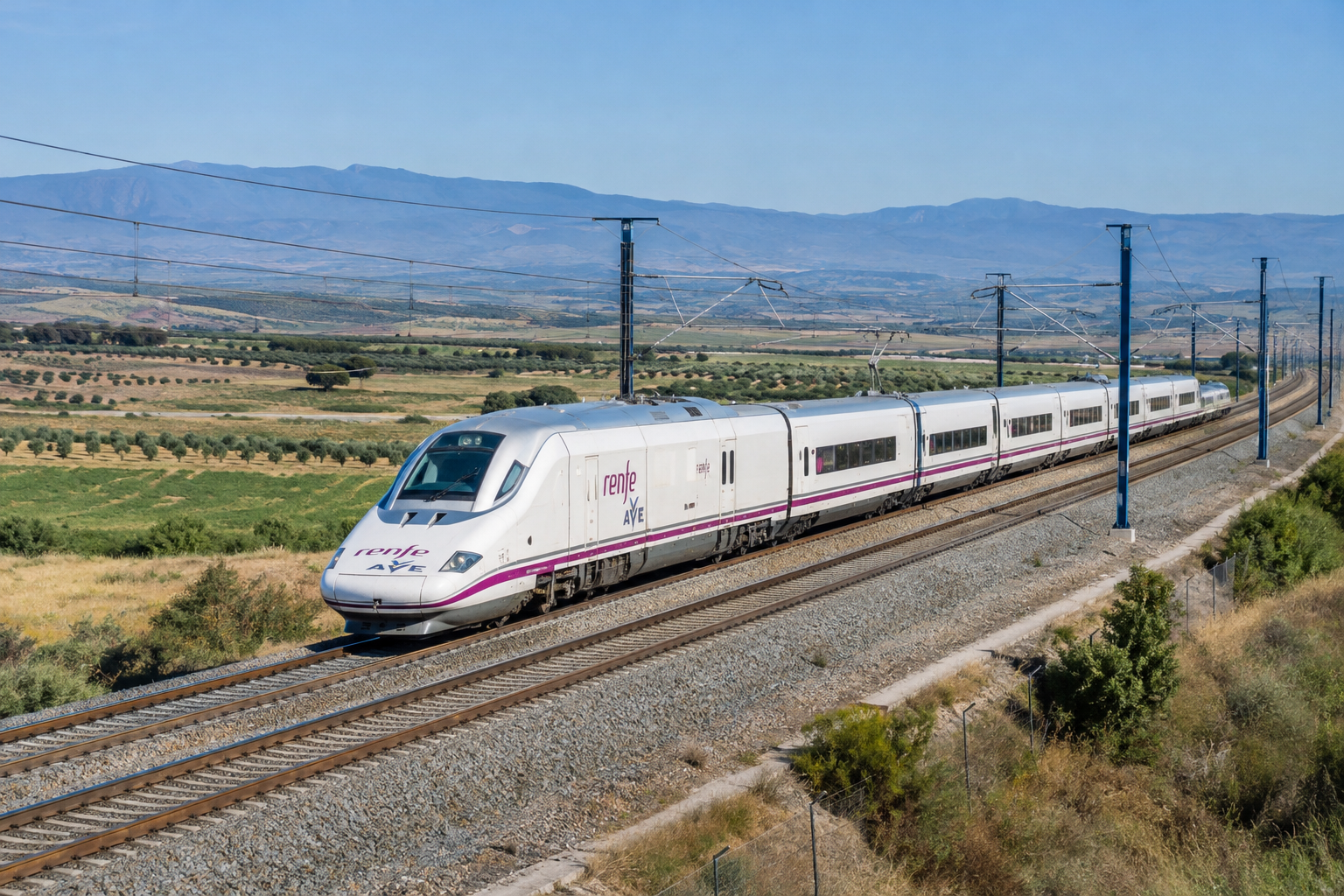
To transport as many passengers as possible despite having fewer scheduled services, railway companies could employ “double traction” – coupling two trains together – during periods of particularly high demand. In the case of Renfe’s S-112 trains, this could provide up to 700 seats per service.
This solution could be employed particularly on weekends, public holidays, and other days with high demand. The intention is to prevent a reduction in train frequencies from automatically leading to a sharp decline in the number of available seats.
Tickets from December 13 onwards do not automatically mean a reopening
For travelers, the date of December 13 is currently a primary source of confusion. Renfe, Iryo, and Ouigo have restricted their booking systems for the affected corridor up to this date, or have made tickets available starting from December 13. However, this does not mean that the route will only reopen on that day.
December 13 coincides with the start of the new timetable – or, more specifically, the winter timetable period. Railway operators have therefore chosen this date as a commercial reference point. Should Adif open the line sooner, regular services could resume even before December 13.
Málaga is urgently awaiting the return of the connection
For Málaga, the resumption of the direct high-speed rail connection is of great economic importance. The route links the Costa del Sol with Madrid and is significant for tourists, business travelers, commuters, and families alike.
The prolonged disruption is taking a particular toll on the tourism sector. Turismo Costa del Sol has estimated that the economic losses resulting from the interruption of the connection to Málaga could reach 185.6 million euros, assuming the route is not fully reopened until December 13. Furthermore, approximately 1,974 jobs could be affected.
For this reason, the Andalusian regional government has also repeatedly called for a concrete timeline for the resumption of services. With the December holidays and the subsequent Christmas season, Málaga is facing a period that is crucial for travel and tourism.
Resumption under stricter conditions
The return of the AVE would not simply mean a return to the previous timetable. Following the accident near Urda, services are initially set to resume under additional safety requirements. A reduced number of connections, greater intervals between trains, and extra technical inspections are intended to ensure that operations can be restarted gradually. At the same time, the use of coupled trainsets could help compensate, in part, for the lower frequency of trips.
For travelers, this means that a resumption of service on December 6 or 7 is currently a possibility, though not yet guaranteed. Only once repairs are complete and subsequent safety test runs have been carried out will Adif be able to make a final decision on when the direct high-speed rail link between Málaga and Madrid will reopen to passengers.