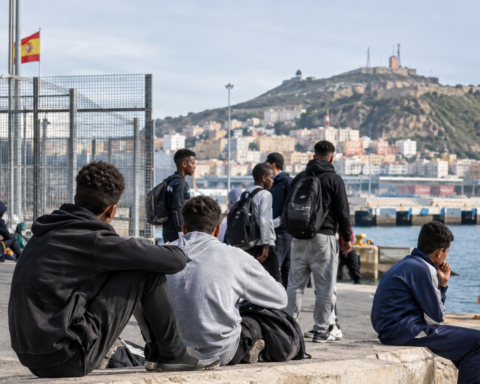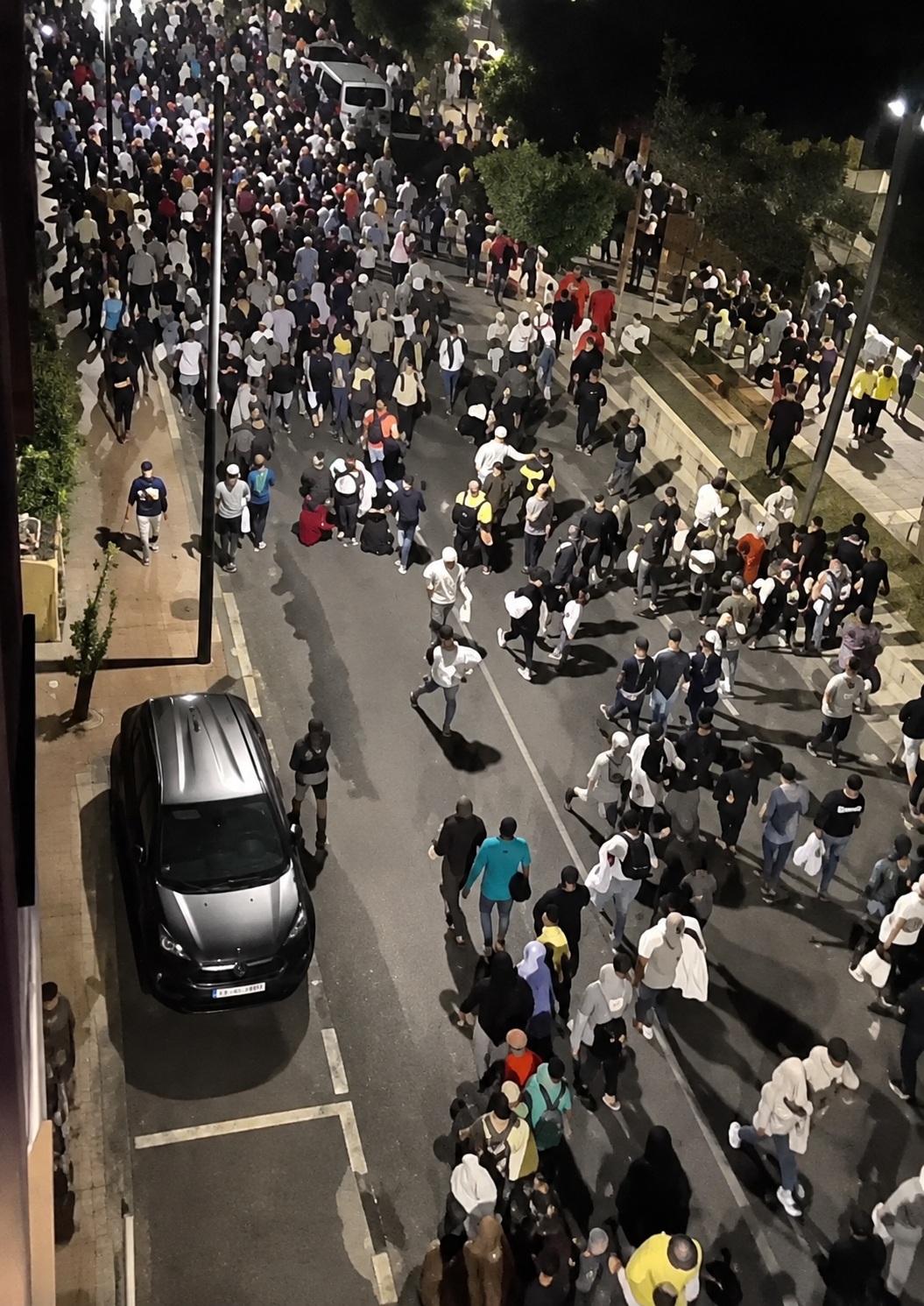
Crowding and tense situations arose during the transfer of migrants from makeshift camps on the beaches of Ceuta to a new reception center at the port. Personnel from the Civil Guard, the National Police, and the military escorted the transport. The planned facility has the capacity to accommodate up to 1,800 people.
Spain Expat Press Editorial Team
by Marlon Gallego Bosbach
The relocation of migrants from the coastal areas of Ceuta to a makeshift camp at the port caused unrest on Thursday. A large crowd gathered during the transfer. The situation was marked by chaos and tension, requiring intervention by riot police units.
The aim of the operation was to clear the makeshift shelters on the coast and transfer the people housed there to the newly established reception center in the port area.
Security forces oversee the clearing of the beaches
Officers from the Guardia Civil and the Policía Nacional, as well as military personnel, took part in the operation. They oversaw the clearing of the coastal areas and escorted the migrants to the temporary camp. During the march, security forces repeatedly urged the people to remain calm. However, the situation remained tense, requiring the transport to be halted several times.
As events unfolded, a large crowd gathered. Riot police had to intervene to bring the situation under control and allow the transfer to proceed.
Temporary reception center on two port sites
The people are to be accommodated in a temporary reception facility set up on two plots of land in the port of Ceuta. The sites belong to the relevant port authority.
The camp is intended to accommodate migrants who had previously been living in makeshift facilities along the coast. According to official figures, the two sites can accommodate a total of up to 1,800 people.
The facility is intended as a temporary solution. It is designed to help organize the accommodation of migrants and relieve the situation on the beaches.
Proximity to utility facilities raises safety concerns
However, the location of the new warehouse raises questions regarding safety. The two sites are situated near local utility facilities and critical infrastructure.
This close proximity raises concerns that an incident could lead to an accident. Consequently, ensuring the safety of the people housed there and of the surrounding facilities presents an additional challenge for those responsible.
Strained situation regarding accommodation
The transfer highlights the difficulties Ceuta faces in accommodating migrants. The makeshift camps on the beaches are to be cleared, and the people moved to suitable reception areas.
With the new harbor camp, accommodation with a capacity of up to 1,800 people is available for this purpose. The report does not indicate how the situation will develop following the relocation or whether further accommodation options will be required.
The events demonstrate how tense the situation was during the transfer. The authorities face the task of organizing the relocation of the people while simultaneously ensuring security in the port area.