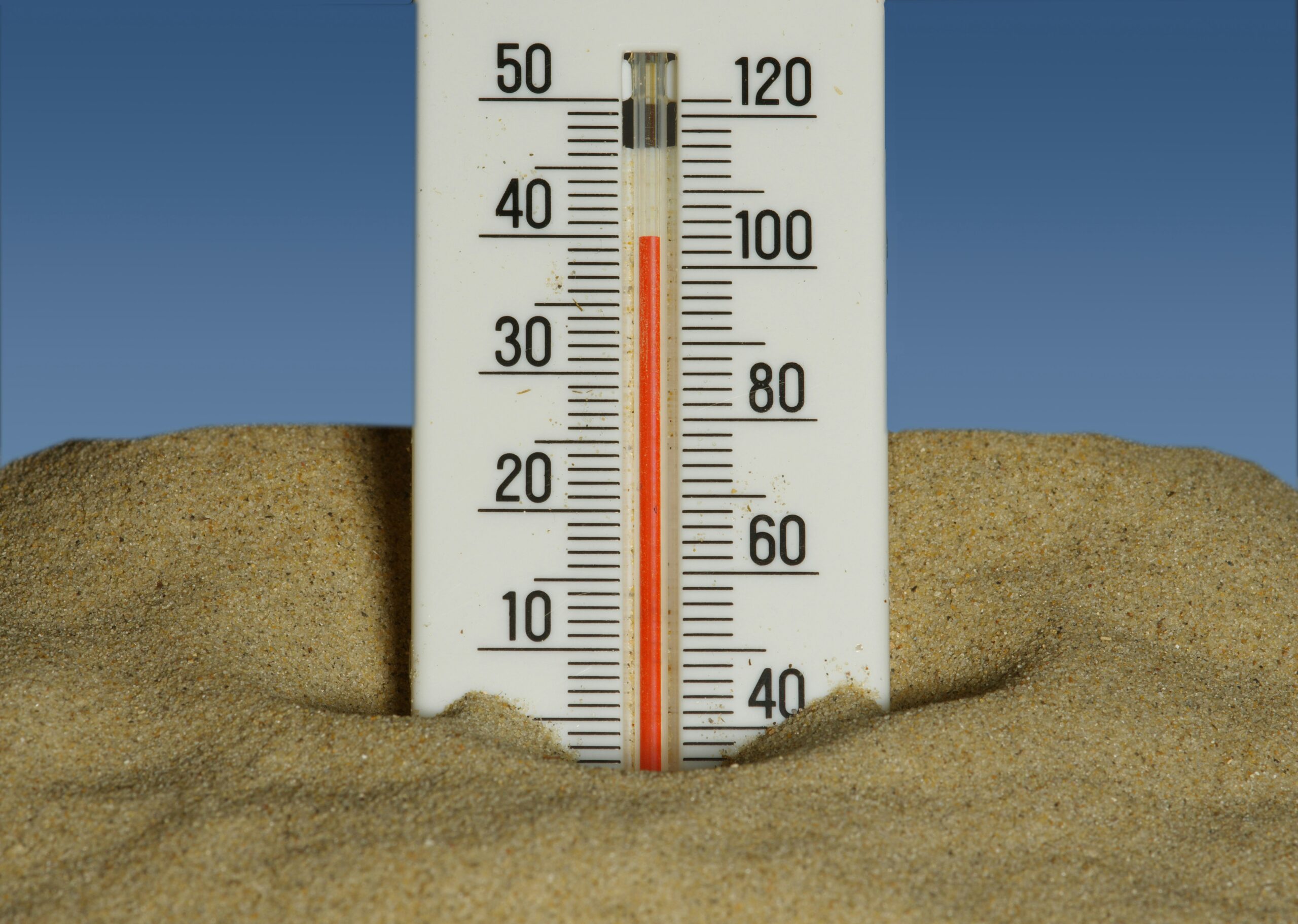
Residents and holidaymakers on the Costa Blanca are currently experiencing one of the most uncomfortable weather spells of the summer. It is not just the soaring temperatures causing concern, but above all the exceptionally high humidity. Spain’s national weather agency, AEMET, has extended its weather warnings across large parts of Alicante province. Meteorologists expect the current heatwave to reach its peak on Thursday.
Spain Expat Press Editorial Team
by Marlon Gallego Bosbach
While temperatures of 40°C or higher are forecast inland, it is the oppressive humidity along the coast that is making conditions particularly uncomfortable. Although daytime temperatures on the Costa Blanca are generally expected to range between 31°C and 35°C, the exceptionally high humidity makes it feel significantly hotter. Many residents are already describing the conditions as “oppressive tropical heat” that offers little relief, even after sunset.
High humidity makes it feel significantly hotter
The unusually oppressive conditions are the result of several weather factors combining at once. Over recent weeks, the Mediterranean Sea has warmed considerably, releasing large amounts of moisture into the atmosphere. At the same time, light winds are providing little to no cooling, allowing the humid air to linger along the coastline.
As a result, the human body is less able to regulate its temperature through sweating. The consequence is that the perceived temperature in many areas is significantly higher than the actual readings shown on thermometers. Under these conditions, temperatures just above 30°C can feel like well over 40°C.
The traditional holiday destinations along the Costa Blanca are among the areas most affected, including Alicante, Benidorm, Altea, Calpe, Dénia, Jávea, Torrevieja and Orihuela Costa.
Tropical nights offer little relief
Even after sunset, conditions barely improve. In many coastal areas, temperatures remain between 24°C and 26°C overnight. Meteorologists refer to these conditions as so-called tropical nights, when temperatures fail to drop below 20°C and provide little opportunity for the body to recover from the daytime heat.
These persistently high overnight temperatures are proving to be a significant strain for many people. Homes have little chance to cool down, sleep problems are becoming more common, and the body has hardly any opportunity to recover from the daytime heat. Older people, young children and those with cardiovascular conditions are considered particularly vulnerable.
Heatwave to peak on Thursday
According to Spain’s national weather agency, the third heatwave of the summer will reach its peak on Thursday. Yellow, orange and, in some regions, even red weather alerts are already in place across large parts of Spain.
While temperatures above 42°C are expected locally in the south of Alicante province and neighbouring areas, the coast will also continue to be affected by the extreme heat. Meteorologists are additionally warning of isolated heat-related thunderstorms, which could bring strong gusts of wind and hail in some locations. However, no lasting cool-down is expected in the immediate future. Temperatures may only begin to ease slightly in some parts of the country towards the weekend.
Health authorities urge caution
In light of the exceptional weather conditions, Spanish authorities are urging residents and holidaymakers to take extra precautions. Direct exposure to the sun should be avoided wherever possible, particularly during the hottest hours of the day from midday until the late afternoon.
Experts also recommend drinking plenty of water – even before feeling thirsty – in order to prevent dehydration. Physically demanding activities should, where possible, be moved to the early morning or late evening hours. Wearing light-coloured, loose clothing can also help protect the body from overheating.
To keep indoor temperatures as low as possible, windows and shutters should remain closed during the day and only be opened during the cooler night-time hours. Particular attention should be given to elderly people, children and those with pre-existing health conditions, who are especially vulnerable during periods of extreme heat.
Pets also require access to sufficient water and shade and must never be left inside parked vehicles under any circumstances. At the same time, the risk of wildfires remains high across many parts of Spain due to the ongoing dry conditions and extreme heat, prompting authorities to continue issuing urgent warnings for people to exercise caution.
Summer holidays become a test of endurance
For many holidaymakers, the current weather conditions are proving challenging. While visits to the beach in the early morning or evening remain possible, activities during the midday hours are increasingly becoming a strain. Even along the coast, the combination of hot air and high humidity is causing the summer of 2026 to be perceived as exceptionally oppressive in many areas.
Meteorologists continue to monitor the situation closely. It remains unclear whether a lasting improvement in conditions will follow once the heatwave reaches its peak. One thing is certain, however: the coming days are set to be among the hottest and most humid of the summer so far on the Costa Blanca.