Semana Santa in Andalusia is far more than a religious celebration.
It is a comprehensive cultural event in which history, art, collective identity and emotion come together. For one week, life in cities such as Seville, Málaga, Granada or Córdoba changes fundamentally: everyday routines fade into the background, and public life moves onto the streets.
For outsiders, this phenomenon can initially be difficult to access. However, those who engage with it experience an exceptionally dense and powerful form of collective expression.
Spain Press Editorial Team
The Pasos: A visual narrative of the Passion of Christ
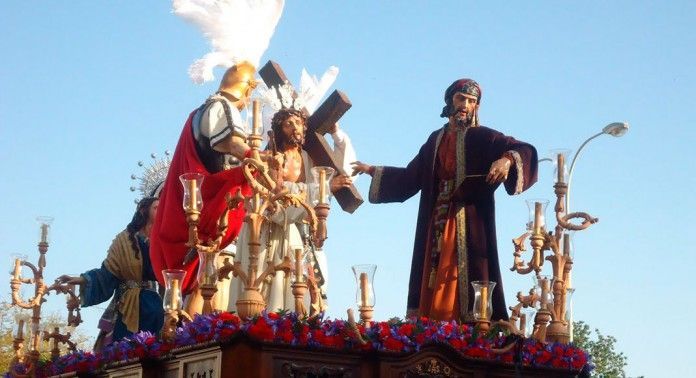
The so-called Pasos are richly decorated platforms on which religious figures are carried through the streets. They represent an impressive visual narrative of the Passion of Christ.
The Cristo Pasos depict specific scenes from the final hours of Jesus: the prayer in the Garden of Gethsemane, the arrest, the trial, the Way of the Cross or the crucifixion. Many of these representations date back to the Baroque period and originally served as a form of popular catechesis — images replaced the written word.
However, there is no strict chronological order. Each brotherhood (Cofradía) is devoted to a particular scene, meaning that the overall impression unfolds more as an emotional sequence than as a linear story..
The Virgen Pasos, on the other hand, do not depict a specific action, but rather an emotional state. The so-called Dolorosas embody pain, loss and quiet dignity. While the figures of Christ present the events, the Marian figures convey the emotional dimension.
The Cofradías: Tradition and belonging
Each procession is organised by a Cofradía — a brotherhood whose roots often go back several centuries.
A defining element of Semana Santa are the Nazarenos, who take part in the processions wearing long robes with pointed hoods (capirotes).
The term “Nazareno” derives from the Spanish Nazareno or Nazareno de Jesús — meaning “Jesus of Nazareth”. Historically, the name refers to those who follow Christ or symbolically identify with his suffering.
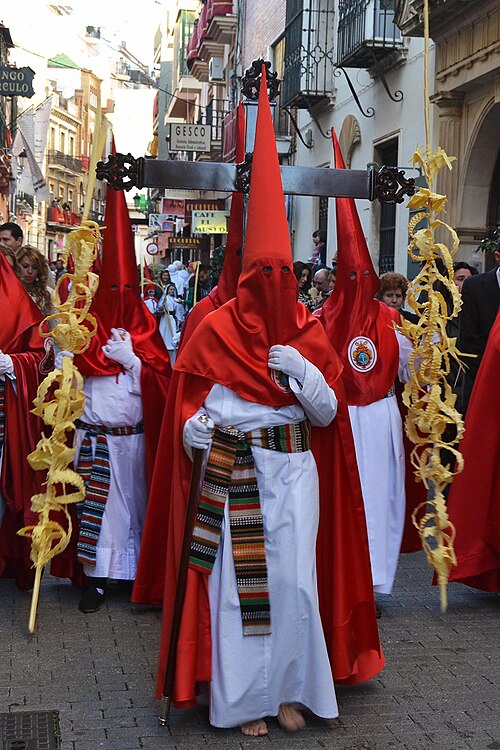
This figure has its origins in medieval penitential rituals. As early as the 15th and 16th centuries, believers appeared publicly as penitents, often barefoot or dressed in simple garments, to express repentance and seek forgiveness. Over time, these traditions developed into today’s brotherhoods and their characteristic attire.
The present-day appearance of the Nazarenos follows a clear structure:
- Long tunics in the colours of their respective Cofradía
- A capirote (pointed hood) that fully covers the face
- Often a cape and gloves
- Candles, crosses or other religious symbols
The full covering of the face is central: it represents anonymity and humility. Penance is not displayed, but carried out without personal identity — before God, all are equal.
For international visitors, it is important to understand that this tradition has no connection to modern political or ideological symbolism. Its origins are purely religious and historically rooted.
The Nazarenos usually move through the streets in complete silence, often for many hours. Through their uniformity and discipline, they decisively shape the visual character of the processions — and contribute significantly to the unique atmosphere of Semana Santa.
These communities are deeply embedded in the social fabric. Membership is often passed down within families, and each neighbourhood strongly identifies with its own brotherhood.
Clothing and behaviour: An expression of respect
Semana Santa is also a social event in which clothing plays an important role.
Men generally wear suits or at least a jacket. Women dress elegantly and discreetly. Families attend together and often spend many hours in public spaces.
This is not a fashion statement, but a form of respect towards the tradition and the atmosphere of the moment.
Important note for visitors:
Even though Andalusia is warm — avoid wearing shorts or sleeveless shirts during the processions if possible. No one will confront you, but it is widely considered inappropriate and disrespectful to the significance of these days.
The Mantilla: Tradition, aesthetics and restraint
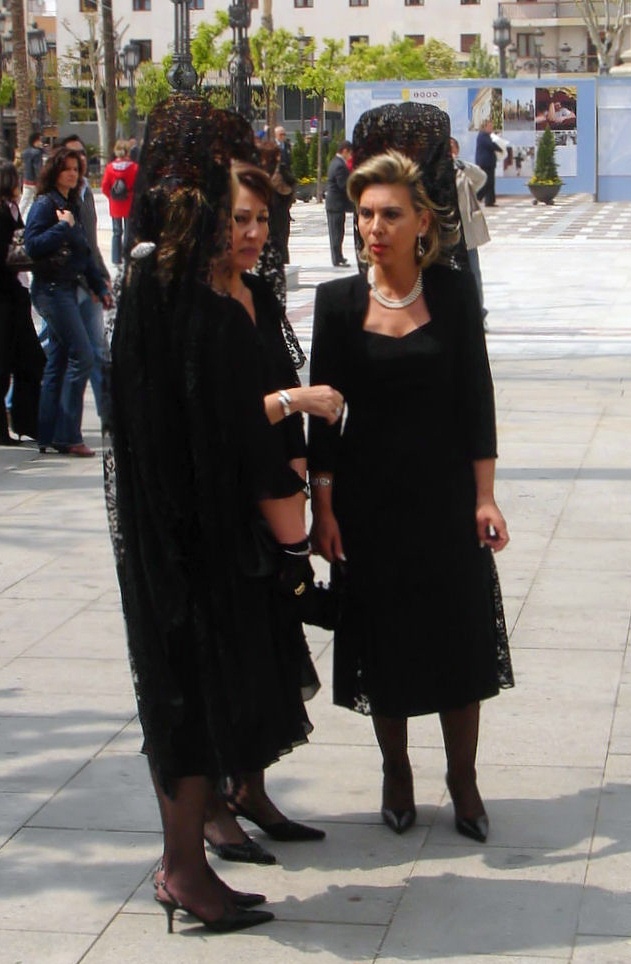
A particularly characteristic element is the Mantilla, a traditional lace veil, usually worn in black.
The classic appearance follows clear, unwritten rules:
- A black dress, usually knee-length or slightly below
- A simple peineta (comb) on which the mantilla is placed
- The mantilla falls elegantly over the shoulders and back
- Hair is worn up to emphasise the shape
- Overall impression: simplicity, elegance and restraint
The mantilla symbolises dignity, tradition and — especially during Semana Santa — also mourning and connection to the image of the suffering Virgin Mary
Atmosphere: A combination of the senses
The impact of Semana Santa unfolds through a complex interplay:
- The scent of incense
- Processional music with slow, solemn marches
- Moments of intense silence
- Spontaneous songs (Saetas) from balconies
These elements create an atmosphere that is both ceremonial and emotionally charged.
La Madrugá: Der emotionale Höhepunkt
La Madrugá: The emotional peak
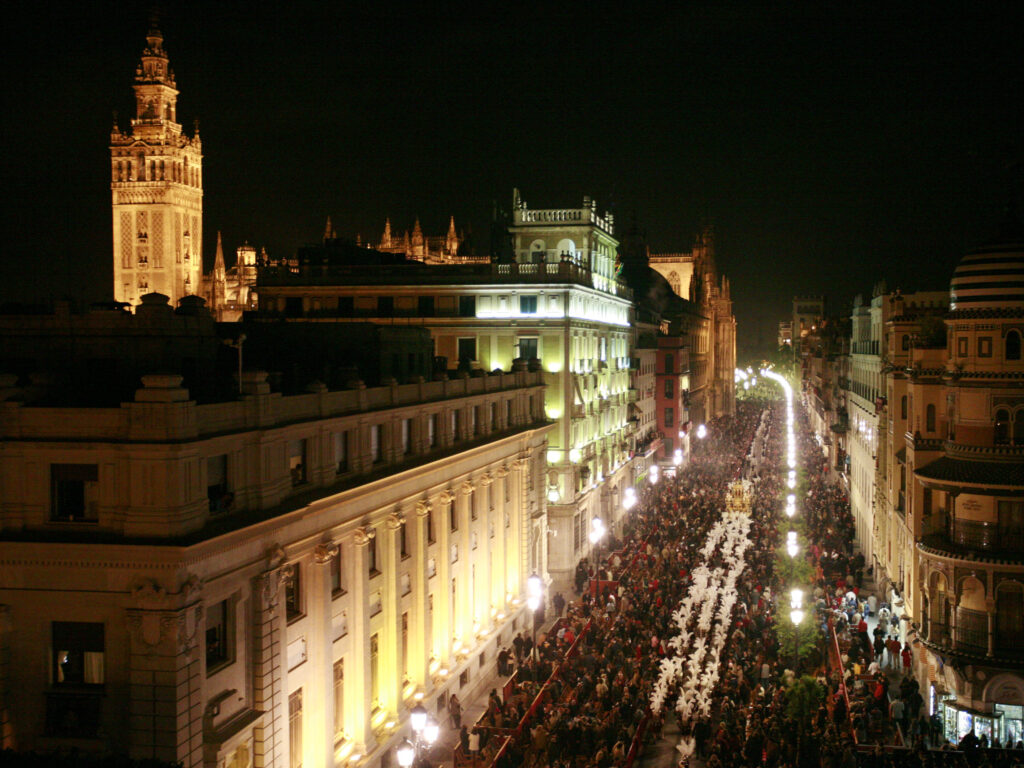
The night from Maundy Thursday to Good Friday, known as La Madrugá, is considered the most intense part of Semana Santa.On this night, some of the most important brotherhoods pass through the streets. Large crowds, deep silence and a particularly high emotional intensity define these hours.
Gastronomy: Tradition on the plate
Tradition is also reflected in the cuisine:
- Torrijas (sweet bread soaked in milk and egg)
- Pestiños
- Cod-based dishes
- Traditional stews
These dishes originate from religious rules and historical eating habit
A collective experience
Semana Santa is not an isolated event, but a shared experience.
Familien, Freunde und ganze Stadtviertel nehmen daran teil. Das Warten, das Gehen und das gemeinsame Erleben sind integraler Bestandteil der Tradition.
More than religion: Expression of a society
The unique intensity of Semana Santa lies in its complexity. It brings together:
- History
- Art
- Religion
- Community
- Emotion
Even without a religious background, its impact can be understood: it is the moment in which a society makes itself visible.
Note for visitors
If you experience Semana Santa, do not try to see everything.
Choose specific moments — and take the time to experience them consciously.
That is where its true meaning lies.