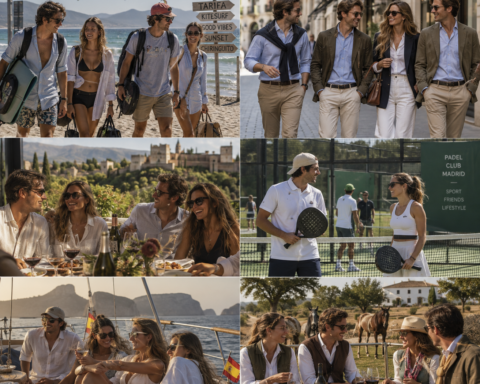
In Spain, going out is never simply a matter of leaving the house. It is almost a way of understanding life itself. While in many European countries social gatherings often revolve around an early dinner or a brief appointment, in Spain the street becomes an extension of the living room. A terrace, a bar or a town square can turn into the perfect setting for hours of conversation, laughter and shared time.
Spain Expat Press Editorial Team
One of the most typical customs is tapeo — going out for tapas. But this is about much more than sampling small portions of food. It is, above all, a social ritual. People do not necessarily spend the whole evening in a single restaurant. They often move from bar to bar, trying different specialities and, more importantly, enjoying the company. A tapa may be a slice of tortilla, a plate of croquettes, cured ham, olives or a modern culinary creation. What matters is not only the food, but the moment that comes with it.
Closely linked to this is terraceo — spending time on terraces. Few words describe the Spanish relationship with outdoor life better. Thanks to the mild climate in many parts of the country, terraces remain full for much of the year. A quick coffee can easily turn into a two-hour conversation, and a beer in the sun may well become an entire afternoon with friends.
In recent years, another phenomenon has gained considerable ground: tardeo. The word refers to going out in the afternoon. It emerged as an alternative to long nights out and has now become a genuine trend. People meet after lunch, enjoy tapas, listen to music, dance and spend time together — without necessarily staying out until the early hours. Often, tardeo begins in the late afternoon and stretches well into the evening.
A regular feature of many tardeo afternoons is copeteo. This does not simply mean “having a drink”. It refers to the relaxed ritual of enjoying a copa — a gin and tonic, whisky, rum or another long drink — in good company. It often begins after a meal or during tardeo itself. People change venue, the music gets louder, the atmosphere becomes more relaxed, and what began as a quiet afternoon can quickly turn into a long evening of conversation and good humour.
And, of course, there is bailoteo: going dancing, listening to music, moving to the rhythm and enjoying the moment. From a village festival to a nightclub in a major city, music is deeply embedded in Spanish social life. Dancing does not always require a special occasion. Sometimes, all it takes is a familiar song to transform the mood completely.
Then there is another word increasingly heard in Spain: salseo. It means gossip, chatter, social buzz and a little bit of drama — usually in a light-hearted, entertaining sense.
The word comes from salsa, meaning sauce. And that is precisely the idea: the seasoning of social life. Salseo means that something is happening. Conversations, little stories, rumours, laughter and that typically Spanish mixture of curiosity, closeness and entertainment. It may refer to harmless gossip among friends, but it can also describe the lively atmosphere of a place.
Because in Spain, a little salseo is often part of the picture. Wherever people gather — sitting on a terrace, sharing tapas or extending the afternoon through tardeo — stories begin to emerge. And it is precisely these small moments that make Spanish social life so distinctive.
Behind all these words — tapeo for going out for tapas, terraceo for terrace life, tardeo for afternoon socialising, copeteo for long drinks in good company, bailoteo for dancing and salseo for the lively social buzz — lies the same idea: enjoying the moment.
Spain is a country where social life plays a central role. Relationships are often nurtured around a table, a drink, music or a conversation that seems to have no end.
It is more than simply going out. It is a small ritual. And perhaps that is one of the things that most surprises visitors: in Spain, people do not meet merely to do something. They meet to be together.