Only a few years ago, Spain’s discussion about unaccompanied migrant children centred largely on protection, care and integration. Today, security, border control and return increasingly dominate the conversation. In the aftermath of the latest Ceuta crisis, a new poll suggests just how far attitudes have moved – even among Socialist voters.
Spain Expat Press Editorial Team
Few terms capture the transformation of Spain’s migration debate quite like four letters: MENA.
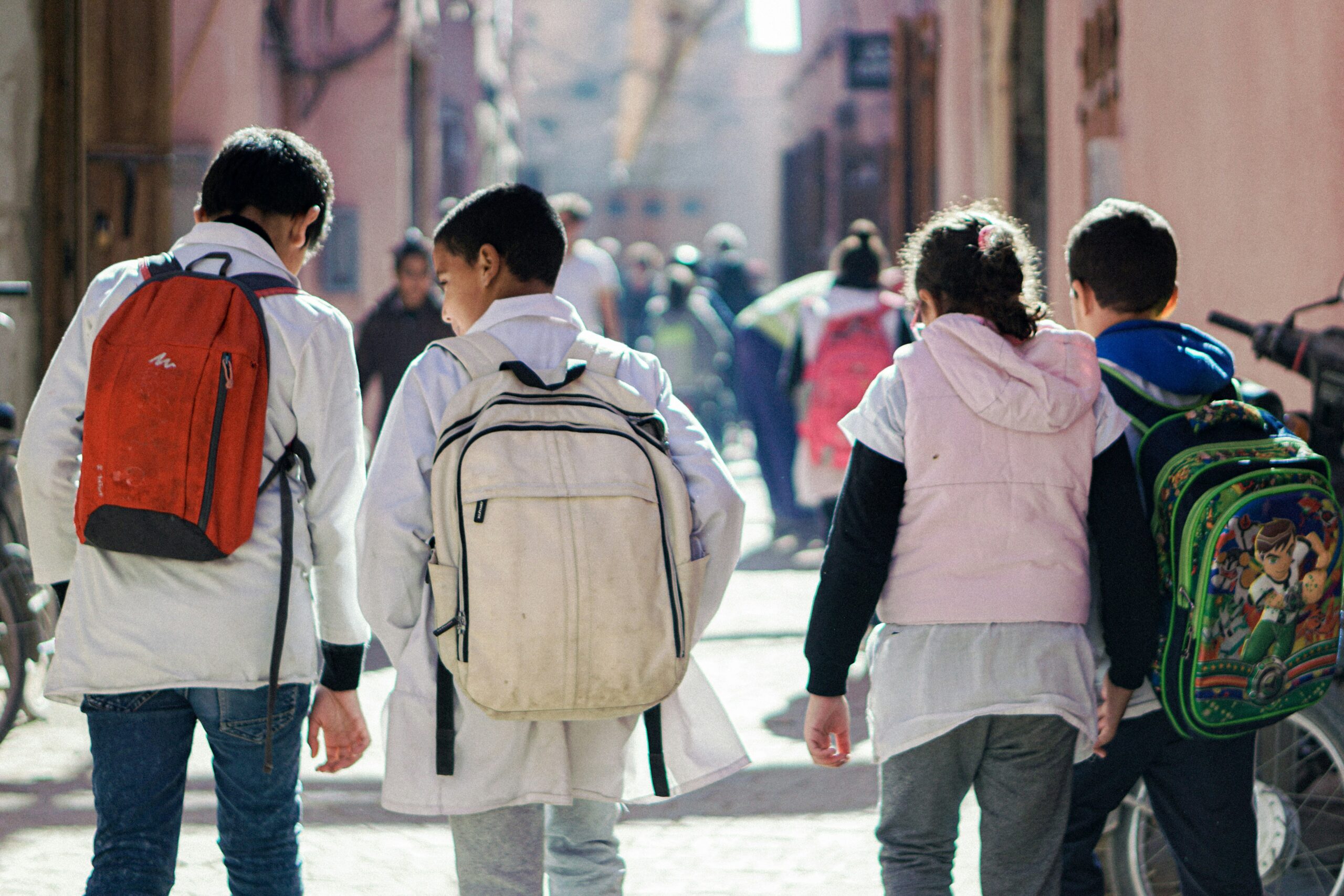
The acronym stands for menor extranjero no acompañado – an unaccompanied foreign minor, a child or teenager in Spain without a parent or responsible adult.
Once a largely bureaucratic classification, “MENA” has acquired a distinctly negative connotation in much of Spain’s public debate. The word itself has become politically and socially charged, frequently associated in public discourse with irregular migration, pressure on reception centres, insecurity and crime.
That linguistic transformation matters.
A term originally created to describe a child’s administrative and legal situation is now often used as though it described a particular social group, with all the assumptions and stereotypes that can come with it.
In everyday political debate, saying “MENA” can therefore evoke something very different from simply saying “unaccompanied child”.
That alone says much about what has changed.
For years, the emphasis was primarily on vulnerability. These were children arriving alone in a foreign country, often from difficult circumstances, for whom the state had a particular duty of care.
That legal obligation remains. But the political conversation surrounding it looks very different today.
Questions about accommodation and integration are increasingly accompanied by concerns over capacity, cost, public safety and border control. And, particularly in the case of young Moroccans, another question has moved to the forefront: if their country of origin is safe, stable and directly borders Spanish territory, why can they not return?
The latest crisis in Ceuta has made that question considerably more urgent.
A striking 80 per cent
A recently published poll offers perhaps the clearest indication yet of the change in mood.
Around 80 per cent of respondents said they favoured returning unaccompanied Moroccan minors to Morocco, including making the necessary legal changes if required. Just nine per cent backed the government’s approach of distributing them among Spain’s autonomous communities.
More striking still is what happens when the figures are broken down politically.
Among Socialist voters, 77 per cent reportedly support return.
One poll cannot speak for an entire country. But figures of that magnitude are difficult to dismiss, particularly when support extends well beyond the conservative electorate.
Migration is no longer fitting neatly into Spain’s traditional left-right divide.
The change began before Ceuta
The signs were already visible well before the latest border crisis.
In 2024, Spain’s state polling institute, the CIS, recorded a sharp rise in the number of people identifying immigration as one of the country’s principal problems.
Interestingly, the picture changed when Spaniards were asked about the problems affecting them personally. Housing, the economy, healthcare and employment tended to matter considerably more.
That distinction is important.
Public concern about immigration is not necessarily the result of direct personal experience. It is also shaped by politics, television footage, social media and highly visible events at Spain’s borders.
Ceuta has now added another powerful layer to that perception.
Crime has become part of the conversation
Perhaps nowhere is the change more sensitive than on the question of security.
Among parts of the Spanish public, unaccompanied migrant minors have increasingly become associated with fears of crime, antisocial behaviour and insecurity.
Cases involving migrant teenagers or young adults who originally arrived in Spain as unaccompanied minors can attract intense attention, particularly online. An individual crime can consequently become part of a much broader narrative about migration.
That requires an important distinction.
Being classified as a MENA says nothing about whether someone is a criminal. It is an administrative status, not a criminological category, and treating an entire group as responsible for offences committed by individuals would be misleading.
But perception matters politically.
Governments do not operate in a world of statistics alone. They also respond to what voters believe is happening around them.
And increasingly, the language surrounding these minors is no longer simply about protection and integration. It is also about security, pressure on public services and control.
Morocco changes the equation
There is another reason why this particular migration debate has developed differently from previous refugee crises in Europe.
Morocco is not at war.
For many Spaniards, that creates an obvious distinction between young Moroccans arriving in Ceuta and refugees who fled the Syrian civil war or Ukrainians escaping Russia’s invasion.
That distinction does not mean that Moroccan children cannot be vulnerable.
Poverty, limited opportunities, difficult family circumstances and the prospect of education or employment in Europe can all drive a teenager to leave home. The absence of war does not remove Spain’s obligation to protect a child when protection is required.
But politically, Morocco’s circumstances matter.
It is a functioning state immediately across the border from Ceuta. And that leads many Spaniards to ask why young Moroccan citizens should be permanently accommodated in Spain and redistributed across the country rather than, where it is safe and legally possible, reunited with their families or returned to appropriate protection arrangements in Morocco.
That question has gradually changed the entire direction of the argument.
Why redistribute if return is possible?
For years, Spanish politics concentrated on how responsibility for unaccompanied minors should be shared among the autonomous communities.
Increasingly, voters are questioning the premise.
Rather than asking where in Spain these children should be sent, they are asking whether some should remain in Spain at all.
Legally, however, matters are far more complicated.
Unaccompanied children cannot simply be treated like adult irregular migrants. Spanish and international law require the authorities to consider the best interests of each child. Their family circumstances and the conditions awaiting them in their country of origin must be assessed.
There can therefore be no automatic collective return simply because a minor is Moroccan.
And this is where Spain now faces an increasingly uncomfortable collision between law and politics.
A large section of the electorate appears to want a relatively straightforward answer: return those who can go back to Morocco.
The state, however, is obliged to answer a more complicated question: can this particular child be returned safely and in accordance with the law?
Between those two positions lies much of the tension surrounding Spain’s migration policy today.
The significance of the latest polling therefore goes beyond the headline figure of 80 per cent.
It suggests that the political argument itself has moved.
Spain is no longer discussing unaccompanied migrant minors almost exclusively through the language of reception, protection and redistribution. Security, capacity and return have become central to the conversation – and support for that shift now appears to extend far beyond the political right.
Perhaps the clearest evidence of the transformation is the word itself.
“MENA” began as a neutral administrative acronym. Today, for many people in Spain, it carries an unmistakably negative meaning.
The legal protections afforded to children have not disappeared.
What has changed is the way society talks about them – and the willingness to regard permanent reception and redistribution within Spain as the obvious answer.