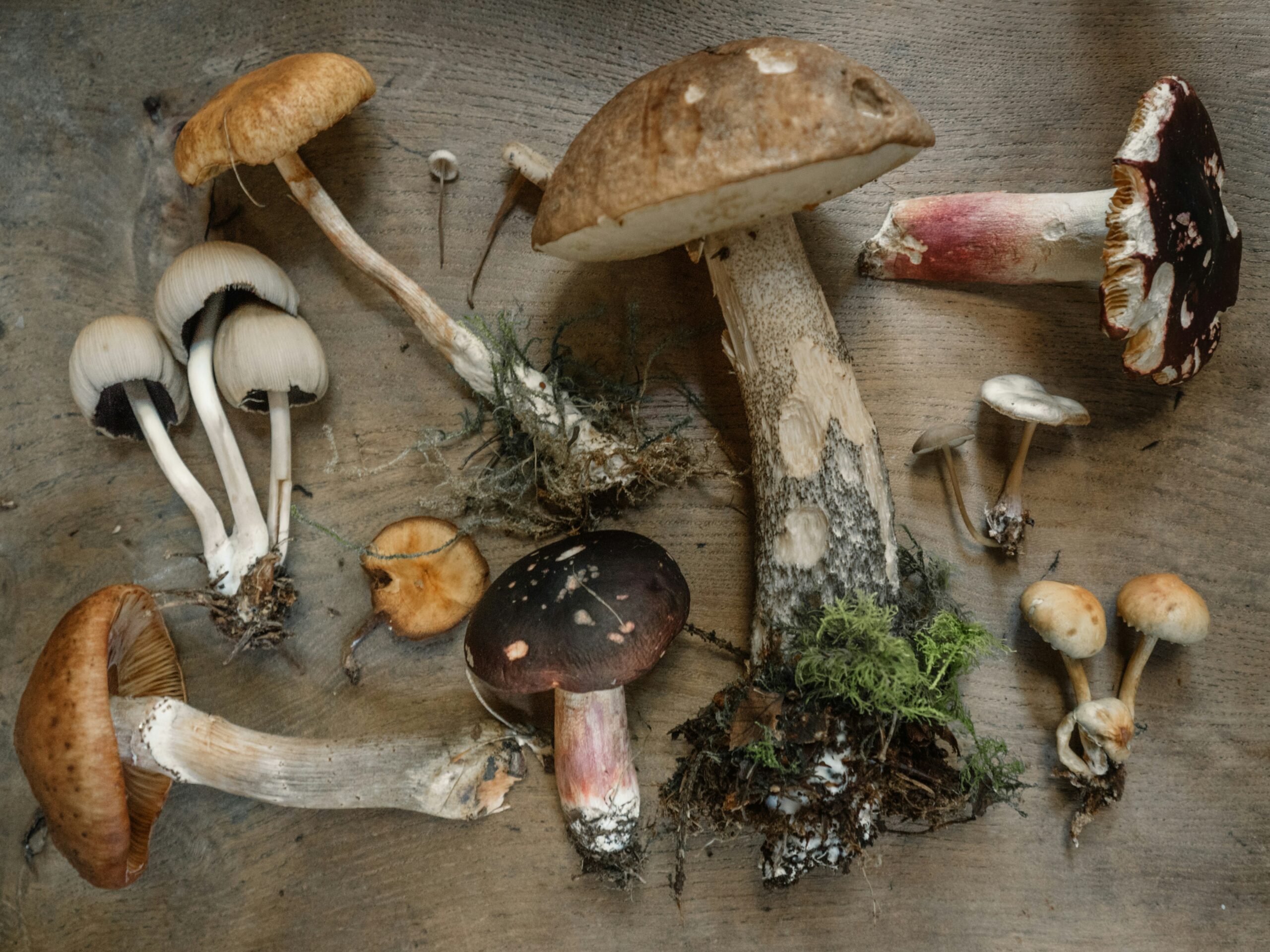
When the first autumn rains arrive, thousands of people in Spain head for the woods with a wicker basket and a knife, hoping to find saffron milk caps, ceps and chanterelles. Foraging for wild mushrooms is a deeply rooted tradition in Spain and an important source of income for many rural areas. In autumn, whole villages come alive with mushroom markets, mycology festivals and restaurants serving seasonal menus. After an exceptionally poor start, this year’s season is finally gathering pace.
Spain Expat Press Editorial Team
When is mushroom season?
The main season runs through the autumn, peaking in October and November, but the exact timing depends on the weather. The ideal conditions are daytime temperatures of 20 to 22C and nights of around 5 to 6C without frost, combined with several weeks of sustained humidity and little drying wind.
Different species appear in turn. The first to emerge are those that feed on dead organic matter, which can fruit within days of conditions becoming favourable. They are followed by the most prized autumn varieties, such as the saffron milk cap, the cep and the chanterelle. Late-season species, including the grey knight, woodwaxes and the beefsteak fungus, often do not appear until December. There is also a spring season, when foragers look for morels, March woodwaxes and fairy ring mushrooms.
The weakest start in decades
This autumn got off to a dismal start. In El Bierzo, in the province of León, the season was running two months behind, and local mycologists described it as the worst in half a century. In Catalonia, one expert predicted at the end of October that the northern mountain areas would produce only around a fifth of the usual yield, pushing market prices to record highs.
The weather was to blame. A very dry summer was followed by a September with almost no rain. The underground network of fungal threads needs water in the soil to produce mushrooms, even when temperatures are right.
The picture varied from region to region. In the damp beech and oak forests of the north, Atlantic humidity kept the season above average. In Madrid and the interior, it was dry and late, with only sporadic finds. In Mallorca, mushrooms appeared in scattered, small quantities. In Galicia, rain at the end of October rescued the season, although variety remains limited.
Rain brings a turnaround
The situation has since improved. Rainfall over recent weeks has revived the season in many areas. In Catalonia, production has risen sharply over the past fortnight, particularly of saffron milk caps, with the November rains bringing the season back to life in central Catalonia, the pre-coastal ranges and along the coast. Even so, it will not be a good year: experts expect the final harvest to reach only about half the usual volume.
Prospects are now best at lower altitudes and near the coast, where frosts arrive later. In mid- and high-altitude areas, by contrast, cold weather and frost will sharply limit production as November goes on. Anyone planning a foraging trip would therefore do better to head for the pine forests of the foothills rather than the high mountains. If the weather stays mild, the season could continue into December, bringing the late species with it.
The most popular edible mushrooms
Saffron milk cap (níscalo, or rovelló in Catalan): Spain’s favourite wild mushroom, especially in Catalonia. It grows in pine forests across the country and is easily recognised by the carrot-coloured milk it releases when cut.
Cep or penny bun (boletus or hongo): found in beech, oak, chestnut and pine woods, and highly prized by top chefs.
Chanterelle (rebozuelo, or rossinyol in Catalan): firm and aromatic, it pairs well with meat dishes. Foragers should beware of the false chanterelle, which looks very similar.
Horn of plenty (trompeta de la muerte): almost black and easy to identify, but hard to spot, as it is small and blends into the leaf litter.
King oyster mushroom (seta de cardo): grows in meadows and pastures and is a classic, particularly in Castile.
Caesar’s mushroom (amanita cesárea or oronja): one of the finest edible mushrooms, found in oak and holm oak woodland. It must never be confused with the poisonous fly agaric.
Where are the best foraging areas?
Soria (Castile and León): The Pinares district is one of the largest mushroom areas in Spain. Ceps, saffron milk caps and king oyster mushrooms are the most common finds, and more than 150 species have been recorded in total. The village of Navaleno is the best starting point, and its mycology centre offers advice on where to look and what to find. Covaleda, Duruelo de la Sierra, Vinuesa and the Cañón del Río Lobos nature park are also worth a visit.
Catalonia: The Berguedà district, in the north of the province of Barcelona, is regarded as the region’s mushroom paradise, especially around Castellar del Riu, which is known for its saffron milk caps. The neighbouring Solsonès district is less well known but equally productive. The Montseny massif near Barcelona is a particularly good place to find horn of plenty in autumn.
Navarre and the Basque Country: The Ultzama valley, just over 20 kilometres from Pamplona, has oak and beech forests that make it one of the richest mushroom areas in the region. The Irati forest is known for its chanterelles. In the Basque Country, the Gorbeia nature park and its Altube beech forest are a long-standing favourite.
Aragon: The Tena valley in the Aragonese Pyrenees is a good area for ceps, and the Sierra de Albarracín has one of the largest mycological parks in Spain.
Andalusia and Madrid: In the south, the Sierra de Aracena in Huelva and the Los Alcornocales nature park are well-known foraging areas. In the Madrid region, most picking takes place in the pine forests of the Sierra de Guadarrama.
What are the rules?
Each region sets its own rules, and they vary considerably.
Castile and León has the strictest regime. A permit is always required, and even outside designated areas the limit is 5kg per person per day. Permits are available at micocyl.es for a single day, several days or the whole season. A free app uses GPS to show whether you are in a regulated area, even without mobile coverage.
Aragon: Recreational foragers may take up to 3kg a day in unregulated woodland, or up to 12kg with a permit in regulated areas. Permits are issued by the local town hall.
Navarre and La Rioja: Without a permit, the limit outside designated areas is 3kg per person per day.
Catalonia: There is no general permit system, but rules do apply, including a limit of 3kg per person per day and the requirement to use a ventilated basket.
Valencia region: No permit is needed for personal use, provided you collect no more than 6kg per person per day. Commercial foragers always need a permit, regardless of quantity.
Madrid region: A permit is required only within the Sierra de Guadarrama National Park. Anyone caught foraging there without one faces a fine of between €1,000 and €3,000.
The same rule applies everywhere: mushrooms should be carried in a wicker basket rather than a plastic bag, so that spores can spread. Cutting mushrooms with a knife and avoiding disturbing the forest floor helps protect the fungal network for the following season.
Mycology events in November
For beginners, mycology festivals offer guided walks, exhibitions, identification help and tastings. In Covelo, in the Galician province of Pontevedra, the annual mycology and environment days take place in the second half of November, with talks, guided outings, a mushroom exhibition and tastings. At the end of November, Jimena de la Frontera in Cádiz hosts the Los Alcornocales nature park mycology days, with identification workshops, guided walks and cookery classes. Many local mycological associations (asociaciones micológicas) also run courses and identification evenings throughout the year.
If in doubt, leave it out
Every autumn there are cases of mushroom poisoning in Spain, some of them fatal. The death cap is the most treacherous of all, as it closely resembles several edible species and causes the majority of deaths. Experts advise beginners to start with ceps, which are easier to identify, and never to pick mushrooms with white gills unless they are absolutely certain. Caution is also needed with the blusher, which can be mistaken for the highly toxic panther cap.
If poisoning is suspected, call the emergency number 112. Spain’s National Poison Information Service (Servicio de Información Toxicológica) is available around the clock on 91 562 04 20. Symptoms may not appear until several hours after eating, so any leftover mushrooms should be kept for identification.