Anyone planning to travel by train in Spain today is strongly advised to check their service before setting off. A nationwide 24-hour strike at Renfe on Monday (29 June) is causing significant disruption across the country’s rail network. High-speed, long-distance and regional train services are particularly affected – with the industrial action taking place just as Spain’s peak summer holiday season gets underway.
Spain Expat Press Editorial Team
by Marlon Gallego Bosbach
According to the state-owned rail operator Renfe, a total of 320 train services have been cancelled. Although rail operations have not been completely suspended, passengers across many parts of Spain are facing delays, timetable changes and significantly more crowded trains. The disruption comes at an especially inconvenient time for many holidaymakers travelling at the start of the summer holiday season or beginning their journeys.
These train services are affected
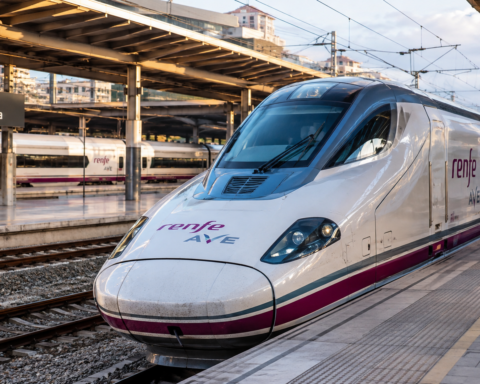
High-speed AVE services, as well as the low-cost Avlo connections, are among the services affected by the disruption. Long-distance trains and medium-distance regional services (Media Distancia) have also been partially cancelled. In addition, commuter trains (Cercanías) in some metropolitan areas are also experiencing disruptions.
To ensure that rail services do not come to a complete standstill during the strike, Spain’s Ministry of Transport has introduced so-called minimum service levels. As a result, around 73% of high-speed and long-distance trains are still operating, along with approximately 65% of regional services. In the commuter network, service levels range between 50% and 75% of the normal timetable, depending on the time of day.
Background to the industrial action
Behind the strike is the Sindicato Ferroviario trade union, which is opposing the planned restructuring of Renfe Mercancías, the company’s freight division. From the union’s perspective, earlier agreements with the company are not being upheld. It is particularly critical of the planned cooperation with private partners in freight transport, as well as concerns that jobs could be lost in the long term and that state responsibilities may increasingly be outsourced.
The union refers to agreements made in 2023 and 2025 which, in its view, have not been fully implemented. The strike is intended to put pressure on company management to reconsider the planned changes.
Renfe: Strike participation so far low
Renfe itself has taken a more cautious view of the strike. According to the company, only a relatively small number of employees have taken part in the industrial action so far. Nevertheless, the previously announced service cancellations had to be implemented, as they were already factored into the timetable as a precautionary measure.
According to the company, the legally required minimum services have largely been maintained. Major disruptions have so far only occurred in isolated cases, although passengers on many routes are still having to contend with restrictions.
Rights for affected passengers
Passengers whose train is cancelled do not have to bear the cost themselves. Renfe is offering affected travellers the option to rebook their ticket free of charge onto another service or to receive a full refund of the fare.
In addition, European passenger rights apply. Depending on the situation, travellers may be entitled to alternative transport, reimbursement of the ticket price, and – if necessary – meals or hotel accommodation. In cases of significant delays, compensation may also be available under certain conditions.
Next strike already announced
Rail passengers could face further disruption in the coming weeks. The union has already announced another nationwide 24-hour strike for 15 July. If no agreement is reached between employee representatives and company management by then, significant disruptions to Spain’s rail network are expected once again – right in the middle of the peak holiday season.
Advice for holidaymakers
Anyone planning to travel with Renfe in the coming days should double-check their connection before departure. Due to the reduced timetable, the remaining services are likely to be significantly more crowded than usual. In particular, high-demand routes between Madrid, Barcelona, Valencia, Seville, Málaga and Alicante are expected to see increased passenger numbers.
Travellers who are flexible should allow plenty of time for their journey and, where possible, switch early to alternative services.