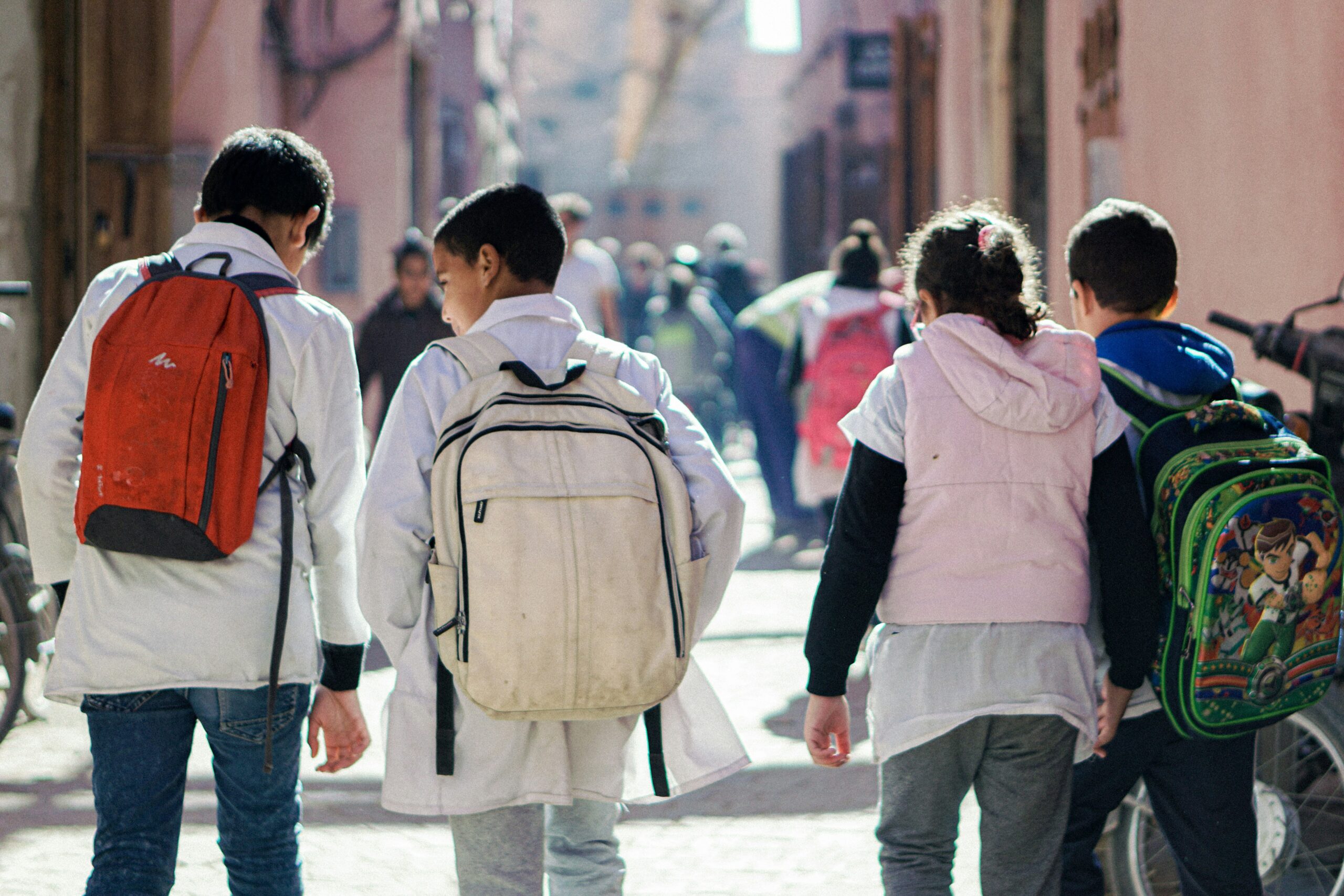
When a foreign family decides to move to Spain, one of the first questions is often: Where will our children go to school?
Spain Expat Press Editorial Team
The good news is that Spain has a diverse and wide-ranging education system. From state schools and publicly funded independent schools to well-established British, German, French and international schools, there are options to suit very different family circumstances.
Choosing the right school can make a significant difference to a child’s integration, language development, family routine and future opportunities.
One issue deserves particular attention: Spain does not have a single national language model. The language used in the classroom can vary considerably between autonomous communities and, in some cases, even between schools. A family choosing Valencia or Catalonia may encounter a very different reality from the one it expected – particularly if it assumes that its children will be taught mainly in Castilian, or Spanish.
How does the Spanish education system work?
Compulsory education in Spain begins at the age of six and continues until the age of 16. This means that all children are generally entitled to a place in the state education system during the compulsory years, beginning with primary school. The same guarantee does not apply in the same way to pre-school or early-years education.
The main stages of education are:
- Early-years education (Educación Infantil, ages 0–6)
- Primary education (Educación Primaria, ages 6–12)
- Compulsory secondary education (ESO, ages 12–16)
- Bachillerato, broadly comparable to sixth-form education (ages 16–18)
- Vocational education and training (Formación Profesional, or FP)
- University
Early-years education is divided into two cycles:
- First cycle: ages 0 to 3
- Second cycle: ages 3 to 6
Neither cycle is compulsory. Although the second cycle is offered free of charge in state and publicly funded independent schools, securing a place in a municipal nursery or pre-school can be difficult, particularly in cities where demand is high. Places are limited, and admissions procedures often take into account factors such as the family’s address, household circumstances, income and the availability of places at the relevant institution.
When no state or publicly funded place is available, many families turn to private nurseries, which generally charge fees. Private provision is particularly common for children aged between 0 and 3, when the public offer is more limited.
Compulsory education begins later, in primary school, normally in the year in which a child turns six. From that point onwards, children are generally entitled to a place in the state compulsory education system – although not necessarily at the particular school chosen by the family.
Although the education system is regulated nationally, Spain’s autonomous communities have significant responsibilities, particularly in relation to language, school calendars, admissions procedures and educational organisation. This decentralisation is especially important for families considering Catalonia, the Valencian Community, Galicia or the Basque Country.
The three main options for international families
1. State schools
State schools are funded by national or regional authorities and provide compulsory education free of charge.
For many families planning to live in Spain permanently, they offer the most direct route to integration. Children learn the languages used at school, make friends with local pupils and become fully immersed in the culture of the region where they live.
Many foreign parents are surprised by how quickly young children acquire a new language. In many cases, after only a few months at school, children are already helping their parents with local expressions and everyday communication.
Spanish state schools do not usually require a uniform. Clothing is generally informal, and children wear their own clothes, apart from particular activities or special circumstances.
Before choosing a state school, however, families should investigate its language model carefully. In some regions, Castilian is not the main language of instruction and may account for only a limited part of the timetable.
2. Publicly funded independent schools
Publicly funded independent schools, known as colegios concertados, are privately run schools that receive public funding. They are popular with both Spanish and foreign families.
Many have a Catholic tradition or a religious ethos. Religious education or faith-based activities may therefore form part of the school’s educational approach. Uniforms are also common, and families should take both these costs and the practical implications into account.
Although compulsory education is publicly funded, families may still have to pay for uniforms, meals, extra-curricular activities, school materials or certain additional services.
Publicly funded independent schools are often heavily oversubscribed. Securing a place can therefore be difficult, particularly in certain regions and year groups. Families should find out about the admissions criteria early and submit applications within the relevant deadlines.
In regions with more than one official language, a publicly funded independent school may also operate an immersion model or teach mainly in the co-official language. The fact that a school receives public funding does not automatically mean that most subjects are taught in Castilian.
3. International and private schools
International schools are particularly popular with foreign families who want to retain the curriculum and language of their home country.
Spain has a substantial number of British, German, French, American and international schools offering programmes such as the International Baccalaureate (IB).
These schools allow pupils to continue with a familiar education system and can make future international moves easier. Spanish families are also increasingly interested in them because they offer children early exposure to an additional language.
German schools, for example, offer a demanding and well-regarded curriculum and are popular with Spanish families. British, French and other international families also increasingly choose them when they want their children to gain an additional language and follow an international educational pathway.
The main disadvantage is usually cost. Annual fees can range from several thousand euros to very substantial sums at the most exclusive schools. In addition to tuition, families may need to budget for meals, transport, uniforms, teaching materials, activities and, in some cases, registration fees.
Which option is best?
There is no universal answer.
The right choice depends on the family’s plans, the children’s ages, how long they intend to remain in Spain, their budget and the degree of integration they want.
Many parents find changing schools particularly difficult for their children. The concern is often greatest when a child already has close friends, established routines and familiar teachers. Nevertheless, many families choose state or publicly funded independent schools for younger children because they tend to adapt quickly and benefit greatly from language immersion.
Later, when children move into secondary education, some families transfer them to private or international schools, particularly for language provision, curricular continuity or preparation for higher education in another country.
If a family plans to remain in Spain for many years, language immersion can offer enormous long-term benefits. It is essential, however, to understand precisely which language the children will learn and which language will mainly be used for teaching.
Families planning to return to their home country or move elsewhere internationally often choose international schools instead, in order to maintain educational continuity.
Language: the decisive factor
Many parents worry that their children may struggle when entering an education system whose language they do not yet speak.
Experience shows that age plays a decisive role.
Young children usually adapt remarkably quickly. For them, language can become a kind of game. It is striking to see how rapidly they learn when they attend a Spanish school every day, hear the languages used there for several hours and use them to communicate with classmates.
Foreign families must nevertheless distinguish between learning a co-official regional language and learning Castilian, or Spanish. In some autonomous communities, children may integrate quickly into the school system and learn Catalan or Valencian while having considerably less exposure to Castilian than their parents expected.
For teenagers arriving in the middle of secondary school, the situation can be more challenging, particularly if they have to study technical or scientific subjects in a language they do not yet speak confidently.
Some families therefore opt for a gradual transition, additional language support or an international school during the first few years. Others prefer direct entry into the regional system in order to accelerate local integration.
Before making a decision, parents should not only check whether a school offers bilingual education, but also establish how much of the timetable is actually taught in each language.
Valencia and Catalonia: an important language warning
Families planning to move to the Valencian Community or Catalonia should investigate the language model of their chosen school particularly carefully.
Many foreign parents are surprised to discover that Castilian may account for only a relatively small part of the timetable. At certain schools and in certain year groups, for example, teaching in Castilian may amount to only three or four hours a week, while the rest of the curriculum is taught mainly in Valencian or Catalan, depending on the region and the model in operation.
This means that a foreign child may quickly learn the region’s co-official language and spend much of the school day using it, while having considerably less academic exposure to Castilian.
For some families, this immersion is an advantage. Children integrate into local society, communicate with classmates and acquire an additional language. For others, it can come as a significant surprise, particularly if they moved to Spain expecting their children to learn mainly Spanish.
The concern is understandable. Castilian is an internationally important language, spoken by hundreds of millions of people and used across much of Europe and the Americas. For many foreign parents, ensuring that their children achieve a strong level of Spanish is therefore a priority.
The co-official language may also have considerable cultural and social value, but it should not be confused with Castilian. Before enrolling a child, families should ask explicitly:
- What is the main language of instruction?
- How many hours a week are taught in Castilian?
- How many hours are taught in Catalan or Valencian?
- Which language is used for the core subjects?
- What level of Spanish do pupils normally reach by the end of the relevant stage?
- Is it possible to choose a model with a higher proportion of Castilian?
- Does the school offer specific support for foreign pupils?
It is not enough for a school to describe itself as bilingual. The term “bilingual” can conceal very different allocations of teaching time. At some schools, both languages are represented relatively equally; at others, one language is clearly dominant.
The situation may also vary according to location, educational stage, type of school and the regulations in force. Families should therefore obtain information directly from the school and the relevant education authority before completing the enrolment process.
An increasingly multilingual education system
Spain has undergone a major educational transformation over recent decades.
Today, bilingual programmes in Spanish and English are common in both state and publicly funded independent schools. In regions such as Andalusia, Madrid and Valencia, many schools also teach a significant proportion of subjects in English.
In Valencia, however, Valencian may introduce a third language into the school day, while Catalonia has a similar situation with Catalan. In other autonomous communities, a second official language may also play an important role, such as Galician or Basque.
It is therefore essential to find out about all the teaching languages used in the specific region where the family intends to live. A child may grow up in an educational environment involving Castilian, English and a co-official language. The balance between them may nevertheless be very different from what the parents expected.
International schools may offer further languages as the main teaching language or as part of the curriculum. In some cases, pupils finish school speaking three languages: the family language, Spanish and the school’s language. In other cases, they may speak the family language, English and Catalan or Valencian, while Castilian becomes less prominent if the family does not reinforce it outside school.
School hours: an important cultural difference
Spanish school hours can surprise many foreign families.
At state schools, lessons usually begin between 8.00 and 9.00 am and finish between 2.00 and 3.00 pm. This depends on the school and on whether it operates a continuous timetable or a split school day.
At 2.00 or 3.00 pm, many children go home for lunch. In many Spanish households, the main meal of the day is eaten at this time, after school.
From around 5.00 or 6.00 pm, children may attend extra-curricular activities, sports training, language classes or private tutoring. Some activities continue until 8.00 or 9.00 pm, after which families return home for dinner.
Snacks and smaller meals between the main meals are also common. Children often eat something during the morning and have another snack after school or before their afternoon activities.
For many foreign families, these hours may seem long and tiring for children. In some countries, children are already in bed by 8.00 pm. In Spain, however, children often have a longer daily routine, particularly when school, extra-curricular activities and social life are combined.
Even so, children usually adapt surprisingly quickly. Within a few months, most become accustomed to the rhythm, make friends and learn the languages used in their school environment.
Before choosing a school, families should ask about:
- the start and finish times;
- whether the school operates a continuous or split day;
- lunch and the school canteen;
- early-morning care;
- extra-curricular activities;
- school transport;
- academic support and private tutoring;
- afternoon collection times.
After compulsory education: Bachillerato or vocational training
After completing the ESO, normally at the age of 16, pupils can choose between two main educational routes: Bachillerato or vocational education and training (Formación Profesional, or FP).
Bachillerato usually lasts two years and is aimed primarily at pupils who intend to go on to university. During this stage, they study academic subjects in greater depth and prepare for higher education. After completing it, they can sit the university entrance examination and apply for a degree course.
The second major option is vocational education and training, which has grown considerably in importance in Spain in recent years. FP provides practical training closely linked to the labour market. Courses are available in areas including information technology, healthcare, administration, tourism, hospitality, electrical engineering, vehicle maintenance, retail, renewable energy, and film, television and sound production.
Because of its strong links with employment, many pupils now choose vocational training. Rising demand has nevertheless made admission to certain courses a genuine challenge. In some subjects and locations, there are more applicants than places. Simply submitting an application is therefore not always enough: admission may depend on grades, criteria established by the authorities and the availability of places at the chosen school.
The three levels of vocational training
Vocational education is divided into three main levels:
Basic vocational training
This is the first level and is aimed at pupils who have not completed compulsory education or who need a more practical route through further education.
In certain circumstances, pupils can enter without having completed the ESO. These programmes provide basic occupational skills while allowing students to continue progressing through the education system. For some young people, they offer a second chance and a gradual route into employment.
Intermediate-level training
The second level consists of intermediate-level vocational courses. Entry normally follows completion of the ESO, although other routes are also available, including certain examinations or equivalent qualifications.
Competition for places can be considerable. Many pupils choose an intermediate course because they want practical training, a specific specialism and a relatively quick route into employment. The popularity of this option has increased significantly, making places difficult to secure in some fields.
Intermediate courses combine theoretical content with practical training and may include periods of work-based learning. On completion, students receive the qualification of Technician and can either enter the labour market or continue their education.
Higher-level training
The third level consists of higher-level vocational courses. Students can enter after completing an intermediate course or after Bachillerato.
This option is particularly attractive to pupils who have completed Bachillerato but do not wish to sit the university entrance examination, or who prefer a more practical and directly career-focused qualification.
Higher-level courses usually last two years and include specialist training and, in most cases, placements with employers. On completion, students receive the qualification of Higher Technician and can either enter employment or apply for university.
Students who complete a higher-level course can also progress to university. In certain cases, their admission score is calculated using the results achieved during the vocational course. They may also sit optional parts of the university entrance examination to improve their chances of securing a place on a particular degree.
Vocational training is therefore not a dead end or an inferior alternative to university. It can lead directly to employment while also providing a route into higher education.
Vocational training has become highly competitive
For many years, some families regarded university as the only prestigious educational route. That perception has changed considerably.
Vocational training has established itself as an attractive alternative because it offers:
- practical training;
- occupational specialisation;
- contact with employers;
- relatively quick access to the labour market;
- opportunities for further qualifications;
- qualifications tailored to sectors where demand is high.
As a result, many courses are now heavily oversubscribed. In areas such as information technology, healthcare, administration, early-years education, vehicle maintenance, renewable energy, and film, television and sound production, demand can significantly exceed the number of available places.
Families should therefore find out early about application deadlines, entry requirements, any applicable admission grades, available schools and nearby alternatives. Leaving the process until the last minute may mean missing out on the preferred course.
More than lessons
Another aspect that often pleasantly surprises foreign families is the social life surrounding schools.
Sporting, cultural and artistic activities are part of everyday life. Football, basketball, dance, music, languages, robotics and coding are among the most popular options.
Contact between families is often close, which can make it considerably easier for newcomers to integrate. School is not simply a place where children learn. It is also where families meet their neighbours, organise activities and build support networks.
For younger children, break times, birthday parties, school trips and extra-curricular activities can be more important for integration than lessons themselves.
In bilingual regions or areas with a co-official language, these activities also provide opportunities to use Catalan, Valencian, Galician or Basque naturally. This can support local integration. At the same time, it makes it particularly important for families to understand which language is used in everyday school life.
Safety and quality of life
Spain is regularly regarded as one of the European countries best suited to raising children.
Crime rates are comparatively low, life expectancy is among the highest in the world, and family life continues to occupy a central place in society.
For many expatriate families, school ultimately becomes the gateway to a new community. It helps them build friendships, support networks and a genuine sense of belonging.
A country where children often adapt faster than adults
Families who have already experienced the process often reach the same conclusion: children usually adapt much faster than their parents expect.
Within a few months, they make friends, pick up local expressions, discover new routines and eventually feel at home. They often learn the language remarkably quickly, particularly when they attend a Spanish school and have daily contact with other children.
“ The language”, however, does not always mean Castilian. In Valencia it may be Valencian, in Catalonia Catalan, in Galicia Galician and in the Basque Country Basque. A child may therefore adapt extremely well linguistically without necessarily reaching the level of Spanish the family had envisaged.
This distinction is particularly important for parents who regard Castilian as a priority because of its international importance. If that is the family’s objective, it may be necessary to choose a school with a high proportion of Castilian, opt for an international school, or reinforce Spanish through lessons, activities and social contacts outside school.
For many international families, moving to Spain becomes much more than a change of address. It gives children the opportunity to have a multicultural, multilingual and enriching experience that may stay with them for the rest of their lives.
The key is early planning, timely information about available places and an understanding that not all educational stages and autonomous communities operate in the same way. While access to compulsory education from the age of six is generally guaranteed within the state system, securing a municipal pre-school place can be considerably more difficult. In many cases, families may need to rely on fee-paying private provision.
Before choosing a town and a school, families should also establish exactly which languages their children will learn, which language will mainly be used for teaching and how much Castilian forms part of the timetable. In Valencia and Catalonia, this question can be decisive in avoiding surprises and ensuring that the chosen education matches the family’s plans.
When the time comes to decide what to do after the ESO, both Bachillerato and vocational training should be considered. Bachillerato generally prepares pupils for university; vocational training offers a practical route into employment while also allowing progression to further study. FP has become so popular that entry to certain courses requires early planning, careful research and a prompt application.