The constitutional court has ruled that Spain’s amnesty law covers embezzlement, and the supreme court has lifted the arrest warrant against the former Catalan president, clearing the way for a homecoming weeks before a snap general election
Spain Expat Press Editorial Team
Carles Puigdemont, the former Catalan president who fled Spain after leading a failed bid for independence in 2017, no longer faces arrest if he returns to the country. On Tuesday, the constitutional court ruled that an amnesty law covers the embezzlement charges against him, and hours later the supreme court lifted the warrant for his arrest.
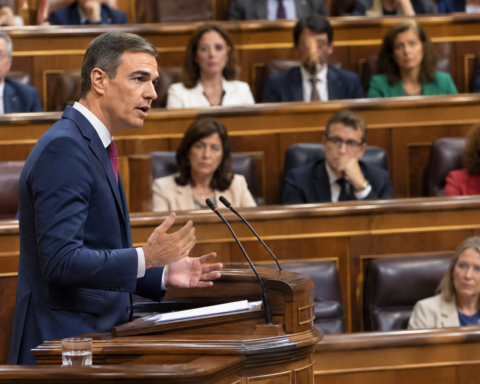
The rulings came a day after the prime minister, Pedro Sánchez, called a snap general election for 29 November. The election follows a bitter clash between his government and Puigdemont’s party, Junts.
Who is Carles Puigdemont?
Puigdemont was president of Catalonia’s regional government in October 2017, when it held an independence referendum that Spanish courts had declared illegal. Weeks later, the Catalan parliament made a unilateral declaration of independence. Madrid responded by invoking article 155 of the constitution and imposing direct rule on the region. Puigdemont fled to Belgium to avoid arrest and has lived in Waterloo, near Brussels, ever since.
He still leads Junts, the hardline separatist party whose seven MPs have held the balance of power in the Spanish parliament. Last week, they joined the conservative People’s party (PP) and the far-right Vox to defeat the government’s flagship housing decrees.
Two rulings in one day
On Tuesday morning, the constitutional court ruled by seven votes to five that the amnesty law passed in 2024 also covers embezzlement, the charge relating to the use of public funds to organise the 2017 referendum. The supreme court had until now refused to apply the amnesty to that offence. The constitutional court’s president, Cándido Conde-Pumpido, accused it of an “unpredictable” interpretation that departed from the purpose of the law.
Within hours, the supreme court judge Pablo Llarena suspended the arrest warrants against Puigdemont and two former members of his government, Toni Comín and Lluís Puig, who had also been living in Belgium. Llarena said the decision was provisional and would last only “for the time strictly necessary to read the ruling in full”, after which he will issue a final decision. Failing to act, he argued, could lead to Puigdemont being arrested on his return under a measure that might later prove unjustified.
In practice, Puigdemont can now enter Spain without being detained.
No date yet
Puigdemont has not yet said when he will return. He called a press conference for Tuesday evening at the Casa de la República, his base in Waterloo, flanked by Comín and Puig. His lawyer, Gonzalo Boye, urged caution, saying further steps were needed before the amnesty was fully applied.
Puig summed up the day: “I boarded the plane while they were still pursuing me, and I land completely free.”
Celebration and anger
In Catalonia, the independence movement celebrated. “The exile of President Puigdemont and ministers Puig and Comín is coming to an end,” said Mònica Sales of Junts, adding that “holding firm pays off”. Oriol Junqueras, leader of the Republican Left of Catalonia (ERC), said “politics is coming back” and called for Catalonia’s future not to be decided by the courts. The former Catalan president Pere Aragonès described it as “a good day”.
Elsewhere in Spain, the ruling reopened one of the deepest political wounds of the past decade. The PP leader, Alberto Núñez Feijóo, called it “yet another of Sánchez’s deceptions”. The amnesty law was the centrepiece of the deal Sánchez struck with Catalan separatists to secure a new term in 2023. Critics regard it as a political reward in exchange for votes; supporters see it as a way to draw a line under the Catalan conflict.
Election shake-up
The timing could hardly be more sensitive. There is no legal obstacle to Puigdemont heading the Junts list in the 29 November election. Until now, the arrest warrant had prevented him from campaigning in person or taking up his seat. Parties must register their candidates by 26 October, raising the prospect that he could campaign in Catalonia for the first time since 2017.
For Junts, which has just broken with the government and, according to polls, is losing ground to the far-right Catalan nationalist party Aliança Catalana, the return of its leader could provide a much-needed boost. For the PP and Vox, it is certain to become one of their main lines of attack against Sánchez.
For foreign residents, Puigdemont’s return will change little in day-to-day life. But it offers a glimpse of the campaign ahead: a deeply polarised contest in which housing, Catalonia and Sánchez himself will dominate the debate.