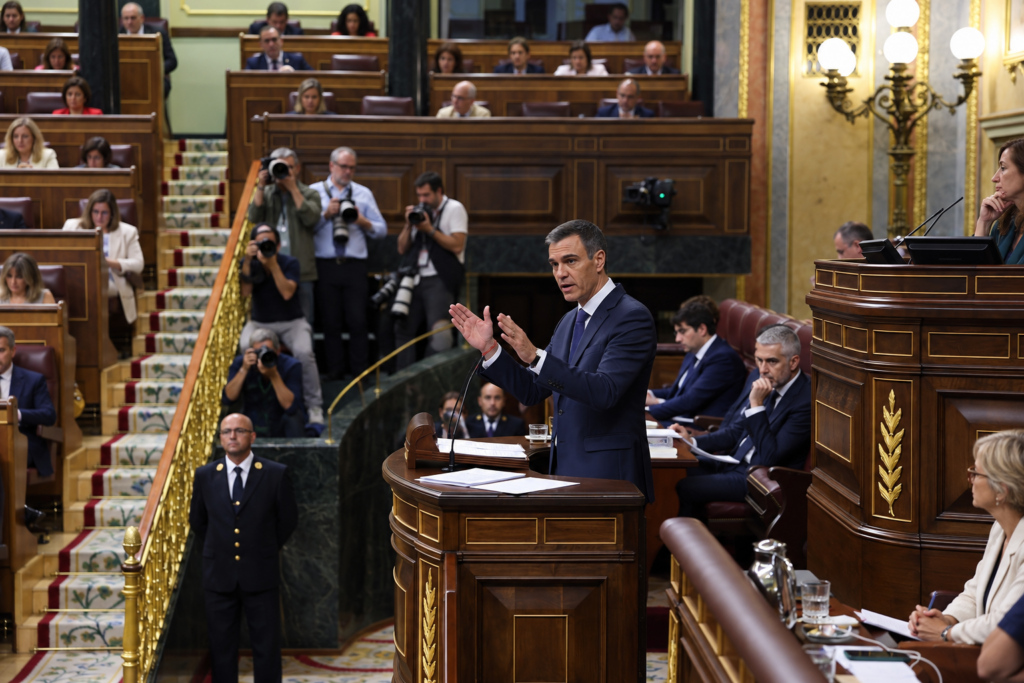
The release of intelligence documents relating to the Ceuta crisis has caused a fresh political storm in Spain. What do the files actually say? What did the government know before the mass border crossings began? And what role did Morocco play? Spain Expat Press explains the key points.
For foreign residents in Spain, the political row surrounding Ceuta is not necessarily easy to follow. The government, opposition parties, intelligence services and individual ministers have offered differing accounts of what happened. Yet at the heart of the controversy lies one relatively straightforward question: were there warnings before the crisis – and should the government have responded differently?
The newly declassified documents provide a much clearer picture.
The CNI knew about the calls to cross
Spanish security services had already detected indications of possible attempts to enter Ceuta before 30 July. By 29 July, however, the intelligence had become considerably more specific.
Spain’s National Intelligence Centre, the CNI, had identified a WhatsApp group called “Asalto a la valla de Ceuta” – “Assault on the Ceuta fence” – as well as two large Facebook groups with a combined membership of around 180,000.
Messages circulating in these groups called on people to attempt to enter Ceuta the following day, both across the border fence and by sea. The timing coincided with Morocco’s Throne Day celebrations.
The CNI passed the information to the relevant Spanish authorities in Ceuta, the Guardia Civil and the Moroccan side.
What the intelligence did not foresee was the extraordinary scale of what followed: more than 70,000 people ultimately entered Ceuta.
That distinction is crucial. The scale of the crisis was not predicted, but the risk of a significant attempt to cross the border was known beforehand.
Why Robles and Marlaska have given different accounts
The documents also help explain an apparent contradiction that has been simmering within the Spanish government.
Defence Minister Margarita Robles had maintained that the intelligence services did their job and passed the information available to the relevant authorities.
Interior Minister Fernando Grande-Marlaska, meanwhile, stressed that there had been no intelligence report predicting what would happen on 30 July.
The newly released material suggests that the two statements are not necessarily incompatible.
There appears to have been no formal intelligence report forecasting an influx of more than 70,000 people. There were, however, specific communications concerning plans for a large-scale attempt to enter Ceuta the following day.
The political argument has therefore shifted. The question is no longer simply whether information existed, but how seriously that information was assessed and acted upon.
What do the documents say about Morocco?
This is perhaps the most diplomatically sensitive part of the affair.
Ceuta is Spanish territory on the North African coast and shares a land border with Morocco. Effective control of that border consequently depends heavily on cooperation between Madrid and Rabat.
The documents do not provide evidence that the Moroccan government organised or actively encouraged the mass crossings.
Spanish military intelligence considered it highly probable that the Moroccan authorities were not actively facilitating the movement. At the same time, however, their conduct during the crisis was described as “negligent and passive”.
That assessment is politically awkward for Madrid, particularly because Morocco had already been informed of the calls circulating online.
Spain relies heavily on cooperation with Morocco in a number of areas, ranging from irregular migration and counter-terrorism to trade and border security. Successive Spanish governments have therefore tended to choose their words carefully when dealing publicly with Rabat.
Why Sánchez’s reference to a “hybrid attack” raises questions
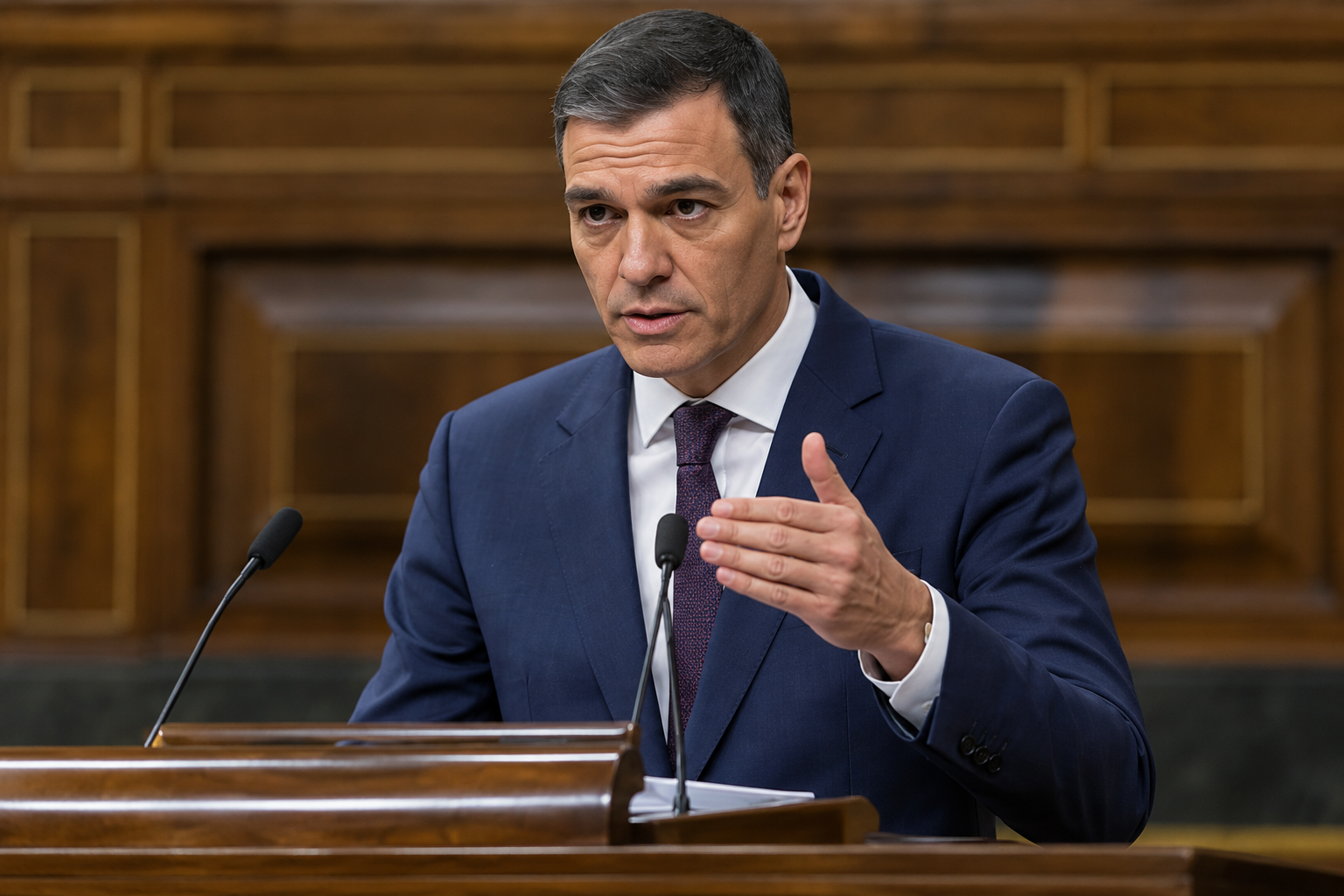
Pedro Sánchez has added another dimension to the controversy by describing what happened in Ceuta as a “hybrid attack”.
The term is generally used to describe attempts to put pressure on a state through methods that fall short of conventional military action. These can include cyberattacks, disinformation, economic pressure and the deliberate use of migration as a political tool.
Sánchez, however, has stopped short of identifying Morocco as responsible.
That leaves an obvious question: if Ceuta was subjected to a hybrid attack, who carried it out?
Given that the released intelligence does not establish that Morocco deliberately orchestrated the crossings, the government may now face further pressure to explain precisely what it means by the term.
Why the affair matters far beyond Ceuta
Ceuta and Melilla are the European Union’s only land borders with Africa. Events there therefore have implications not only for Spain, but also for European migration and security policy.
The crisis also illustrates just how dependent Spain is on cooperation with Morocco when it comes to controlling its southern border.
That leaves the Sánchez government in a difficult position. On the one hand, it faces questions over whether the warnings available before 30 July should have prompted stronger preparations. On the other, Madrid has little interest in provoking an open diplomatic confrontation with Rabat.
What remains after the documents were released?
The files do not establish that the Spanish government knew in advance the true scale of the crisis. Nor do they prove that Morocco deliberately engineered the mass crossings.
What they do change is an important part of the political debate.
The central question is no longer: were there warnings?
The documents show that concrete information was available and that it was communicated to the relevant authorities.
The more difficult question is whether that intelligence was properly assessed – and whether Spain could have been better prepared for what happened on 30 July.
It is on this point that the newly released documents are now putting Pedro Sánchez and his government under growing pressure to provide answers.