For many years, Spain was regarded as the ideal destination for European retirees. Sunshine, comparatively moderate living costs, a reliable healthcare system and a slower pace of life made the country a natural choice for a permanent retirement. That profile still exists — but it no longer defines the trend.
Spa.in Press
In recent years, both the profile of those arriving in Spain and their reasons for doing so have shifted noticeably. Increasingly, the country is attracting a different type of resident: younger, digital and mobile. These newcomers are not looking for a final place to settle, but for a defined phase of life. Spain is less a destination than a stopover in an international lifestyle.
This is not a short-lived phenomenon. It is reflected in official statistics, international studies and, increasingly, in the day-to-day reality of Spanish cities.
From emigration to experimentation
Data on residence permits and work authorisations point to a growing number of people who work remotely or live in Spain only temporarily. At the same time, traditional non-working migration is growing at a much slower pace.
Institutions such as Eurostat and the OECD have long described a structural shift within Europe: permanent relocation is declining, while flexible mobility is increasing. Life paths are becoming less linear, and places of residence change more frequently.
Spain fits seamlessly into this pattern. Platforms analysing location-independent work show that the average length of stay among international residents is shortening. Rather than settling down, people test, compare — and move on.
Families on a timetable: the Northern European model
This shift is particularly visible among families from Northern Europe. Many arrive not with the intention of staying permanently, but deliberately for a few years. Spain offers something their home countries often cannot: a mild climate, more daylight and everyday life without long, dark winters.
Children attend international or bilingual schools, often learn Spanish remarkably quickly and grow up in an open, Mediterranean environment. For many families, this period represents a conscious investment in quality of life and education — not necessarily a permanent new beginning.
After a few years, many move on: back to their home country or onwards to another international destination. Spain becomes an important chapter in a child’s life story — but not the final one.
Spain as a stopover
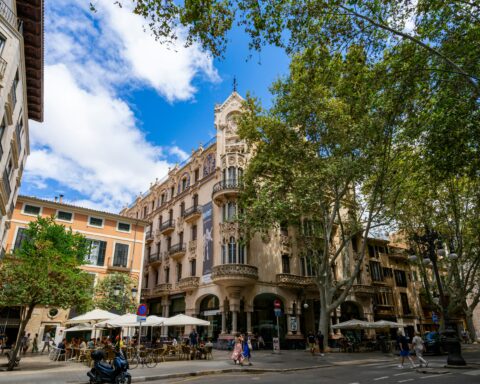
Madrid, Barcelona, Valencia, Málaga and Palma now appear in the same international rankings as Lisbon, Berlin or Mexico City. These are cities offering a high quality of life for a year or two — but increasingly not perceived as places for permanent settlement.
This shift is also evident in the housing market. Market analyses point to strong growth in flexible rental models, co-living concepts and accommodation designed for medium-term stays. Property as a long-term life decision is gradually losing relevance.
Retirees remain — but with greater caution
The traditional retirement migration has not disappeared, but it has become more restrained. Rising living costs in popular regions, higher private healthcare expenses and legal uncertainty in the housing market are increasingly influencing decisions.
Many older newcomers now rent rather than buy, or maintain a second residence without permanent registration. This is not so much a retreat as a change in behaviour — more cautious, more flexible.
More dynamic cities, weaker roots
The new type of resident is reshaping urban life. Municipal data shows higher turnover, neighbourhoods adapt to an international population on limited stays, and local retail follows suit. Urban dynamism increases — while long-term attachment declines.
Spain is not losing its appeal as a result. Rather, its role is changing: from a place to stay to a place in between.
A country that still attracts — but on different terms
Spain remains one of Europe’s most desirable places to live. What has changed is that it now operates within a global competition, where residents compare, calculate and decide with greater flexibility..
The result is a more international — but also more demanding — Spain. Less permanence, more quality of life for a limited time. A quiet yet profound transformation, redefining cities, housing models and the very notion of belonging.