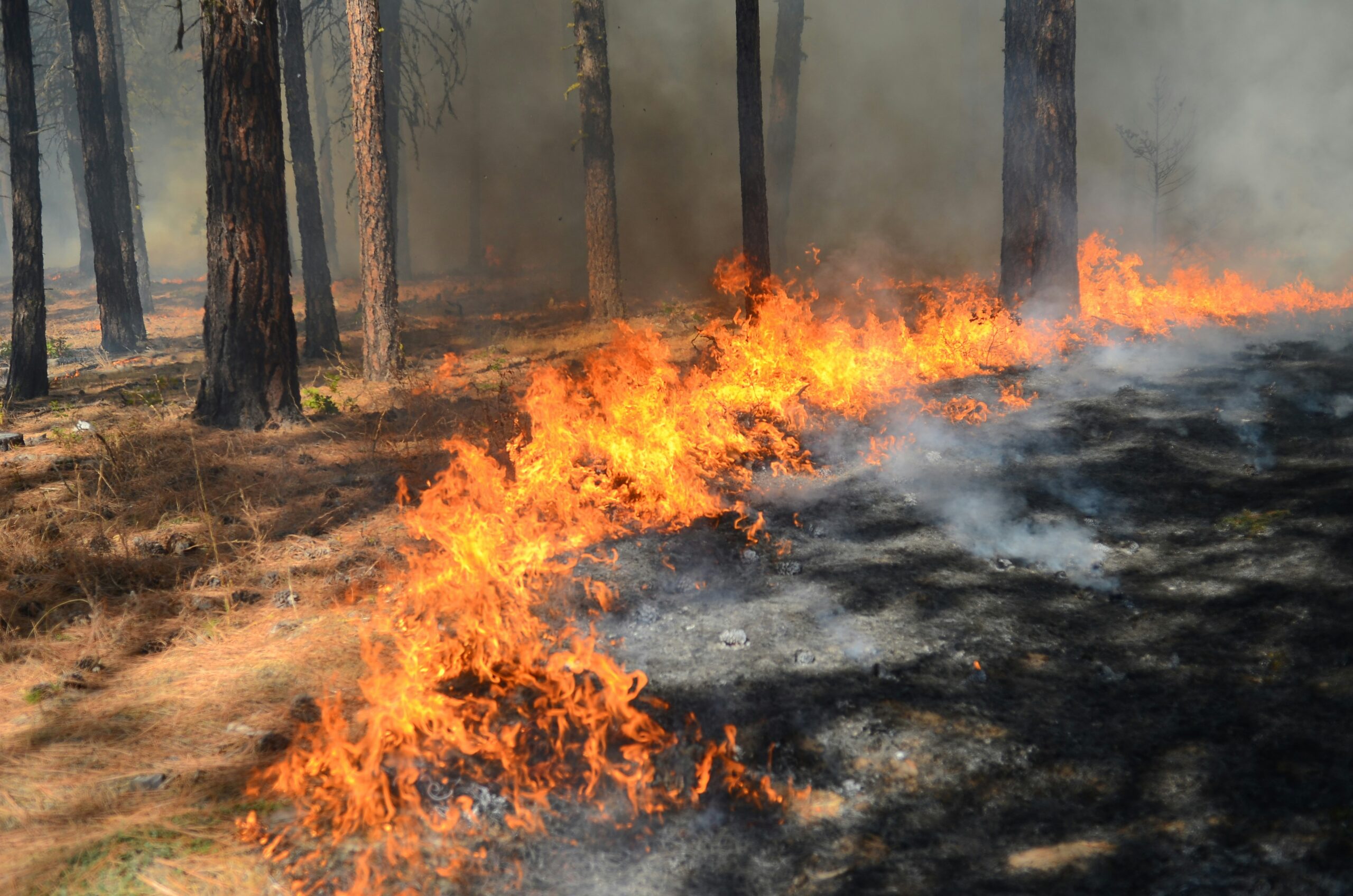
As millions of people across Spain make plans for their summer holidays, environmental authorities are sounding the alarm: by mid-June, significantly more forest and vegetation fires had already been recorded nationwide than during the same period last year. The trend is causing growing concern among experts, particularly as the peak wildfire season in many parts of the country is not expected to begin until the coming weeks.
Spain Expat Press Editorial Team
by Marlon Gallego Bosbach
According to data from the European Forest Fire Information System (EFFIS), 254 fires have been recorded in Spain since the beginning of the year. In the same period in 2025, there were only 76. The area affected by the flames has also increased significantly, now reaching almost 40 square kilometres.
Andalusia particularly affected
Andalusia is once again emerging as a hotspot in this year’s wildfire season. In the first five months of the year alone, 161 fires were recorded in the region. A major blaze in the province of Huelva destroyed several square kilometres of vegetation, demonstrating early in the year how quickly fires can spread under dry conditions.
Fire service associations and disaster protection agencies are closely monitoring the situation. Although many of the fires have so far been brought under control relatively quickly, the rising number of incidents is already placing strain on available resources ahead of the peak summer months.
Extreme weather conditions are increasing the risk
Meteorologists see a direct link between the unusually high temperatures and the increased fire risk. Large parts of the Iberian Peninsula have been experiencing weeks of drought, while temperatures in many areas are significantly above long-term average values.
The European Commission’s Joint Research Centre (JRC) warns in its latest fire danger forecast of “extreme conditions” in parts of the Iberian Peninsula. For the coming weeks, above-average temperatures and below-average rainfall are expected at the same time – a combination that favours the spread of wildfires.
The memory of the disaster year 2025
The concerns are not without reason. The year 2025 is considered one of the most devastating wildfire years in Spain’s recent history. According to estimates from the European Copernicus programme, hundreds of thousands of hectares of land were destroyed. The regions of Galicia, Castile and León, and Extremadura were particularly affected by large-scale fires. Thousands of people had to leave their homes, transport routes were closed, and numerous communities battled the flames for weeks.
International support from several European countries was required to bring the situation under control. The Spanish Armed Forces alone deployed thousands of soldiers, as well as dozens of aircraft and helicopters, in the firefighting efforts.
Government prepares large-scale response
In light of the current developments, the Spanish government has already announced additional measures for this year’s season. A large-scale deployment of water-bombing aircraft, ground units and specialist response teams is planned. According to media reports, this is set to be the largest state-led summer wildfire response operation to date.
The aim is to detect fires earlier and contain them more quickly before they can develop into large-scale wildfires.
Experts see long-term challenges
In addition to weather conditions, experts increasingly point to structural causes. In many rural regions of Spain, forests and scrubland are no longer being adequately maintained. Due to rural depopulation, traditional land management practices that once helped reduce flammable material are missing in many areas. At the same time, formerly agricultural land is becoming overgrown again, increasing the fuel load.
Climate researchers also warn that heatwaves and prolonged periods of drought could become more frequent as a result of climate change. This extends the wildfire season and increases the risk of large-scale fires that are difficult to control.
Difficult weeks lie ahead
It is not yet possible to assess whether 2026 will develop into another extreme year. However, the current figures clearly show that Spain is entering the summer with significantly higher wildfire activity than a year ago.
If the forecast heat and dry periods persist, fire services in many regions of the country are likely to face extremely challenging weeks ahead. For authorities, residents and holidaymakers alike, this marks the beginning of a season that is already under close scrutiny.