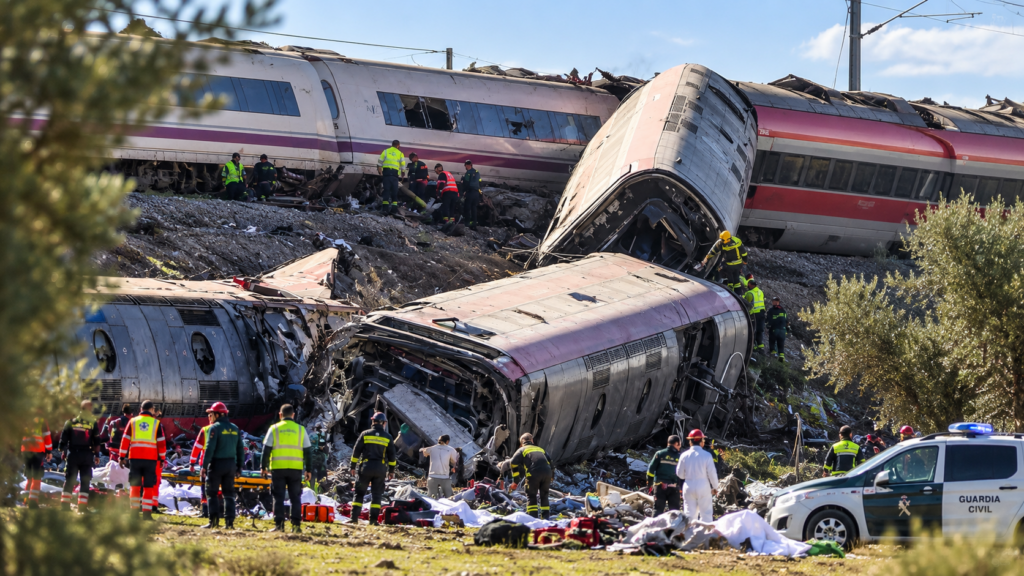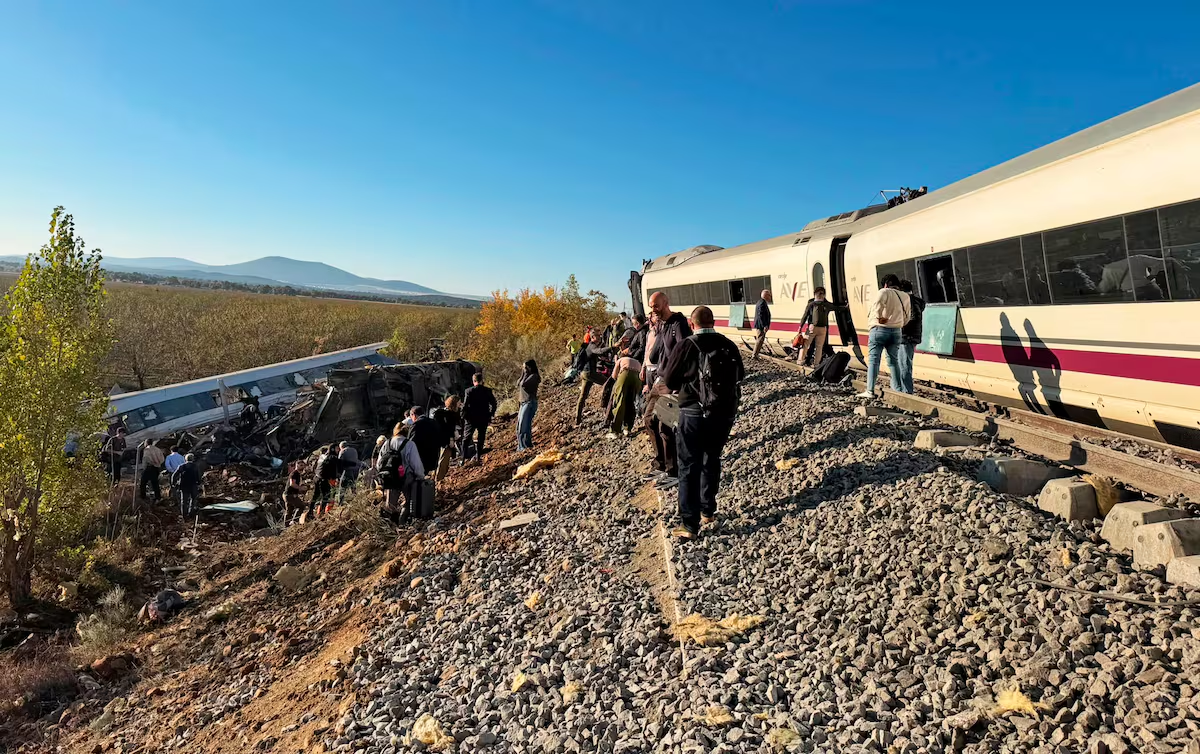
Distressing footage filmed by passengers in the immediate aftermath of the train collision on the Madrid–Seville high-speed railway line has emerged, offering a stark insight into the scale of Wednesday morning’s disaster. Videos recorded by travellers, alongside footage released by emergency services and the authorities, document the devastation. According to the latest media reports, the death toll may have reached at least 50, although the figure has yet to receive final official confirmation.
Spain Expat Press Editorial Team
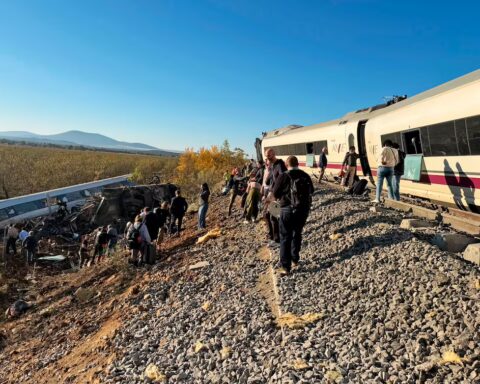
The first videos began circulating while emergency services were still making their way to the scene. Passengers had taken out their mobile phones to record the aftermath of the collision between two high-speed trains.
The footage shows severely damaged carriages, scattered luggage and disorientated passengers attempting to make sense of what had happened as they struggled to leave the trains.
Some of these recordings were provided directly to Spanish news organisations by those on board. Others spread rapidly across social media, offering an immediate and deeply unsettling glimpse of the disaster.
Passengers capture the first moments after the collision
Among the most compelling accounts are those of passengers who experienced the impact first-hand.
Spanish sports journalist Roberto Gómez was reportedly travelling aboard one of the trains involved.
Speaking to Spanish radio station Onda Cero, he described the force of the collision and the chaotic minutes that followed.
According to his account, passengers who had escaped injury immediately began helping others, while the full extent of the disaster remained unclear.
The survivors’ testimonies convey something that even the most striking images cannot fully capture: the fear, confusion and desperate attempts to locate relatives and fellow passengers amid the wreckage.
Un amigo está en el accidente de tren en Toledo, la situación es muy grave. https://t.co/KGYrghylLa
— RescueYou (@RescueYou247TW) October 28, 2026
Aerial footage reveals the extent of the destruction
As Wednesday morning progressed, further videos emerged, including aerial footage and recordings made by emergency personnel working at the scene.
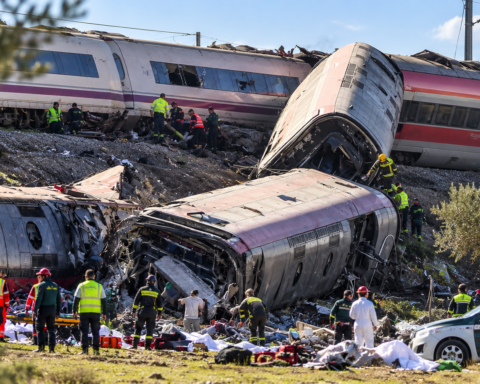
The footage shows derailed carriages and the difficult conditions facing rescue teams.
Particularly disturbing are the images of train carriages reported to have plunged down an embankment following the collision.
Recovering victims and treating the injured have presented emergency responders with considerable challenges.
Firefighters, medical teams, Civil Protection personnel and officers from Spain’s Guardia Civil are among those involved in the rescue operation.
The footage provides a stark illustration of the devastating consequences of the collision.
📹 El grave choque entre dos trenes en Toledo, desde el aire https://t.co/2iTSWQqDdD
— ABC.es (@abc_es) October 28, 2026
Videos that document a national tragedy
The recordings made by passengers have considerable documentary value.
They capture the first minutes after the disaster, before professional television crews and photographers had reached the scene.
They also highlight how dramatically the reporting of major emergencies has changed.
Today, those directly affected by a disaster are often the first to document it, using their mobile phones to capture events as they unfold.
Within minutes, their recordings can reach millions of people, providing an immediate perspective on situations that, in the past, would initially have been described only through eyewitness accounts.
However, the rapid circulation of such material also raises important questions about authenticity.
Not every video shared on social media can be reliably verified. Genuine footage may circulate alongside older recordings, edited material or artificially generated images.
Distinguishing between verified eyewitness videos, officially released footage and unconfirmed material is therefore essential.
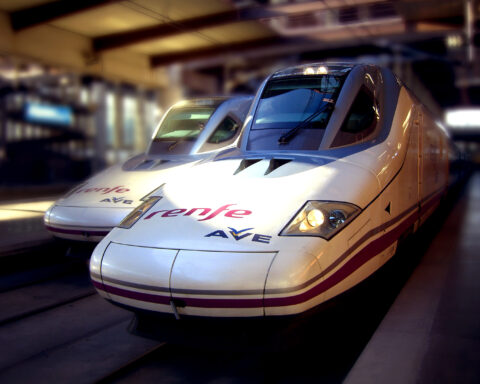
‼️Las primeras hipótesis de la tragedia apuntan a un fallo previo del sistema de seguridad LZB. Tras paralizarse el tráfico, el Centro de Control autorizó al tren #AVE a avanzar, a pesar de que el #Iryo seguía detenido en la vía.
👉 Informa @La_SER https://t.co/cFPWDnUn63
— eSPAINews (@eSPAINews_) October 28, 2026
The footage shows the consequences — not the cause
However powerful the recordings may be, they cannot, on their own, explain what caused the disaster.
Investigators must establish how such a serious collision could have occurred on one of Spain’s principal high-speed railway routes.
The investigation will need to examine technical evidence, operational procedures and the circumstances immediately preceding the crash.
Although the videos may help document the aftermath, determining the cause will require a comprehensive technical investigation.
Más imágenes del accidente de tren en Toledo. https://t.co/GGVJf3UCbY
— RescueYou (@RescueYou247TW) October 28, 2026
A tragedy that has shaken Spain
As emergency teams continue their work and investigators seek to establish precisely what happened, the videos filmed by passengers have become some of the most immediate and powerful records of the disaster.
They capture a Wednesday morning that began like any other for hundreds of travellers.
People commuting to work, visiting relatives or making their way home.
Within seconds, an ordinary railway journey had turned into a national tragedy.
Spain Expat Press brings together videos shared by passengers, Spanish media organisations and the relevant emergency authorities, documenting not only the scale of the destruction but, above all, the human suffering behind one of Spain’s most devastating railway disasters in recent years.