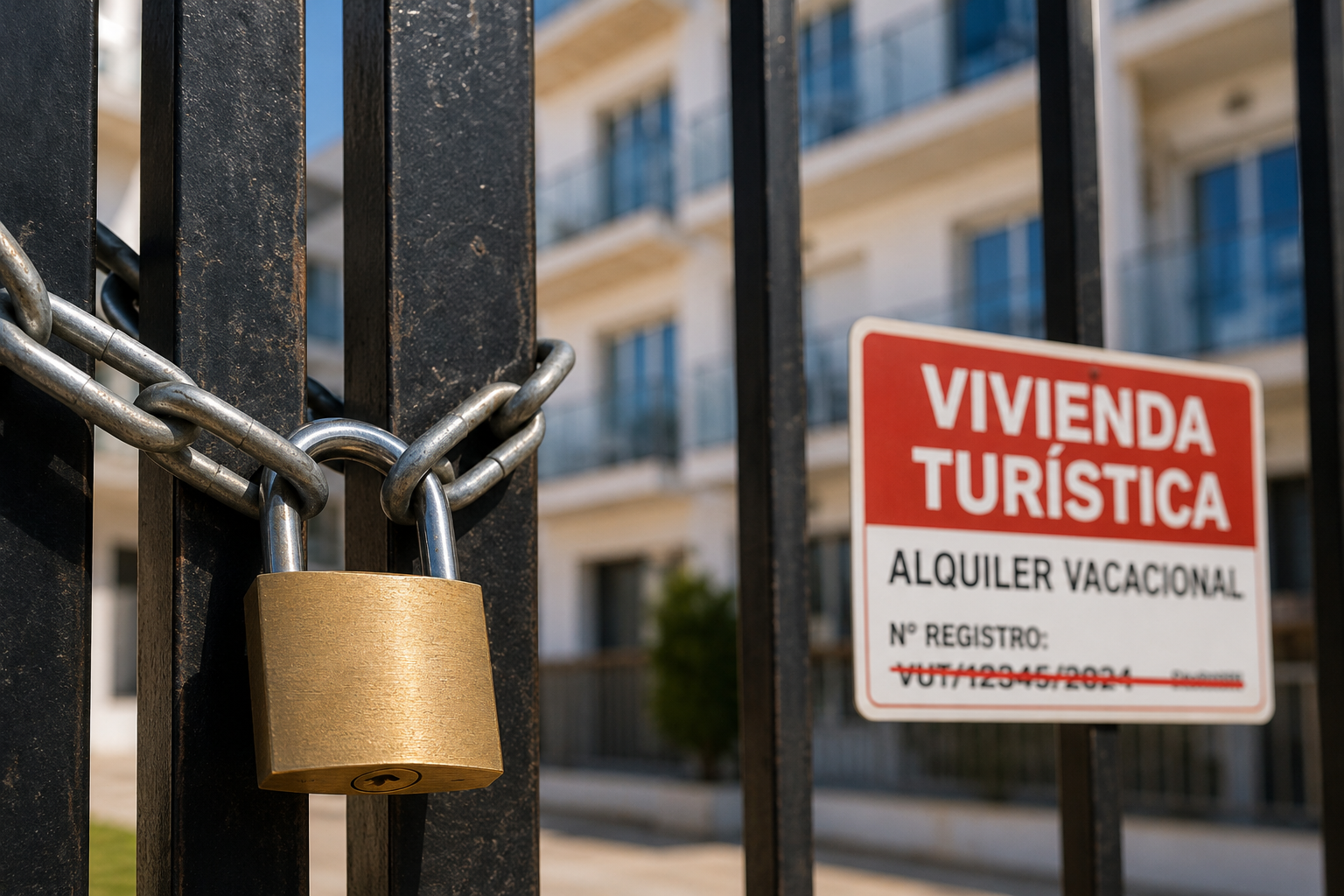

Spain’s ongoing battle over tourist apartments has descended into fresh chaos after the country’s Supreme Court struck down large parts of the government’s controversial national registry system for short-term rentals.
The ruling represents a major setback for Madrid’s attempts to tighten control over platforms such as Airbnb and other holiday rental operators across the country.
Spain Expat Press Editorial Team
What was the “Single Registry”?
The so-called “Registro Único” was introduced by Spain’s coalition government in July 2025 as part of a broader crackdown on tourist rentals amid mounting housing pressures in cities and coastal regions.
Under the system, owners of holiday apartments were required to obtain a national registration number before advertising properties on platforms such as Airbnb or Booking.
The measure sparked immediate backlash from property owners, regional governments and tourism associations, many of whom argued the system duplicated existing regional licensing schemes and created unnecessary bureaucracy.
Thousands of landlords rushed to comply with the new rules, paying fees, hiring legal advisers and submitting extensive documentation under strict deadlines.
Why did the Supreme Court strike it down?
Spain’s Supreme Court ruled that the central government had exceeded its legal powers by imposing a national registry on top of existing regional systems.
The court concluded that tourism regulation largely falls under the authority of Spain’s autonomous regions rather than the state.
Several regional governments — including Andalusia and Valencia — had challenged the measure, arguing that Madrid was interfering in regional competencies.
The decision is being seen as a major legal and political defeat for the government’s housing strategy.
Furious reaction from property owners
The ruling has also triggered frustration among many landlords who had already completed the registration process.
Owners across Spain spent months navigating what many described as a bureaucratic nightmare, with repeated complaints about:
Many landlords now feel they were placed under enormous pressure to comply with a system that has partially collapsed less than a year later.
Does this mean tourist rentals are now uncontrolled?
Not entirely.
While the court struck down the national mandatory registry, it upheld the government’s digital data-sharing system and confirmed that online platforms must still provide information about listings to the authorities.
Regional tourist rental licences and local regulations also remain fully in force.
In practice, this means Spain’s patchwork of regional rules governing holiday apartments will continue — something critics say only deepens the existing confusion surrounding the sector.
More than 100,000 properties affected
Spanish media reports suggest that more than 100,000 tourist rental listings that had previously faced rejection or removal under the national system could now potentially return to the market.
The decision comes at a time when Spain is already facing fierce political tensions over mass tourism, rising rents and housing shortages in major cities and popular coastal destinations.