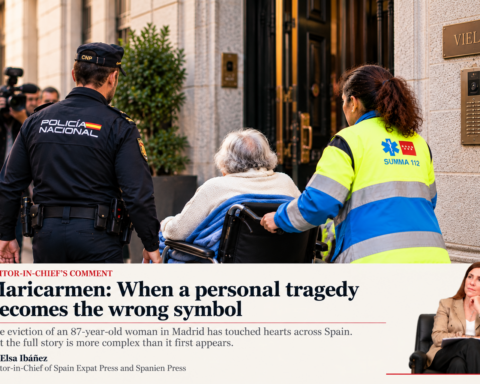
Spain may be approaching a turning point in its housing policy. After years of extraordinary protections against evictions, a shift now appears to be underway — one that could reshape the balance between social protection and property rights.
Spain Press Editorial Team
Following a recent parliamentary decision, as many as 70,000 eviction proceedings that had been suspended since the pandemic could now move forward. Those affected are largely vulnerable tenants who have fallen behind on rent — an issue that in Spain has long been politically intertwined with the broader debate around squatting.
The protections were originally introduced during the Covid-19 crisis to prevent financially distressed households from losing their homes. In practice, however, they also meant that evictions were halted even in cases of prolonged non-payment. What began as a temporary emergency measure gradually became embedded in an already strained housing system.
With these safeguards no longer being extended, the situation may now begin to change. Proceedings that had been frozen for years could resume, signalling a gradual return to a legal framework in which failure to meet rental obligations once again carries more immediate consequences.
The discussion remains complex. Officially, the measures were designed to shield vulnerable tenants. Critics argue that they also made it significantly harder for property owners to recover possession of their homes in a range of disputes. Landlords frequently cited growing legal uncertainty and drawn-out processes.
At the same time, the underlying pressures remain unresolved. Rents have risen sharply in recent years, while incomes have not kept pace. Spain continues to have one of the lowest levels of social housing in Europe, leaving many households exposed to sudden financial shocks.
The potential reactivation of thousands of cases does not necessarily mean an immediate wave of forced evictions. Yet it does mark a clear policy shift. Going forward, decisions are likely to be made more on a case-by-case basis, weighing social vulnerability against ownership rights.
For foreign residents and investors, this development signals more than a domestic political debate. It points to a broader reassessment of the pandemic-era housing framework — one that could influence legal certainty, rental dynamics and future regulation of the property market.
Whether this ultimately represents the beginning of the end of a system that made evictions exceptionally difficult remains to be seen. What is clear is that Spain’s housing policy is entering a new phase.