They spoke English, claimed to have been robbed and said they desperately needed money to get home. To win their victims’ trust, they displayed supposed bank transfers on their phones. Two suspects have been arrested, a third remains unidentified – and police believe there may be more victims.
Spain Expat Press Editorial Team
It is the sort of story that might prompt almost anyone to help. A foreign tourist approaches you in Barcelona. He has been robbed, has no money or documents and urgently needs to get home.
There is no risk in lending him the money, he assures you. He will transfer it straight back.
To prove it, he shows you the transaction on his phone.
Except the money never arrives.
Catalonia’s Mossos d’Esquadra are investigating a series of alleged frauds in Barcelona in which men posing as tourists in distress are suspected of persuading members of the public to hand over substantial amounts of cash.
Two men have been arrested and police are attempting to identify a third suspect. More than 20 victims are already known, and investigators believe there could be others.
A scam built on kindness
The method was deceptively simple.
A man would approach someone in the street, usually speaking English, and explain that he was a tourist who had either been robbed or lost his documents and money.
Unable to return home, he urgently needed financial assistance.
To reassure the person he approached, he offered to repay the money immediately by bank transfer.
He would then display what appeared to be confirmation of the transaction on his mobile phone, convincing the victim that the money was already on its way.
In some cases, victims accompanied the supposed tourist to a cashpoint, withdrew money and handed it over.
Only later, when they checked their accounts properly, did they discover that no payment had arrived. The transfer confirmation they had been shown was allegedly false or manipulated.
Cases around Barcelona-Sants and the Eixample
A number of incidents under investigation took place around Barcelona-Sants railway station, one of the city’s busiest transport hubs, while others were reported in the Eixample district.
One suspect is alleged to have been involved in eight frauds committed between September 2025 and August 2026, causing losses of around €13,000.
In at least one case, investigators are also examining allegations that a victim was intimidated into handing over money.
Victims’ photographs helped police
Some victims became suspicious during or shortly after their encounters and managed to photograph the man who had approached them, or the vehicle in which he subsequently left.
When the promised transfers failed to arrive, those photographs were handed to police along with their complaints.
As officers compared the different reports, another detail emerged: the descriptions did not always point to the same individual.
Investigators began to suspect that several people were using the same technique.
Two arrests and a possible family connection
Police arrested a 31-year-old man in May and linked him to eight alleged frauds. He was subsequently released after appearing before a court.
But similar incidents continued.
On 25 August, the Mossos arrested another suspect in connection with eight cases involving losses of approximately €13,000.
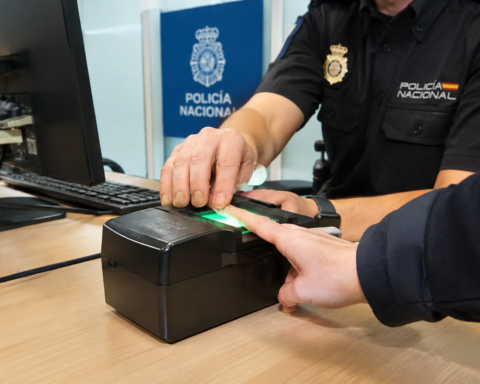
The man allegedly provided false personal details when he was detained. His true identity was established after officers checked his fingerprints.
Investigators then discovered another intriguing detail: he apparently shares surnames with the man arrested earlier, leading police to suspect that the pair may be related.
A third man, described by victims, has yet to be conclusively identified.
A red Audi and a dash towards France
The investigation took an unusual turn following the second arrest.
After appearing before a judge, the suspect was released. Prosecutors had requested precautionary measures including the surrender of his passport and a ban on leaving Spain.
Investigators, however, suspected he might try to flee.
After his release, the man reportedly got into a red rented Audi with British number plates, filled it with fuel and headed north towards France.
The Mossos followed the vehicle and alerted officers near La Jonquera, close to the French border.
Shortly before reaching France, one of the Audi’s tyres burst.
According to reports of the investigation, the suspect apparently realised he was being followed, abandoned the car at a service station and fled.
The investigation remains open.
Police believe there may be more victims
Investigators suspect the men may have been using the technique for some time and have not ruled out the possibility that other people connected to them were operating in a similar way.
The suspects may also have since left Spain.
Police are therefore encouraging anyone who believes they have fallen victim to the same scam to report it.
The number of known cases may represent only part of the true scale of the fraud.
Never trust a transfer shown on somebody else’s phone
What makes the scam effective is that the initial story is entirely plausible.
Barcelona receives millions of international visitors, and encountering a traveller who has lost a wallet, phone or documents would hardly seem extraordinary.
The crucial element is the supposed bank transfer.
A screenshot, banking-app screen or payment confirmation displayed on somebody else’s phone is not proof that money has actually reached your account.
The only reliable confirmation is to check your own bank account independently.
Particular caution is advisable when a stranger creates a sense of urgency, asks for a substantial amount of cash or wants you to accompany them to a cashpoint.
Exploiting the instinct to help
Perhaps the most troubling aspect of the alleged scam is that it relied less on sophisticated technology than on human kindness.
The victims handed over their money because they believed they were helping a traveller stranded far from home.
In a city filled with tourists from around the world, it was a story designed to sound perfectly ordinary.
That is precisely what made it convincing.
Helping a stranger is one thing. Handing over cash on the strength of a bank transfer displayed on their phone is another.