Something rather peculiar happens in Spain towards the end of August. It is still hot, the beaches are packed, many families are still on holiday and the country remains firmly in summer mode. Yet step into a supermarket, department store or shopping centre and commercially, at least, September has already arrived.
Spain Expat Press Editorial Team
The same words are everywhere: “Vuelta al Cole” — Back to School.
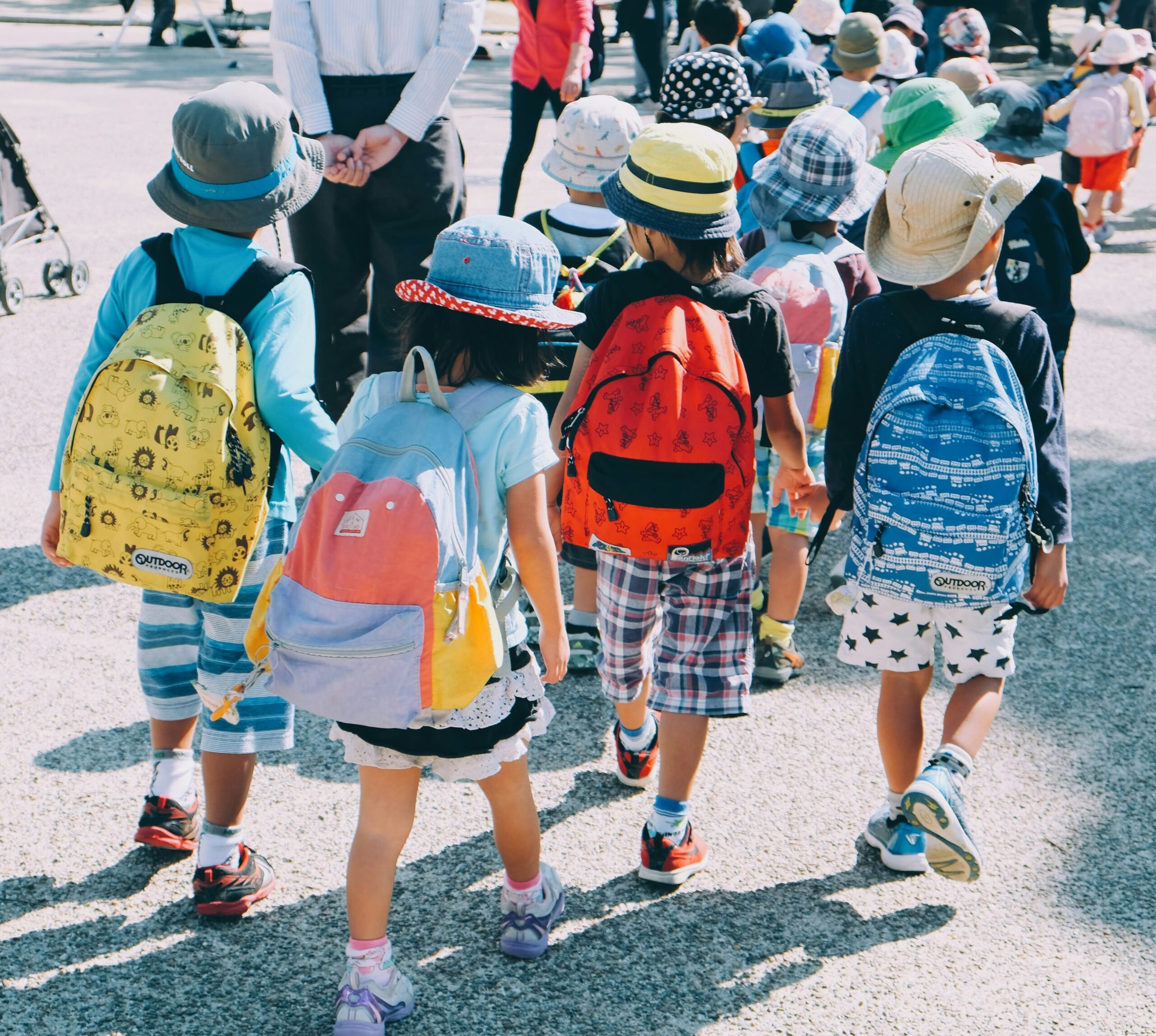
Rucksacks, notebooks, pencil cases, trainers, school uniforms, sportswear, computers, tablets, desks, water bottles, calculators and, of course, textbooks. For several weeks, the return to school becomes one of Spain’s biggest retail campaigns of the year.
And there is a good reason for it.
Much more than a few new notebooks
To understand the scale of Spain’s Vuelta al Cole, it helps to understand what September means for millions of households: a significant proportion of everything a child needs for the new academic year has to be bought or replaced within a very short period of time.
And in 2026, the financial burden is rising again.
Estimates vary considerably depending on what is included. Cetelem estimates that Spanish families expect to spend an average of around €478, approximately 12 per cent more than in 2025. Other calculations put the basic back-to-school bill at more than €500 per pupil, while the total can rise considerably once uniforms, school meals, transport, fees and other expenses are included.
It is precisely this concentration of spending that makes the final weeks of August and the beginning of the school year so important for retailers.
And it is no longer simply about stationery.
Children have grown out of last year’s shoes. They may need new sportswear or a uniform. Then there are rucksacks, notebooks, pens, textbooks and, increasingly, digital devices.
Multiply all of that by millions of pupils and the result is an enormous market.
The campaign starts while Spain is still at the beach
Perhaps the most striking thing about the Spanish Vuelta al Cole is the contrast.
While much of the country is still firmly in holiday mode, the Back to School campaign is already under way. Displays begin appearing during August, even though pupils in many regions will not return to their classrooms until September.
There is another peculiarity: Spain does not have a single national first day of school.
Education is highly decentralised and each autonomous region establishes its own academic calendar.
In Madrid, for example, the 2026/27 school year begins on 7 September for Infant and Primary pupils and on 8 September for older students. In Andalusia, Infant and Primary schools return on 10 September, while secondary schools and Bachillerato begin on 15 September.
The Vuelta al Cole, therefore, is not really a single day at all. It is a period lasting several weeks, bridging the gap between the summer holidays and the return to normal family life.
In many regions, the regional government provides the textbooks
There is, however, one important measure that helps ease the financial burden on families.
Several of Spain’s autonomous regions provide textbooks free of charge or finance them through loan and reuse schemes.
The system varies from one region to another. In some cases, pupils receive books without having to pay for them; elsewhere, textbooks are loaned to children and returned at the end of the academic year so they can be used again by another pupil. Other regions operate grants or similar forms of assistance.
The objective is straightforward: families should not have to spend hundreds of euros replacing school textbooks every year.
For households with two or three school-age children, these schemes can make a considerable difference.
They have also helped establish a culture of reuse. Books are returned at the end of the year, checked and passed on to the next generation of pupils rather than automatically being replaced.
The ‘Black Friday’ of families with children
From a retail perspective, Vuelta al Cole has one particularly attractive characteristic: a large proportion of the spending is difficult to avoid.
A family can theoretically decide not to buy Christmas presents or take advantage of a particular sales campaign. But if a child needs new shoes, notebooks, sportswear or a uniform for school, those purchases cannot simply be postponed indefinitely.
The competition for that spending is intense.
Fashion chains launch dedicated Back to School collections. Supermarkets devote entire aisles to notebooks, folders and stationery. Bookshops compete for textbook orders, while online retailers sell everything from school bags to laptops.
For Spanish retailers, the end of August and beginning of September also mark the return of normal consumer life after the long summer holiday season.
In Spain, school often means much more than school
To understand the real cost of the Spanish school year, however, you cannot stop counting when the school day ends.
For many families, that is when the second part of the children’s day begins.
Extracurricular activities — the ubiquitous actividades extraescolares — are a standard part of family life. Among the most popular are English lessons, football and dance, alongside swimming, tennis, music, basketball, martial arts and numerous other activities.
A child might have English on Monday, football on Tuesday, English again on Wednesday and dance on Thursday. With two or three children, the weekly family calendar can quickly turn into a minor logistical operation.
And, of course, all of this costs money.
Month after month.
The financial impact of going back to school is therefore not limited to one large shopping trip at the end of August. Once the academic year starts, recurring expenses continue throughout the year.
And after school, many children head to an ‘academia’
There is another feature of Spanish educational life that foreign families may not immediately be familiar with: the private after-school academia.
Large numbers of parents send their children to these centres after the normal school day.
They are not necessarily traditional tutoring centres exclusively for pupils who are struggling academically. Many provide a place where children can complete their homework, prepare for tests and get help with anything they have not fully understood in class.
Tutors assist with mathematics, languages and other subjects, check homework and explain difficult topics again in a smaller and often calmer environment.
For working parents, an academia can also serve a very practical purpose: children are supervised during part of the afternoon and, ideally, return home with their homework already completed.
Private one-to-one tutoring is also widespread.
As a result, an entire private education economy exists around the formal school system — and its cost can easily be overlooked in standard calculations of the Spanish Vuelta al Cole.
Because on top of the new rucksack, clothes and stationery, a family may also be paying every month for English lessons, football, dance and an academia.
With several children, those monthly costs can quickly become substantial.
Spain’s ‘September squeeze’
For families, then, the Vuelta al Cole is much more than an expensive shopping trip.
It also arrives immediately after July and August, months in which many households have already spent more than usual on holidays, travel, restaurants and entertainment.
Then comes the bill for the new school year.
That is why the expression “cuesta de septiembre” — roughly, the “September squeeze” — has become increasingly common in Spain. It echoes the traditional cuesta de enero, the difficult financial period after Christmas.
The return to school is therefore no longer merely an educational event. It is an important economic moment for Spanish households.
Second-hand, hand-me-downs and reuse
Spanish families have also become increasingly resourceful.
Younger siblings inherit books, uniforms and school supplies from older children. Parents’ associations organise exchanges, while second-hand schoolbooks, clothing and rucksacks are becoming increasingly common.
The regional textbook loan and reuse programmes also help reduce costs.
And many parents have adopted another sensible strategy: do not buy absolutely everything before school has even started.
Anything still usable from the previous year stays in service. For certain materials, families wait until teachers actually confirm what pupils will need.
Because few things are more irritating than spending a small fortune on school supplies in August only to discover two weeks later that half of them were unnecessary.
There is an emotional side to it, too
It would nevertheless be too simplistic to dismiss the Vuelta al Cole as nothing more than clever marketing.
September really does represent a major change in the rhythm of Spanish family life.
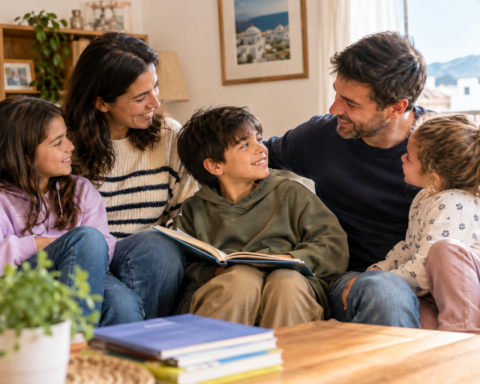
During July and August, routines become remarkably relaxed. Children go to bed later, dinner moves further into the evening, grandparents help with childcare, and families head to summer camps, the beach, holiday homes or the family village.
And then September arrives.
The alarm clock returns.
Breakfast, the school run, lessons, homework, academia, English classes, football, dance and other afternoon activities once again dictate the family timetable.
For younger children in particular, something as simple as choosing a new school bag or pencil case can have an emotional significance.
The new rucksack means something new is beginning.
Retailers understand that perfectly.
They are not simply selling pens and notebooks. They are selling the idea of a fresh start.
Spain’s real New Year begins in September
Perhaps that is the best way to understand why Vuelta al Cole has become such an enormous phenomenon in Spain.
Officially, the new year begins in January. For many Spanish families, however, the real reset takes place in September.
The holidays end. Children return to school. Adults return fully to work. Football clubs, language schools, dance classes, academias and countless other activities start up again.
After weeks of summer flexibility — something that often surprises visitors from northern Europe — Spain slowly sets the alarm clock again.
And amid this collective return to routine, the same scene can already be spotted across the country in late August: parents walking through shops with a long school list in their hands, while their children explain why, obviously, they absolutely need another new rucksack this year.
That is Spain’s Vuelta al Cole: education, shopping, tutoring, extracurricular activities, family logistics and the approaching end of summer, all compressed into a few hectic weeks.
And that is precisely why Back to School is such big business in Spain.