Zambombas in Jerez, a living nativity in Arcos, carnival in Cádiz: Spain Expat Press launches a free events calendar for all of Andalusia. Eight cities, 32 towns, a plan for every day – from November to Three Kings and beyond.
Spain Expat Press Editorial Team
Anyone who lives in Andalusia knows the feeling: you hear about the best fiesta the day after it happened. Town hall programmes come out late, mostly in Spanish and scattered across dozens of websites. That is exactly why we built this calendar. We have gathered the dates, checked them and translated them into English – so you don’t miss a thing.
How it works
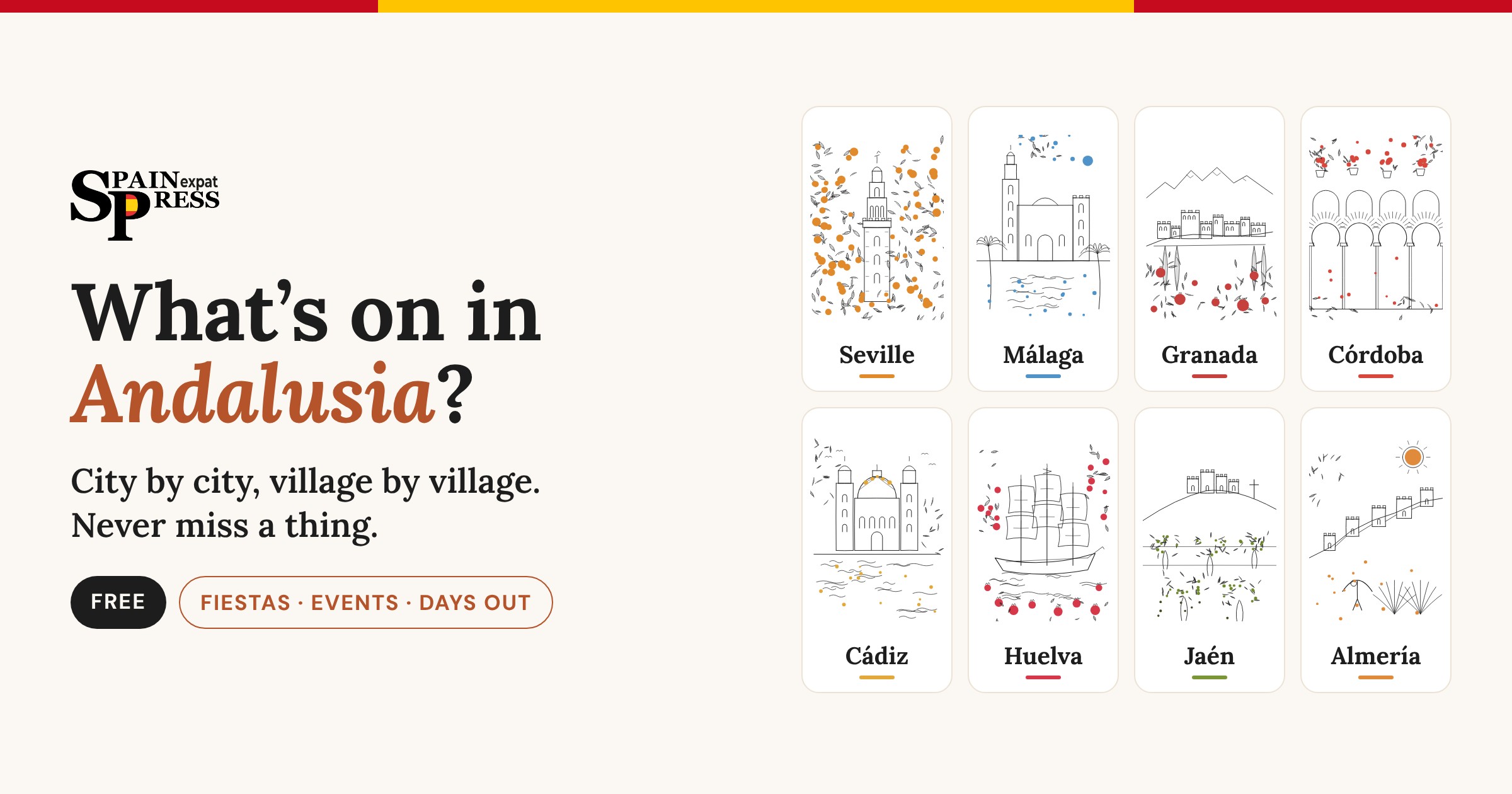
First, choose your destination: Seville, Málaga, Granada, Córdoba, Cádiz, Huelva, Jaén or Almería. Each city has its own page, with a drawing of its landmark – from the Giralda to the Alcazaba.
Below it sits the monthly calendar. Tap a day to see every event with its venue, time and a link to the official source. Confirmed events are marked in colour. On quieter days we suggest something to do: a day trip, a museum, a sunset by the sea.
Not just the big cities
Andalusia lives in its towns and villages. So each city comes with the four best-known towns in its province – Jerez, El Puerto de Santa María, Arcos and Vejer for Cádiz, for example, or Úbeda, Baeza, Cazorla and Linares for Jaén.
You decide what you see: just the city, or individual towns at the tap of a button. Live in Málaga and love Nerja? Simply switch Nerja on. Every town also has a short card with distance, how to get there and why it’s worth the trip.
Our highlights until January
- Zambombas in Jerez: On Advent weekends the streets and courtyards fill with singing, dancing and celebration – something you will only find here.
- Living nativity in Arcos de la Frontera: On 12 December the old town turns into Bethlehem from 6 to 11 pm.
- Early music in Úbeda and Baeza: The Festival de Música Antigua fills Renaissance churches with concerts from 5 to 7 December.
- Día de la Toma in Granada: On 2 January the city commemorates 1492.
- The Three Kings: On 5 January the cabalgata parades wind through all eight cities.
- Carnival in Cádiz: On 8 January the famous carnival contest opens at the Gran Teatro Falla.
- Lumbres de San Antón in Jaén: On the night of 16 January bonfires blaze in every neighbourhood.
Daily tips for newcomers
What exactly is a zambomba? Why do Spaniards eat twelve grapes on New Year’s Eve? On special days the calendar explains Spanish customs, each with a small drawing. On 21 December it reminds you to buy a Christmas lottery ticket. On 28 December it warns you about the pranks of Día de los Inocentes. And on 6 January it reveals the secret of the bean hidden in the roscón de Reyes.
Free, in English and German
The calendar is free, needs no sign-up and works on your phone as well as your computer. One tap switches it to German – handy if you want to share it with German-speaking friends.
We keep the dates up to date. Many town halls only publish their Christmas programme in early December, and we add it as soon as it appears. Please check times and tickets with the organiser before you go – every event links to its source.
Open the calendar:
https://spanienpress.com/agenda/en/
Is a fiesta in your town missing? Write to us – we’ll gladly add it.