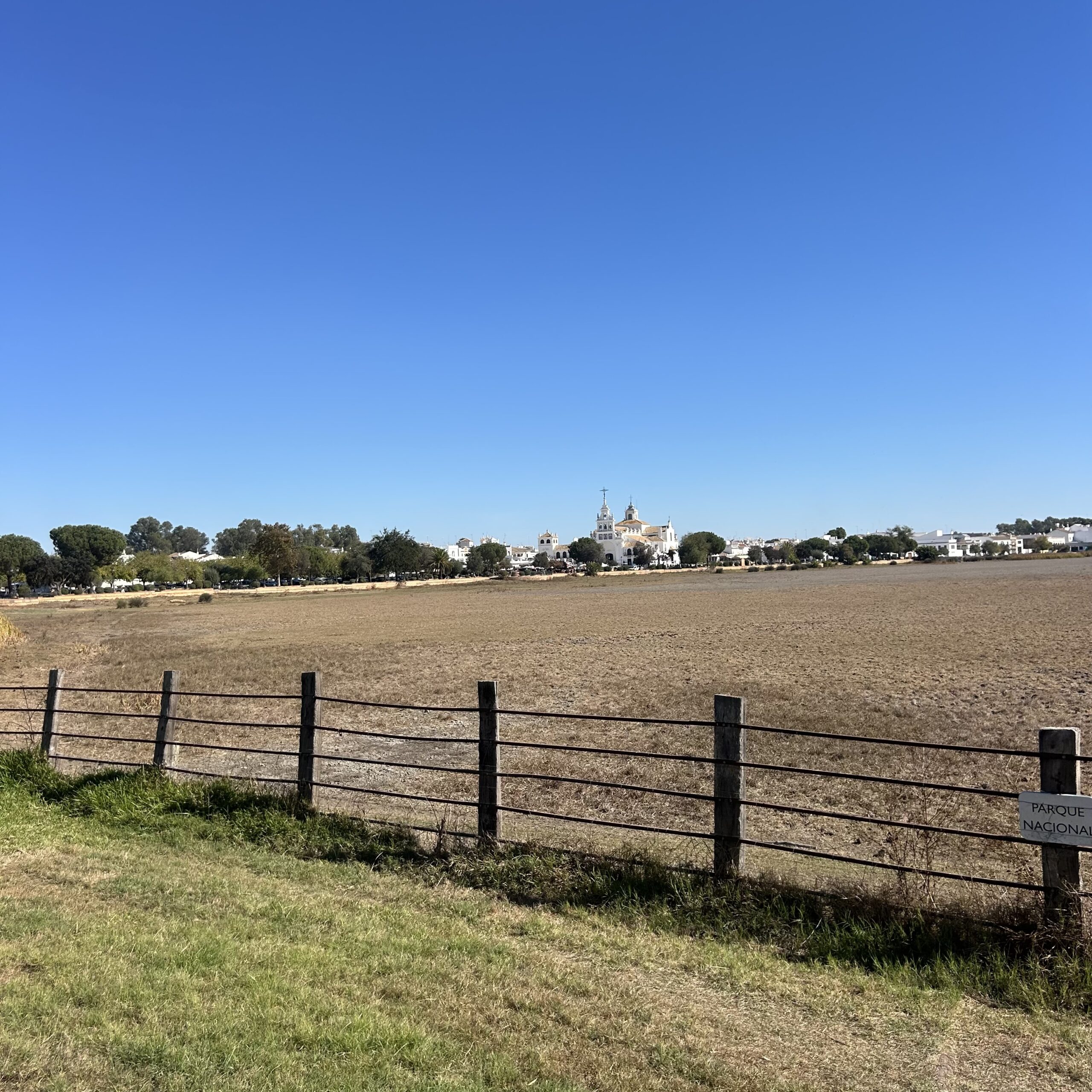
Rural properties are attracting renewed interest across Spain, with sales reaching their highest level in almost two decades. Investment funds, wealthy individuals and ordinary families are increasingly turning to agricultural land and country estates. Andalusia is among the country’s most active markets, but the growing demand is also raising concerns about the future of traditional farming.
Spain Expat Press Editorial Team
For generations, buying a rural finca in Spain was largely a matter for farmers, livestock breeders and families who passed their land down from one generation to the next. Properties were inherited, cultivated and often remained in the same hands for decades.
That picture is changing.
Alongside traditional buyers, investment companies, wealthy individuals and private savers are showing growing interest in rural land, attracted by the prospect of long-term returns and an alternative to the increasingly expensive urban property market.
The latest figures illustrate the scale of the shift.
According to an analysis by rural property platform Cocampo, based on data from Spain’s National Statistics Institute (INE), 112,612 rural property transactions were recorded between January and August 2026, an increase of 1.9% compared with the same period last year.
It was the highest number of transactions recorded during the first eight months of any year since 2007.
The trend was already evident in 2025, when 167,453 rural property sales were registered nationwide, representing a 7.1% increase on the previous year.
Spain’s rural property market is now experiencing levels of activity last seen before the 2008 financial crisis.
Why land is becoming an attractive investment again
Several factors are driving the renewed interest.
For wealthy investors, agricultural land offers an opportunity to diversify their portfolios and hold a tangible asset whose supply is inherently limited.
Unlike many financial investments, a productive finca can also generate regular income through farming, leasing arrangements or specialised agricultural operations.
However, not every rural property represents a sound investment.
Location, soil quality, water availability, infrastructure and the size of the holding all play a significant role in determining its value.
Properties with reliable irrigation and farms capable of operating efficiently on a commercial scale are particularly attractive to professional investors.
For these buyers, the appeal lies less in the romantic idea of owning a country estate and more in the property’s economic potential.
Investment funds turn their attention to Spanish agriculture
Institutional investment in Spanish agriculture has grown considerably in recent years.
According to figures attributed to property consultancy CBRE and reported by Spanish media, institutional investment in industrialised agriculture across Spain and Portugal reached approximately €1.2 billion in 2025, an increase of 50% on the previous year.
Much of this capital is directed towards larger agricultural businesses with established production systems and opportunities for mechanisation.
Olive groves, almond plantations and pistachio farms have attracted particular interest.
Citrus fruit, avocados and other high-value agricultural products are also among the crops drawing attention from investors.
The strategy is generally based on combining agricultural income with the possibility of long-term land appreciation.
Yet farming remains an industry exposed to considerable uncertainty.
Drought, rising energy costs, fluctuating commodity prices and restrictions on water use can all affect profitability.
As a result, institutional buyers tend to favour established operations with reliable infrastructure and predictable production conditions.
Andalusia emerges as one of Spain’s leading markets
Andalusia occupies a prominent position in the country’s rural property market.
In 2025, the region recorded 24,827 rural property transactions, placing it second nationally behind Castile and León, where 25,014 sales were registered.
Its importance is hardly surprising.
Andalusia is home to extensive agricultural land and one of the most diverse farming sectors in Spain.
Olive groves dominate large areas of Jaén and Córdoba, while Seville has substantial arable farmland and irrigated agricultural holdings.
Granada and Almería are known for intensive agricultural production, particularly in areas specialising in fruit and vegetables.
The region also has numerous country estates used for livestock farming, hunting and recreational purposes.
Demand, however, varies considerably between provinces and even neighbouring municipalities.
A property with secure water rights and good transport connections may attract significantly more interest than an isolated plot of dry farmland.
Andalusia also led the national monthly figures in August 2026, recording 1,580 rural property sales.
It is not just millionaires buying rural land
Although investment funds and wealthy buyers often attract the most attention, they are far from being the only participants in the market.
Private individuals and families account for an important share of demand.
According to Cocampo, smaller investors and households have become increasingly active in recent years.
Some are looking for a long-term investment, while others want a small country property for leisure activities or personal projects.
The rising cost of housing in Spanish cities has also encouraged some buyers to consider alternatives outside urban areas.
For certain households, a rural finca may appear more appealing than purchasing another apartment or holiday home.
However, prospective buyers must take planning restrictions into account.
Owning rural land in Spain does not automatically entitle someone to build a house or operate tourist accommodation.
In many regions, strict regulations govern construction and permitted uses on rural plots.
The market therefore encompasses very different buyers, from international agricultural investors acquiring extensive estates to families looking for a modest piece of countryside.
Inherited land is increasingly coming onto the market
Another important factor behind the growing number of transactions is Spain’s ageing agricultural population.
The farming sector has struggled for years with generational succession, particularly in rural communities where younger people have moved away in search of employment.
When agricultural properties are inherited, the beneficiaries often live elsewhere or have careers unrelated to farming.
Taking over an agricultural business requires capital, specialist knowledge and considerable time.
For some heirs, selling is the most practical option.
The statistics highlight the scale of inheritance-related transfers.
In 2025, Spain recorded 179,404 transfers of rural properties through inheritance, compared with 167,453 sales.
Between January and August 2026, inherited property transfers again exceeded sales, with 115,568 inheritance transactions compared with 112,612 purchases.
Not every inherited property subsequently enters the market, but generational change is helping to make more land available to potential buyers.
For investors, this can create opportunities to acquire existing farms or consolidate smaller plots into larger agricultural holdings.
Traditional farmers face growing competition
What may be welcome news for landowners looking to sell is creating concerns among farmers seeking to expand their businesses.
When investment companies and wealthy individuals compete for the same land as local agricultural producers, the financial balance is rarely equal.
The problem is particularly acute for productive irrigated land and established farming operations.
A farmer wishing to acquire additional hectares must usually justify the purchase through the income the land is expected to generate.
An investment fund may have access to substantially greater financial resources and operate according to different investment objectives.
Spanish agricultural organisations have repeatedly highlighted the difficulties facing small and medium-sized farmers trying to access suitable land.
The issue goes beyond property prices.
It raises broader questions about the future of family farming, which remains central to the economy and social structure of many rural communities.
If an increasing proportion of productive agricultural land becomes concentrated in the hands of large owners, the long-term character of Spain’s countryside could change significantly.
Water could determine the future value of rural property
For anyone considering buying agricultural land in Spain, one question has become particularly important: how secure is the water supply?
Recurring droughts and growing pressure on water resources have made irrigation rights a crucial factor in property valuations.
Two farms in the same province may have very different market values depending on whether they have reliable access to irrigation or depend entirely on rainfall.
This is especially relevant in Andalusia, Murcia, Castile-La Mancha and the Valencian Community.
Climate change adds another layer of uncertainty.
Higher temperatures, increasingly irregular rainfall and rising production costs may affect the long-term viability of certain crops.
Professional investors are therefore paying closer attention to water rights, irrigation systems and the environmental sustainability of agricultural operations.
Land may be a lasting asset, but its ability to generate income is never guaranteed.
Is Spain heading towards another property bubble?
The return of rural property transactions to levels last seen before the financial crisis inevitably invites comparisons with Spain’s property boom of the 2000s.
However, the rural land market differs considerably from the residential sector.
Properties vary widely in size, location, agricultural productivity and permitted use.
Financing arrangements and investment objectives are also different.
Most importantly, an increase in the number of transactions does not necessarily mean that prices are rising at the same pace.
INE statistics measure market activity but do not, on their own, provide evidence of a nationwide speculative bubble.
What they do reveal is a renewed interest in rural property ownership.
Institutional investment, inheritance-related sales and the search for alternative assets are reshaping a market traditionally dominated by family ownership.
Spain’s countryside is changing hands
For generations, landownership in rural Spain was closely connected to family history and local identity.
That remains true for thousands of farmers and livestock breeders.
Yet they now share the market with buyers whose priorities may be very different.
Some are seeking investment returns. Others want to protect their savings, develop agricultural businesses or own a property away from the country’s increasingly expensive cities.
For owners considering selling, the growing demand may present an opportunity.
For farmers hoping to expand, it could become another obstacle.
And for rural communities, the challenge will be ensuring that new investment contributes to employment, agricultural modernisation and the long-term survival of villages affected by depopulation.
Spain’s countryside is attracting money once again. But the question is no longer simply how much a hectare costs. It is who will be able to afford it in the years ahead.