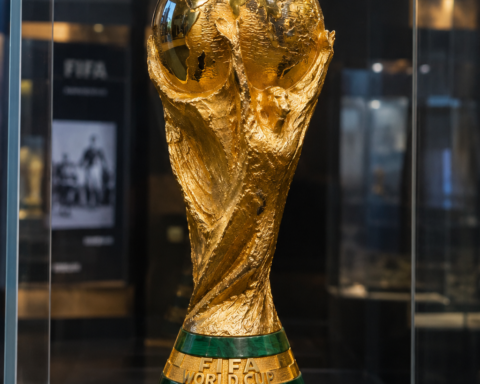
The Spanish national team enters the World Cup, which begins today in the USA, Canada and Mexico, with high expectations. Since their historic 2010 World Cup victory in South Africa, “La Roja” have been waiting for over a decade for their next major triumph on the global stage. The aim is clear: the second World Cup star is finally meant to become a reality.
Spain Expat Press Editorial Team
by Marlon Gallego Bosbach
Spain therefore faces a tournament marked by high expectations, but also by the shadows of its more recent past.
A contender with ambition
The current Spanish squad is once again regarded internationally as one of the contenders for the title. This is largely due to a new generation of players who have established themselves at the highest level in recent years, both at club level and in the national team, and who most recently won the Nations League in 2023 and the European Championship in 2024 in Germany.
The team is considered technically strong, tactically flexible, and significantly more stable than in the period following the golden era of three consecutive titles between 2008 and 2012. Performances in World Cup qualifying, as well as in recent tournaments (the European Championship and the Nations League), have further reinforced the impression that Spain is once again among the absolute elite of world football.
The burden of recent tournaments
Despite the positive development, one issue remains ever-present: the disappointing performances at recent World Cups.
In 2014 in Brazil, Spain experienced a complete break with its own success story. As reigning World and European champions, the team was eliminated already in the group stage – a sporting shock that marked the end of an era.
Four years later, in 2018 in Russia, Spain did manage to return to the knockout stage, but their campaign ended in the round of 16 against the hosts. A dominant performance never materialised, and expectations were once again not met.
The 2022 tournament in Qatar also ended early. After an underwhelming group stage, Spain were eliminated in the round of 16 on penalties against Morocco – another chapter in a series of painful World Cup experiences.
The rebuilding process as an opportunity
Seitdem hat sich das Gesicht der Nationalmannschaft deutlich verändert. Der Fokus liegt heute auf einer jüngeren, dynamischeren Generation, die teilweise bereits internationale Titel auf Klubebene gewonnen hat und auch im Nationaltrikot mit dem Gewinn der Nations League 2023 sowie dem Sieg bei der EM 2024 durchaus schon große Erfolge gefeiert hat.
The team appears more structured, more mature, and operates as a strong unit combined with individual quality. Particularly in midfield and in build-up play, the side continues to rely on ball control and positional dominance, but increasingly combines this with pace and vertical attacking play. The approach is more direct and purposeful going forward – this is the key difference compared to the dominant years between 2008 and 2012.
In midfield, Pedri (FC Barcelona) and Rodri (Manchester City) act as the team’s key playmakers. Further up the pitch, the wing duo consisting of Lamine Yamal from FC Barcelona and Nico Williams from Athletic Club stands out in particular. However, both young players are currently carrying minor injuries and are not at full fitness. It therefore remains uncertain in what condition the pair will be able to perform at the World Cup. In attack, the team’s hopes rest on Mikel Oyarzabal of Real Sociedad. The forward is currently in impressive form, having scored in each of his last six appearances for the Spanish national team.
Spain’s opening match will take place next Monday (15 June) at 6 p.m. The team coached by national manager Luis de la Fuente will face Cape Verde in Atlanta at the Mercedes-Benz Stadium.
New expectations ahead of the tournament
With the expanded World Cup format and 48 participating nations, the tournament will be bigger and more unpredictable than ever. For Spain, this brings both opportunities and risks: the team is clearly among the favourites, but must deliver from the outset in order to meet expectations.
Public perception is clear: Spain is once again regarded as part of the broader world elite. At the same time, confidence in a successful tournament run remains cautious, shaped by the experiences of the last three World Cups.
Between hope and pressure
The key question ahead of the tournament is therefore not only how strong the team is, but whether it can cope with the psychological pressure of high expectations. The desire for a second star is ever-present – among fans, the media, and within the squad itself.
For many observers, it is clear that the potential is there, but the key will be whether Spain can consistently deliver on that potential throughout the entire tournament.