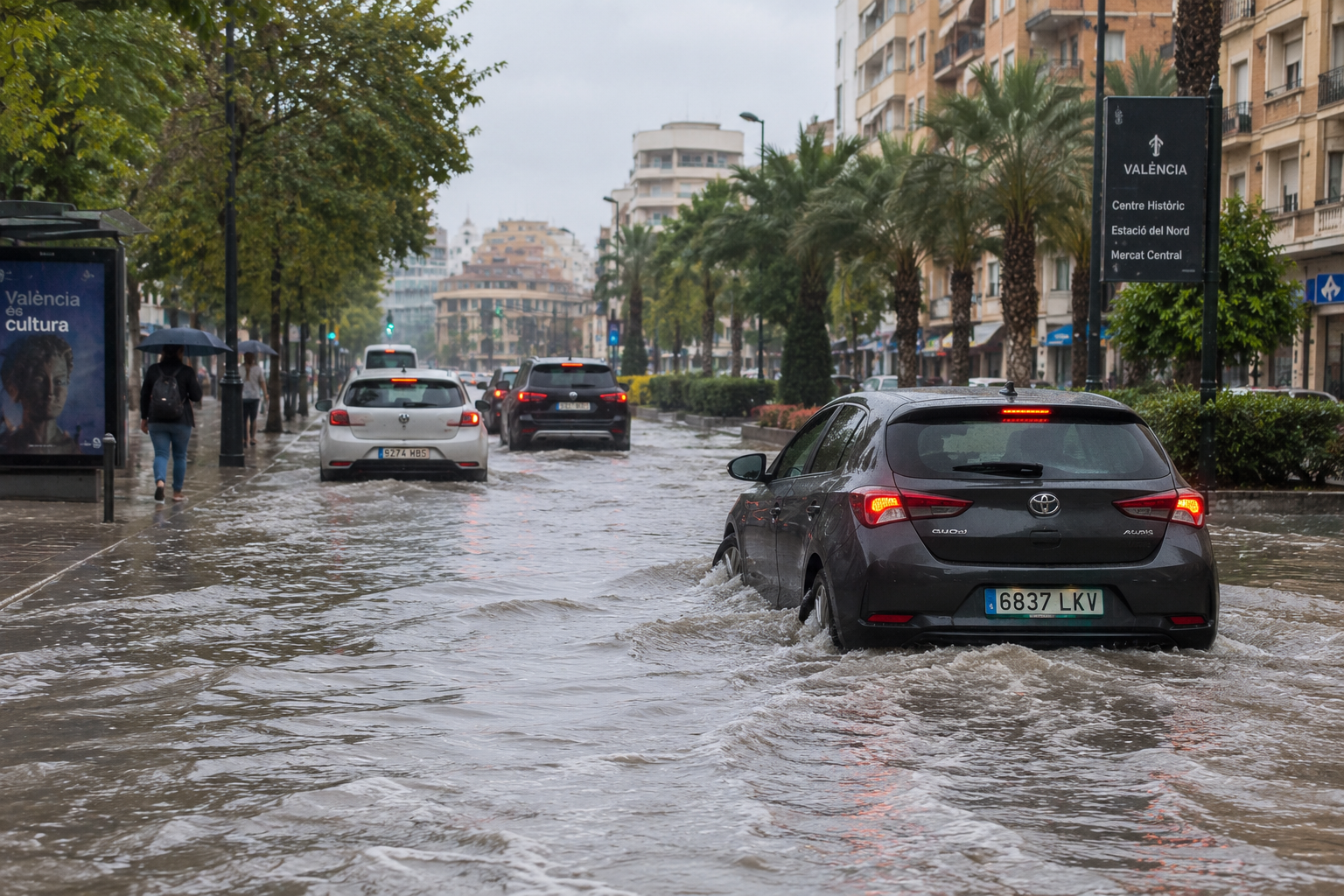
Valencia is working to return to normal following a severe storm. Heavy rains last Wednesday flooded streets in the city and its surrounding areas, toppled trees, and caused significant traffic disruptions. The impact was still clearly felt on Thursday, with nearly 95,000 students unable to attend in-person classes.
Spain Expat Press Editorial Team
by Marlon Gallego Bosbach
In total, emergency responders recorded more than 1,000 incidents. In addition to flooded roads and buildings, they had to deal with blocked transport routes, water ingress, and infrastructure damage. At the same time, public transport services were gradually resumed.
1,084 incidents in Valencia and the surrounding area
The city of Valencia and its surrounding area saw numerous emergency interventions during the severe weather. According to the regional government’s emergency coordination center, a total of 1,084 incidents related to the heavy rainfall were handled between 2 p.m. on Wednesday and 6 p.m. on Thursday; of these, 684 occurred within the city of Valencia.
In the city itself, the fire department and local police had to handle numerous reports. The fire department responded to around 250 incidents, while the local police received 211 reports.
The focus was primarily on property damage in public areas, flooded buildings, water ingress, traffic disruptions, and vehicles stranded in the water. Rescue operations were also required.
In addition to Valencia, a particularly high number of incidents were recorded in Torrent, where there were 77. Thirty interventions were counted in Paterna, 28 each in l’Eliana and Moncada, and 26 in Bétera.
81 liters of rain per square meter
Heavy rainfall struck Valencia with great intensity on Wednesday evening. 81 liters of rain per square meter were recorded in the city. In other parts of the province, even more rain fell within a short period.
The metropolitan area was particularly affected. In Torrent, flooding and rescue operations took place after people became trapped in their vehicles. Streets and garages were also flooded in other municipalities.
The heavy rainfall was accompanied by thunderstorms, hail, and strong wind gusts. The combination of precipitation and wind caused significant disruptions in public areas.
Almost 95,000 students without in-person classes
The impact of the severe weather was also felt in the education sector. In-person classes were cancelled for approximately 94,800 students across 13 municipalities in the provinces of Valencia and Alicante. These measures were intended to ensure safety in light of the weather conditions and the risk of flooding.
Universities also responded to the situation. The University of Valencia and other higher education institutions partially switched their courses to online instruction.
Authorities had already closed facilities as a precaution before the storm reached its peak. In Valencia, schools in particularly vulnerable areas were among those affected. Parks, gardens, and other public facilities were also temporarily closed.
Public transport gradually resumed
Heavy rainfall caused significant, temporary disruption to public transport in the region. Metrovalencia had to suspend operations, while Cercanías trains were also affected by cancellations and delays. Services gradually resumed on Thursday, though restrictions and delays persisted.
Valencia Airport in Manises was also affected for a time. Operations were temporarily restricted due to heavy rainfall; flights had to be diverted or could not take place as planned.
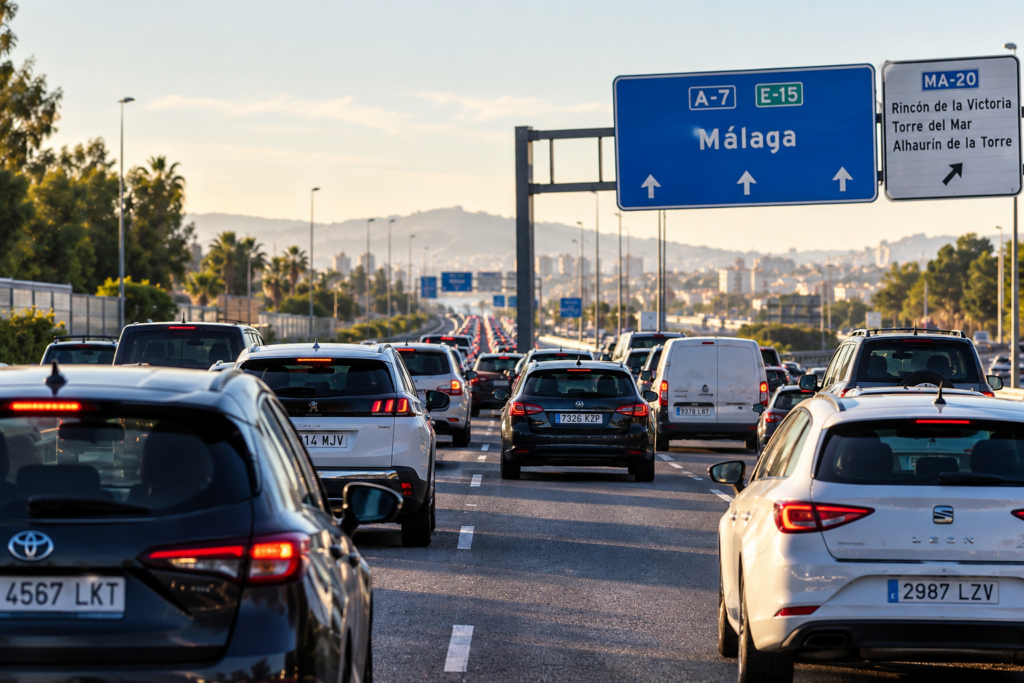
Flooded tunnels, stalled vehicles, and fallen trees caused additional problems on the roads. Emergency crews worked to clear the affected routes and repair the damage.
Fallen trees and closed green spaces
In addition to the flooding, the storm also caused visible damage within the city area. Trees and large branches toppled over and had to be cleared away by emergency crews.
The Jardín del Turia, one of Valencia’s best-known green spaces located in the former riverbed, initially remained closed. The city focused on cleanup operations and inspecting the affected areas.
Memories of the 2024 DANA disaster
The renewed flooding stirred up memories in several municipalities of the devastating DANA event of October 29, 2024. The masses of water caused great concern, particularly in places such as Paiporta, Catarroja, Chiva, Torrent, and Benetússer.
The Barranco del Poyo and other watercourses once again carried large volumes of water. In Paiporta, a garage—among other structures—was flooded after a wall was damaged by a landslide.
Current events have thus once again highlighted the vulnerability of certain areas to extreme rainfall. However, the scale of the 2024 disaster must not be equated with the consequences of this storm known to date.
Dispute over the timing of the ES-Alert warning
Alongside the cleanup efforts, a political debate emerged regarding the timing of the warning issued to the public. The ES-Alert message was sent out shortly after 10 p.m. on Wednesday evening; by that time, numerous roads were already flooded. Valencian government official Juanfran Pérez Llorca defended the authorities’ actions, citing technical criteria and stating that the warnings had been issued in a timely and proper manner.
In contrast, the opposition parties PSPV and Compromís criticized the timing of the warning. The *Asociación de Víctimas Mortales de la DANA* also expressed doubts as to whether the message could still have helped in time to get people out of at-risk areas.
The debate thus touches upon a central question of disaster management: When must warning messages be issued if weather conditions deteriorate rapidly and flooding has already begun?
Further severe weather in the region
As Valencia and its surrounding areas slowly recovered on Thursday, the storm shifted to other parts of the region. Further heavy rainfall was recorded, particularly in the province of Alicante.
In El Pinós, around 40 liters of rain per square meter fell during a localized thunderstorm. Significant rainfall was also reported in the Marina Alta region. Authorities continued to monitor the weather situation, while work to repair damage and restore infrastructure proceeded.