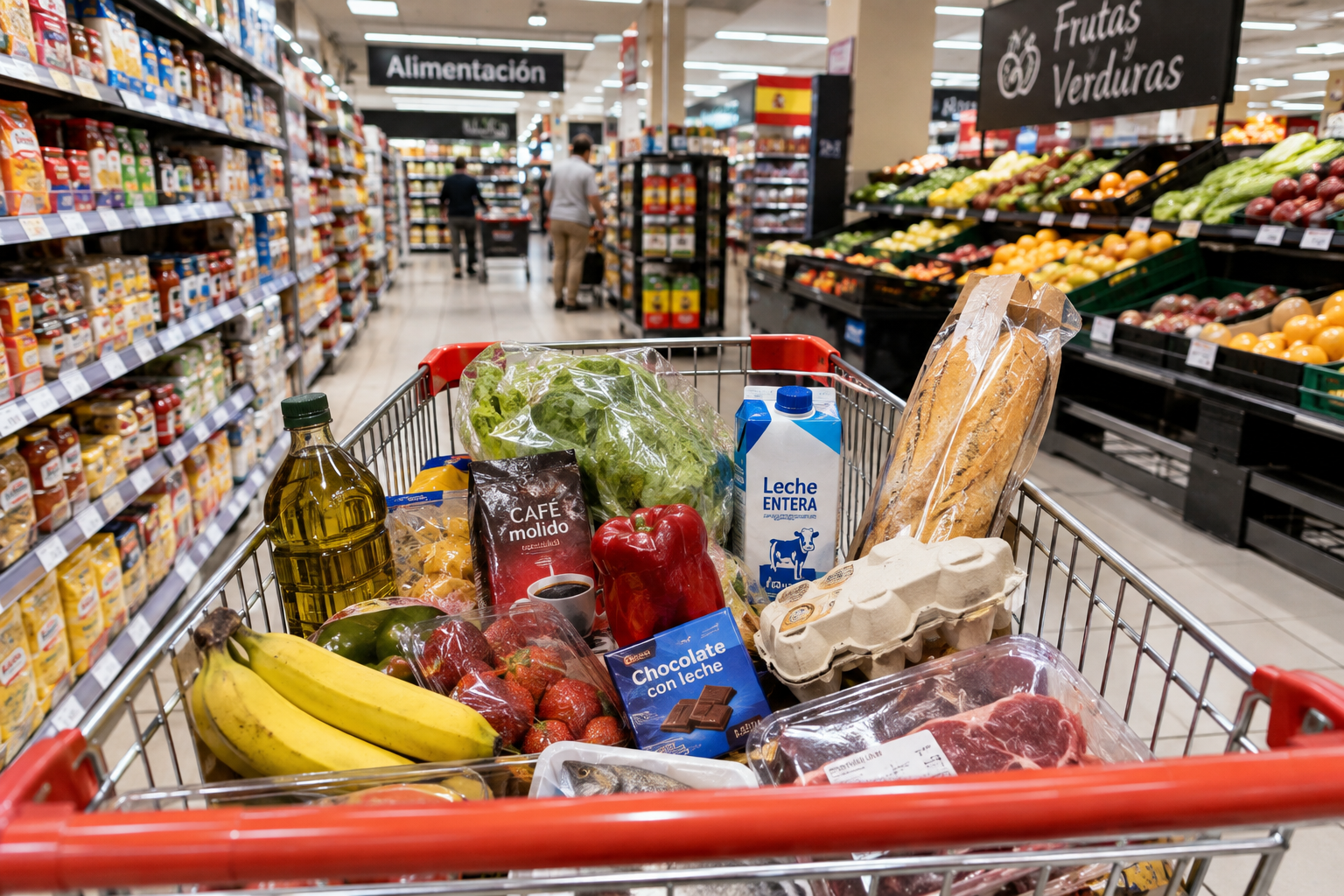
Grocery shopping has become significantly more expensive for many households in Spain. According to a recent study by the Organización de Consumidores y Usuarios (OCU), the price of the surveyed basket of goods has risen by an average of 39.5 percent since 2021. Compared to the previous year alone, prices increased by another 1.8 percent.
Spain Expat Press Editorial Team
by Marlon Gallego Bosbach
Some everyday products have seen particularly sharp price increases. According to the OCU, ground coffee now costs 142 percent more than it did five years ago. The price of medium-sized eggs has risen by 135 percent, and large eggs by 123 percent. Even a bar of milk chocolate, with a price increase of 101 percent, is now more than twice as expensive as it was in 2021.
Fresh food prices are driving prices even higher
The price increase for fresh food continues. In the current survey period, these products became an average of 4.7 percent more expensive.
The increase was particularly pronounced for fish, at 8.6 percent. Meat prices rose by an average of 3.7 percent, while fruit and vegetables increased by 3.5 percent. This directly impacts food items that constitute a significant part of daily shopping in Spain.
Individual products also saw particularly sharp price increases within a year. Tomatoes became 33.2 percent more expensive, cauliflower 22.8 percent, and eggplants 20.4 percent. Gallo de ración, a fish common in Spain, saw a price increase of 19.4 percent.
However, not all prices moved in the same direction. According to the OCU, mashed potatoes became 14.8 percent cheaper, artichokes 15.1 percent cheaper, and bananas 22.6 percent cheaper. Paper napkins also became significantly cheaper.
61.8 percent of the products examined became more expensive
Overall, the consumer organization found that 61.8 percent of the products in the 2026 shopping basket had become more expensive. At the same time, prices for other products fell.
For the study, the OCU recorded 101,520 prices in 690 stores and examined price trends in 189 cities. The shopping basket comprised 244 products from up to 80 categories – including fresh and packaged food as well as hygiene, household, and cleaning products. Both branded and store-brand products were included.
Price increases have slowed – but the price level remains high
The latest figures also show that the pace of price increases has slowed compared to previous years. Last year, the increase in the OCU basket of goods was 2.5 percent, while currently it is 1.8 percent.
However, this does not mean that prices have returned to their previous levels. Rather, the prices reached during the last period of inflation remain unchanged. The OCU continues to view this as a strain on the purchasing power of Spanish households.
Save up to €1,310 by shopping at the right supermarket
According to the study, consumers have one way to reduce costs: comparing supermarkets. Those who specifically shop at cheaper retailers can save an average of up to €1,310 per year, according to the OCU. This corresponds to approximately 20 percent of the average annual expenditure for the surveyed shopping basket of about €6,602.
The potential savings vary significantly depending on location. In Madrid, the possible difference between the cheapest and most expensive stores surveyed can reach up to €4,381 per year. In Mieres, Asturias, however, the difference is only around €381.
Dani, Family Cash and Tifer are among the cheapest chains
In a comparison of supermarket chains, Supermercados Dani leads the OCU ranking for 2026. It is followed by Family Cash, Tifer, Alcampo, and Supeco. The cheapest single location examined was an Alcampo market in the Bonaire shopping center in Aldaia, near Valencia.
At the other end of the price comparison is Sánchez Romero. According to the study, Hipercor, El Corte Inglés, and Supercor are also among the more expensive providers.
However, the larger chains are also showing signs of movement. In 2026, Lidl was the cheapest option in 60 of the surveyed locations – significantly more often than in the previous year. Mercadona and Supeco also improved their position in several cities.
Valencia is considered the cheapest region
There are also significant regional differences. According to the OCU, the Valencian Community has the lowest average price level, followed by Murcia and Asturias.
Among the more expensive regions are Castilla-La Mancha, Castilla y León, Catalonia, the Basque Country, La Rioja, Navarre and Cantabria.
Among the individual cities, Torrent, Villarreal, and Santa Pola fare particularly well. Conversely, Getxo, Pozuelo de Alarcón, Majadahonda, and Cerdanyola del Vallès are among the cities with the highest average prices.
OCU calls for VAT relief
Given the persistently high food prices, the OCU is calling for political measures to provide relief to consumers. The organization specifically advocates reducing the value-added tax (VAT) on basic foodstuffs from the current four percent to zero percent.
The consumer organization believes that such a regulation should also include meat and fish. The OCU points out that these products are financially difficult for a significant number of families to afford.
The current report thus reveals two developments simultaneously: Price increases have slowed, but the general price level in supermarkets remains significantly higher than it was five years ago. For consumers, comparing prices at different supermarkets therefore remains a key way to limit their monthly expenses.