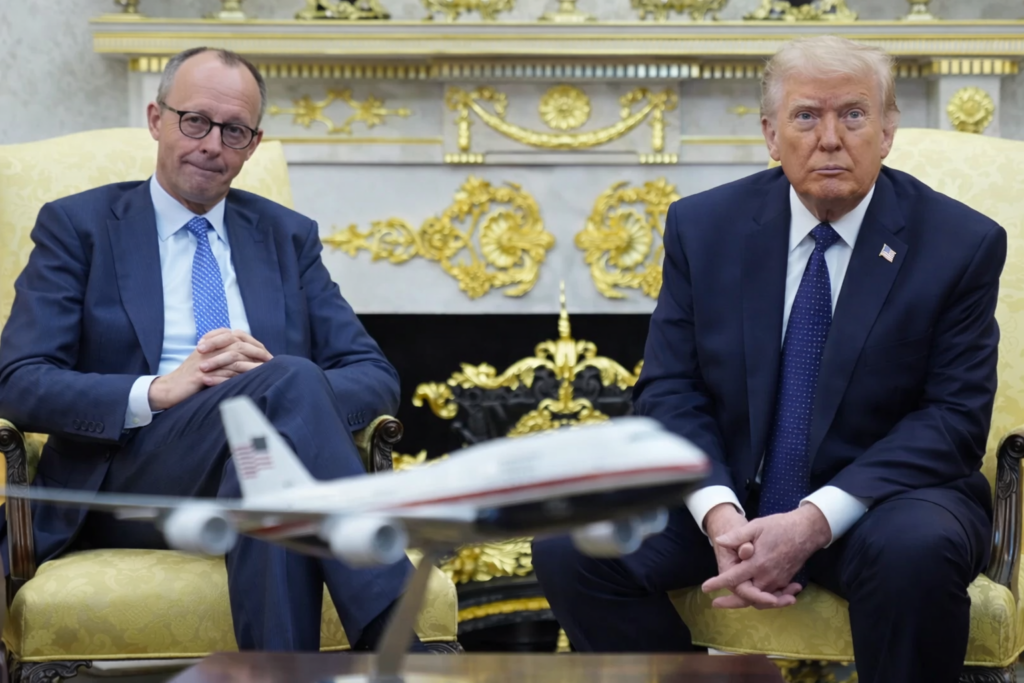
The recent tensions between the Spanish government and former U.S. president Donald Trump have sparked an intense political debate both in Spain and internationally. Trump described Spain as a “terrible ally” and even threatened to end trade relations with the country..
Behind the diplomatic clash, however, a deeper question is being increasingly discussed in Madrid and across Europe: is the stance taken by Spanish Prime Minister Pedro Sánchez purely a matter of foreign-policy conviction — or also a calculated political strategy during a difficult moment at home?
The origins of the dispute
The tension emerged in the context of rising military escalation in the Middle East. The Spanish government decided that U.S. military bases located on Spanish territory would not be used for offensive operations related to possible attacks against Iran.
Madrid presented the decision as a defence of international law and a commitment to diplomatic solutions rather than military escalation.
The reaction from Washington was swift. Trump sharply criticised Spain’s position and suggested that economic consequences could follow.
Trade threats with limited practical impact
Despite the strong rhetoric, a real breakdown in trade relations between the United States and Spain would be difficult to implement.
Spain exports more than €16 billion worth of goods to the United States each year
However, trade relations with the United States are largely managed at the level of the European Union. Any major trade restrictions would therefore have to be negotiated with Brussels and could not easily target Spain alone.
Political debate within Spain
The government’s stance has also sparked a domestic political debate.
Some analysts argue that Spain is attempting to reinforce its international profile and promote a more independent European foreign policy at a time of growing geopolitical tension.
Others believe that internal political considerations may also play a role. Confrontation with Trump — a highly controversial figure in much of Europe — could strengthen support for the government among parts of the progressive electorate.
In international politics, it is not uncommon for foreign-policy decisions to also carry a domestic political dimension.
Defence spending: a deeper source of tension
Another underlying factor in the dispute concerns defence spending within NATO.
The United States has long pressed European allies to increase military spending. Trump has repeatedly argued that NATO members should spend up to 5 per cent of their GDP on defence, far above the current alliance target.
Spain currently spends around 2 per cent of GDP, and the government argues that a dramatic increase to the levels proposed by Washington would be economically difficult to sustain.
This disagreement has already strained relations between the two countries for some time.
Diplomatic pressure rather than a real economic rupture
Despite the sharp political rhetoric, many experts believe a real economic confrontation remains unlikely.
The economic relationship between the United States and Europe is too deeply intertwined to be easily disrupted. In the past, similar diplomatic disputes have typically been resolved through negotiation.
The current clash between Sánchez and Trump nonetheless illustrates a broader shift in international politics: foreign-policy decisions increasingly intersect with domestic political strategies in an era of rising geopolitical tension.