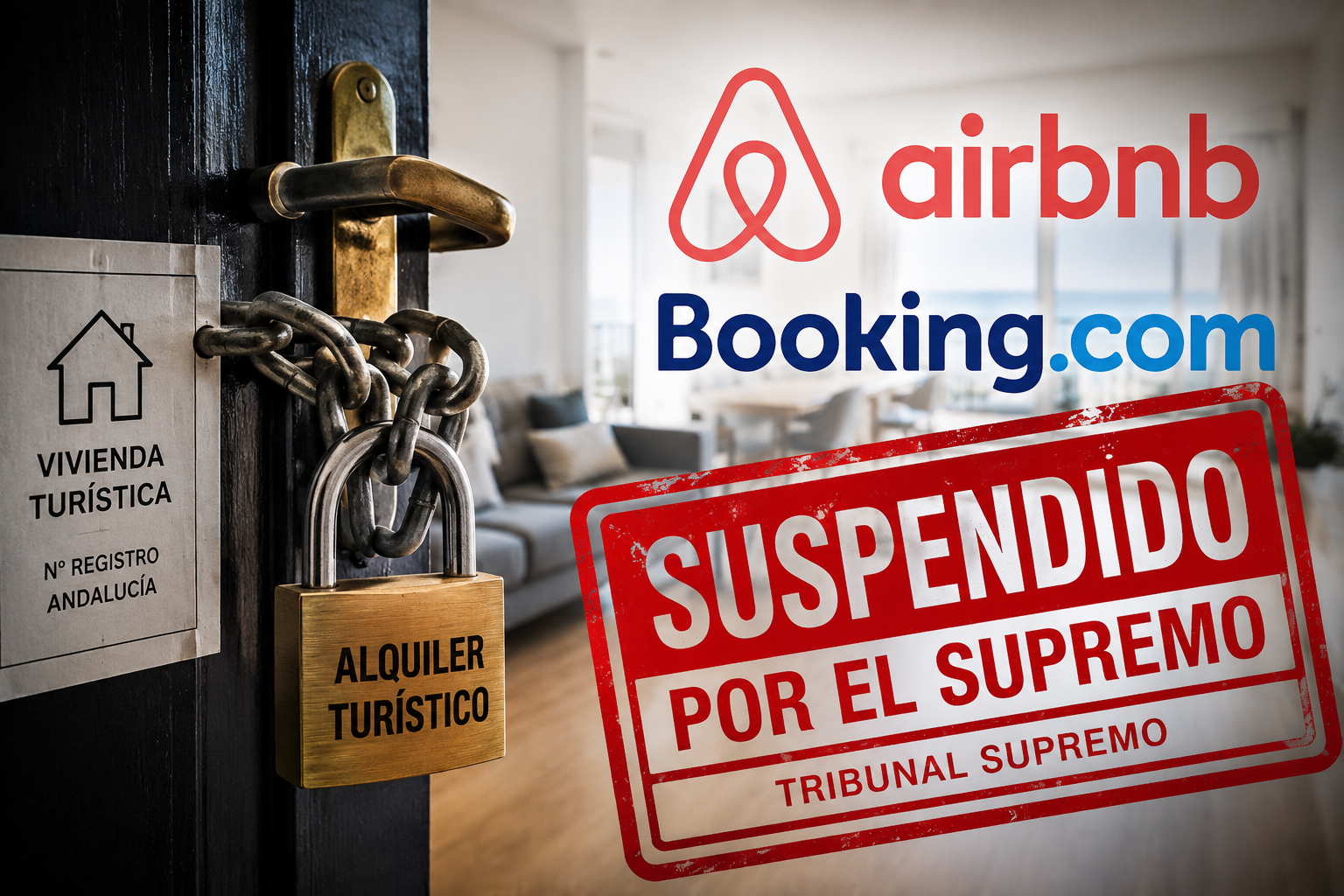
 The suspension of Spain’s state-wide tourist rental registry by the Supreme Court has triggered political and economic turmoil across Andalusia. Thousands of property owners who were unable to legally advertise their holiday rentals on platforms such as Airbnb or Booking.com for months may now be entitled to compensation
Spain Expat Press Editorial Team
According to official figures, more than 167,000 tourist apartments are currently registered in Andalusia. However, since the introduction of the controversial state decree last summer, only around 100,000 owners applied to join the national registry — and almost 26,000 applications were rejected. As a result, tens of thousands of landlords found themselves trapped in bureaucratic limbo: they held valid regional licences but were effectively banned from advertising their properties online.
Following the Supreme Court’s decision to suspend the regulation, the Andalusian government has now officially requested that Madrid examine possible compensation for affected property owners. Andalusia’s Tourism Minister, Arturo Bernal, has written to Spain’s Minister of Industry and Tourism, Jordi Hereu, demanding an urgent sector conference to analyse the economic damage caused.
The regional government is specifically asking for an evaluation of both “direct costs” and “loss of earnings” suffered by landlords who were prevented from operating despite complying with Andalusian regulations.
Andalusia also insists that the vast majority of affected owners are ordinary individuals rather than large investment funds. According to regional data, nearly nine out of ten tourist rental licences in Andalusia belong to private owners.
Control Returns to Andalusia
Following the ruling, full authority over tourist rental regulation now returns to the Andalusian government, which argues that it already had sufficient control mechanisms in place without intervention from Madrid.
Regional authorities claim to have shut down more than 15,000 illegal tourist rentals over the past three years — including almost 6,000 in 2024, nearly 7,000 in 2025 and more than 2,600 so far in 2026..
Andalusia also points out that cities such as Seville, Málaga, Cádiz and El Puerto de Santa María had already introduced restrictions preventing automatic approvals for new tourist apartments in heavily saturated areas.
At the same time, the region has launched the specialised “Titan” police unit tasked with monitoring illegal tourist rentals and tracking online listings.
Madrid Continues to Push for Stricter Controls
Despite the legal setback, Spain’s Housing Ministry has shown no sign of softening its position. The department led by Isabel Rodríguez has called on regional governments to intensify inspections and tighten controls — with particular criticism directed at Andalusia.
“It cannot be acceptable that a simple declaration is enough to register a tourist apartment without later verifying whether regulations are actually being followed,” the ministry stated after the court ruling.
For thousands of landlords, however, the Supreme Court’s decision represents something very different: relief. Many now hope not only to return to platforms such as Airbnb and Booking.com, but also to seek financial compensation after months of uncertainty, bureaucracy and lost income.