Tensions in the Spanish enclave of Ceuta are deepening as thousands of migrants remain outside formal accommodation and security forces struggle to contain an increasingly volatile situation. After four soldiers were injured in an attack on a military vehicle, Spain’s armed forces now face an uncomfortable question: what exactly are troops permitted to do when they themselves come under attack?
Spain Expat Press
CEUTA – Spain’s migration crisis in Ceuta is becoming something more difficult to define – and considerably harder to contain.
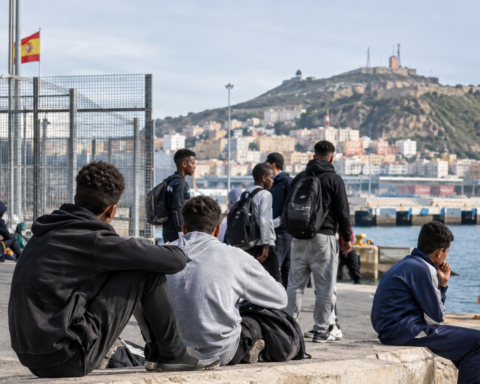
Thousands of migrants remain in the autonomous Spanish city on the north African coast, many sleeping outside official accommodation and in precarious conditions. At the same time, tensions between migrants, local residents and the authorities have intensified, with a succession of confrontations placing growing pressure on police, the Guardia Civil and the military personnel deployed in support roles.
The most serious recent incident came in the early hours of Thursday in Benzú, close to Ceuta’s northern coastline.
According to the authorities, a group of between 30 and 40 people surrounded a Spanish army vehicle and pelted it with large stones. Four soldiers were injured. Twelve Moroccan nationals were subsequently arrested in connection with the attack.
The episode has now opened another front in an already complicated crisis.
Spain’s military associations are demanding greater clarity over the rights of soldiers to protect themselves when their role is officially one of support rather than civilian law enforcement.
Soldiers deployed – but with limited powers
More than 400 additional Policía Nacional and Guardia Civil officers have been deployed to Ceuta, while the armed forces have also been providing support and maintaining a visible presence.
But soldiers are not police officers.
Responsibility for public security lies primarily with the Policía Nacional and Guardia Civil. Military personnel deployed in support of those forces do not automatically acquire the same powers.
That distinction has become increasingly difficult to navigate as troops find themselves operating in an environment in which the risk of confrontation has grown.
Following the Benzú attack, several military associations have argued that the present framework leaves troops exposed.
The Unified Association of Spanish Military Personnel (AUME) has called on the government to ensure soldiers are able to use “proportionate” force when confronted with situations posing an immediate threat to themselves or others.
The organisation argues that troops need an unambiguous legal and operational framework allowing them to respond appropriately when faced with an unlawful and imminent attack.
Where does self-defence begin?
At the heart of the dispute is a deceptively simple question.
Nobody seriously disputes a soldier’s basic right to defend himself or herself against an immediate attack. The difficulty lies in determining which means can be used, under what circumstances and how far troops may go when a support operation suddenly becomes a violent confrontation.
AUME argues that no operational instruction should prevent military personnel from legitimately defending themselves or third parties when faced with an immediate threat.
It is also calling for better personal protective equipment, appropriate resources and specific training for precisely these kinds of situations.
Other military organisations have echoed those concerns.
The Union of Troop Military Personnel (UMT) has criticised a situation in which soldiers are deployed in a sensitive security environment without, it says, sufficient legal protection or adequate means of self-defence.
The Spanish Troops and Sailors Association (ATME), meanwhile, wants the Ministry of Defence urgently to review deployment protocols, equipment and coordination with the Interior Ministry.
Tensions are also rising on the streets
The debate over military powers comes against an increasingly fraught backdrop.
Groups of local residents have attempted to dismantle makeshift migrant camps on beaches, while tents and temporary shelters have been set alight. Police have intervened to keep residents and migrants apart and, during some confrontations, warning shots have been fired.
The Guardia Civil has urged residents to remain calm and leave public-order operations to the security forces.
That appeal is significant. Anger over the situation may be growing, but attempts by residents to take matters into their own hands risk transforming an already serious migration and humanitarian crisis into a broader confrontation on the streets.
Reports of theft, assaults and other incidents have contributed to a growing sense of insecurity among parts of the population. At the same time, migrants living outside formal accommodation remain in highly precarious circumstances.
Ceuta is therefore confronting two problems at once: managing a large population of migrants stranded in the city while preventing frustration, fear and political anger from escalating into further violence.
Police unions also demand reinforcements
The armed forces are not alone in calling for changes.
Police union JUPOL has requested an expansion of the Policía Nacional’s Prevention and Reaction Units, known as UPRs, including an additional operational group in both Ceuta and Melilla.
It also wants a central UPR capable of being deployed rapidly when serious and unexpected public-order situations arise.
The Unified Association of Guardia Civil Officers (AUGC) has similarly demanded additional personnel and equipment and called for firm legal action against anyone who attacks members of the security forces.
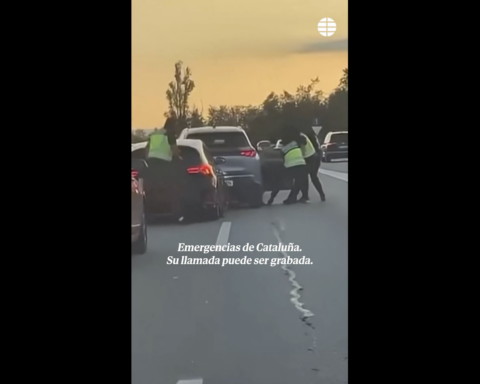
The demands follow several incidents involving security personnel, including the assault of an off-duty Guardia Civil officer at a petrol station.
The broader concern among police and military organisations is increasingly similar: personnel are being asked to operate in an exceptionally tense environment and want both the resources and legal certainty to respond when situations deteriorate.
Ceuta faces a crisis with no simple solution
For Madrid, the difficulty is that this is no longer simply a question of deploying more officers.
The authorities must provide accommodation and humanitarian assistance to thousands of people while maintaining public order and preventing violence between migrants and increasingly frustrated sections of the local population.
And now they must also define the military’s role.
Deploying soldiers can increase manpower and provide a visible state presence. But it also raises fundamental questions when those troops encounter violence while carrying out duties that stop short of conventional policing.
The attack in Benzú has brought that contradiction sharply into focus.
If soldiers are to be placed on the streets as part of the response to an increasingly volatile crisis, military organisations argue, the government must establish precisely what they are expected to do – and what they are permitted to do when they themselves become the target.
Ceuta does not merely need more uniforms on the streets. It needs clear lines of responsibility, workable rules of engagement and a strategy for a crisis that increasingly looks less like a temporary emergency and more like a prolonged test of the Spanish state’s ability to maintain order.