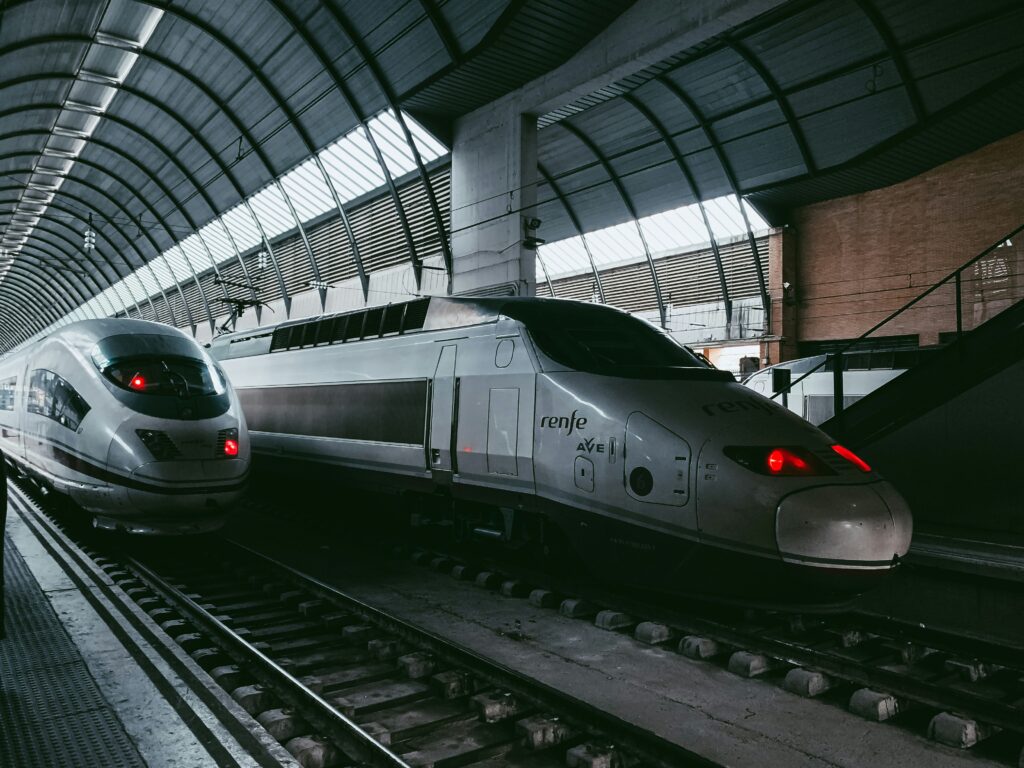
Seville has made a remarkable leap up the list of destinations favoured by Spanish travellers. Ranked just 13th for September trips three years ago, the Andalusian capital has now climbed to fifth place. Its rise reflects a particularly Spanish habit: when the fierce summer heat begins to fade, the season of weekend escapes and short breaks at home gets under way.
Spain Expat Press Editorial Team
In July and August, Seville can test the stamina of even the most enthusiastic visitor. Temperatures well above 35C are hardly unusual, the afternoon sun bears down on the narrow streets of the old town and sightseeing can quickly become an exercise in finding the nearest patch of shade.
Then September arrives – and with it, apparently, the Spaniards.
According to an analysis of advance bookings by free-tour platform GuruWalk, Seville has climbed into the five most popular destinations among Spanish users for September 2026, behind only Rome, Budapest, Madrid and Prague.
The rise has been striking. Seville stood at 13th in 2023 and slipped to 16th the following year. By 2025 it had recovered to 10th. This year it has jumped to fifth – eight places higher than three years ago.
It is an impressive turnaround for a city that, at the height of summer, does not even make the same travellers’ top 20.
When the heat retreats, Seville returns
The contrast says much about the rhythms of domestic travel in Spain.
July and August may belong to beaches, coastal resorts and destinations offering some respite from the heat. But once temperatures begin to fall, Spain’s great inland cities return to the travel map.
And Spaniards have no shortage of reasons to stay within their own borders.
Domestic travel is deeply embedded in Spanish leisure culture. A holiday does not necessarily mean two weeks abroad or a flight to another country. Particularly in autumn and winter, short breaks are a familiar part of the calendar: leave on Friday or Saturday, spend a night or two somewhere different, eat well, wander through an old town and be home again by Sunday evening.
Few countries offer quite so much variety without crossing a border. Galicia’s Atlantic landscapes bear little resemblance to Andalucía; the Basque Country has its own culture and cuisine; Asturias offers mountains and a rugged northern coast; Madrid provides the energy of a major European capital, while cities such as Toledo, Córdoba, Granada and Seville can turn a weekend into a journey through centuries of history.
For Spaniards, their own country remains one of their favourite places to explore.
The Spanish art of the ‘puente’
Then there is the puente – literally a “bridge”, and one of the more cherished features of the Spanish calendar.
When a public holiday falls on a Tuesday or Thursday, taking the Monday or Friday off can transform it into a four-day break. Trains fill, motorways become busier and hotel rooms in popular cities can suddenly become considerably harder to find.
Autumn is particularly well suited to such escapes.
International perceptions of Spanish tourism are still dominated by July and August, sunshine and the Mediterranean coast. Domestic travel follows a rather more complicated calendar. Once the punishing heat recedes, cities in the south and interior become considerably more appealing.
Few illustrate that seasonal shift better than Seville.
A city made for a weekend – just not necessarily in August
The cathedral and Giralda, the Real Alcázar, Plaza de España, Triana and the maze of streets that make up Seville’s historic centre can comfortably fill two or three days. Add the city’s tapas bars, terraces and habit of conducting much of life outdoors, and it has almost everything required of a weekend destination.
The problem in August is the thermometer.
Walking from monument to monument when temperatures are approaching 40C is an entirely different proposition from doing so on a warm autumn evening. By September and October, Seville becomes easier to explore on foot, terraces regain their appeal during the day and visitors can spend hours outdoors without planning their itinerary around air-conditioning.
The latest ranking suggests Spanish travellers are increasingly taking notice.
Other Spanish cities also benefit from the seasonal shift. Madrid reaches third place in the September ranking, while Toledo comes in seventh. Some destinations that flourish during the summer, meanwhile, fall sharply as the season changes.
Porto, which topped the ranking in August, drops to 10th for September, while Dubrovnik and Lisbon disappear from the top 10 altogether.
More than 116,000 Spanish visitors in September
The shift is not confined to one travel-platform ranking.
In September 2025, Seville received 116,842 Spanish visitors, 17.7% more than in August and just over 6% more than during the same month a year earlier.
Andalusians themselves accounted for the largest share of domestic visitors, followed by travellers from Madrid and Catalonia.
For Seville, that domestic market is increasingly significant – and its importance could grow further if extreme summer temperatures continue to influence when people choose to visit southern Spanish cities.
The traditional image of Spain’s tourism calendar has always revolved around the high summer months. But for destinations such as Seville, the more interesting story may increasingly begin when the beach holidays are ending.
The Andalusian coast can keep July and August.
When the heat finally loosens its grip and the first autumn weekends arrive, Spaniards start packing their bags again – and this year, Seville is near the top of the list.