Adamuz (Córdoba), 18 January 2026.
Rail services between Andalusia and Madrid remain suspended following what is now regarded as the most serious accident ever recorded on Spain’s high-speed rail network. The incident occurred on Sunday evening in the municipality of Adamuz, in the province of Córdoba, where two long-distance trains derailed and collided. Authorities have officially confirmed 34 fatalities so far, with many more passengers injured.
Spain Press Editorial Team
Reconstruction of events
Shortly before 8pm, a high-speed train operated by Iryo, travelling from Málaga to Madrid-Puerta de Atocha, derailed as it approached a set of points near Adamuz. For reasons that have yet to be established, several carriages left the track.
In the hours that followed, reports emerged that one train driver may have warned of an unusual noise shortly before the derailment. This information has not been officially confirmed and forms part of the lines of inquiry now being examined by investigators.
After derailing, the Iryo train partially encroached onto the adjacent track. At that moment, a Renfe service travelling in the opposite direction, from Madrid to Huelva, was approaching on the same line. A collision followed, described in initial reports as lateral, causing the second train to derail as well.
The impact caused severe damage to several carriages, some of which were badly deformed, leaving numerous passengers trapped inside and complicating rescue efforts.
Rescue operation and public assistance
Emergency services, including medical teams, firefighters, the Guardia Civil and civil protection units, launched a large-scale response. Spain’s rail infrastructure manager, Adif, activated its crisis committee to coordinate operations with regional and national authorities.
A convoy of ambulances is heading to the scene of the accident in Adamuz.
It’s not magic, it’s your taxes. pic.twitter.com/REYRaVQKIy
— Noa Gresiva (@NoaGresiva) January 18, 2026
Los vecinos de Adamuz han abierto sus casas, cedido sus vehículos y se han volcado en el polideportivo municipal para acoger a las víctimas y heridos que pasarán allí la noche.
La solidaridad de la gente siempre va por delante de rencillas políticas y miserias. pic.twitter.com/gmbBapohR1
— Ibon Perez (@IbonPerezTV) January 18, 2026
At the same time, residents from neighbouring towns reportedly arrived at the scene spontaneously to help assist the injured in the first critical moments, before all emergency units were fully deployed.
Rail disruption and wider impact
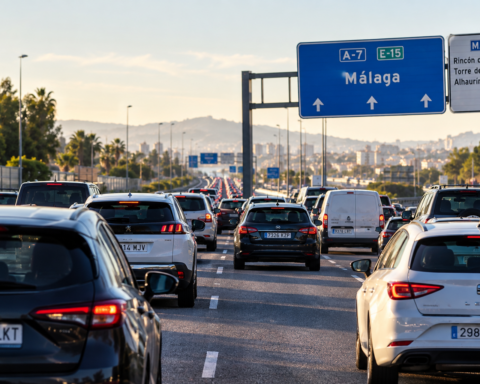
As a result of the crash, rail traffic between Madrid and large parts of Andalusia has been completely halted. Authorities have confirmed that services will remain suspended for at least two days, while damaged trains are removed and the condition of the infrastructure is assessed.
The suspension has triggered major disruption to alternative transport. At Madrid-Puerta de Atocha station, long queues formed at car-rental desks as thousands of passengers sought to continue their journeys by road.
Spain’s flag carrier, Iberia, announced that it has made additional flights available for affected passengers in an effort to ease pressure on land transport links between Madrid and Andalusia.
Investigation under way
The precise cause of the initial derailment remains under investigation. Technical teams are examining the state of the track, signalling systems, onboard data recorders and testimonies from rail staff before drawing any conclusions.
Emergency contact
Authorities have reiterated that the emergency number 112 remains available around the clock for information or assistance related to the accident.
The tragedy has shocked the country and reopened a national debate on the safety of Spain’s high-speed rail network, a cornerstone of its transport system.