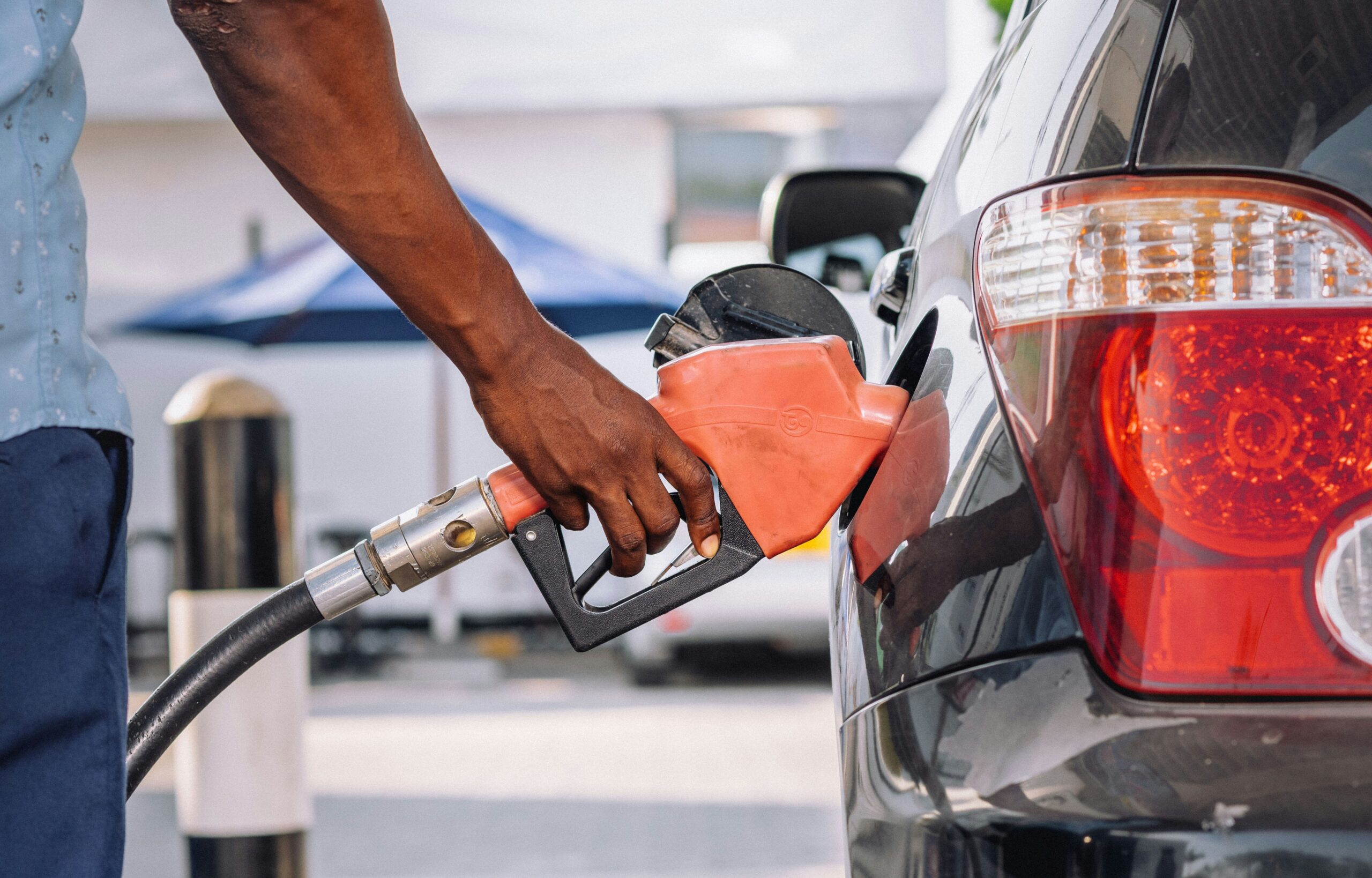
The Spanish government is set to significantly increase tax relief on diesel from September. Instead of the five cents per litre originally planned, motorists will receive 20 cents per litre in relief. The move comes in response to sharply rising diesel prices.
Spain Expat Press Editorial Team
by Marlon Gallego Bosbach
Motorists in Spain can look forward to greater relief at the pump from September. The government is responding to the renewed rise in diesel prices by increasing the tax relief to 20 cents per litre.
The support was originally intended to be gradually phased out. However, after diesel prices rose significantly more in July than they had a year earlier, a safeguard clause included in the government’s package of measures has now been triggered.
Diesel prices rise by more than 15 per cent
The key factor was the development in July: diesel prices in Spain were 15.7 per cent higher than a year earlier. This pushed them above the 15 per cent threshold at which the so-called safeguard clause is automatically triggered.
As a result, the relief originally planned for September at just five cents per litre will be increased to 20 cents per litre.
For motorists, this represents a significant change, particularly given the currently high fuel prices.
Support had already been reduced
The measure comes at a time when the government had actually intended to gradually phase out fuel subsidies.
As recently as spring, both petrol and diesel were temporarily supported with a relief of 20 cents per litre. In July, the relief for diesel was reduced to 15 cents per litre, followed by a further cut to 10 cents per litre in August.
From September, the support was originally due to fall to just five cents per litre. However, that will no longer be the case: the safeguard clause prevents the relief from being reduced further despite the sharp rise in prices. As a result, the higher rate of 20 cents per litre will once again apply to diesel in September.
Petrol is subject to different rules
Petrol drivers, on the other hand, will benefit far less from the new measure. Petrol prices rose by 7.3 per cent in July compared with the previous year, remaining well below the 15 per cent threshold required to automatically trigger the safeguard clause. As a result, the tax relief for petrol will amount to just five cents per litre in September.
What does this mean for motorists?
The actual saving will, of course, depend on how much fuel is purchased. With a 50-litre tank, a relief of 20 cents per litre would amount to a saving of €10 per tank. For a 60-litre tank, the saving would be €12, while a 70-litre tank would save €14.
However, this is a tax relief rather than a fixed discount that motorists need to claim at the petrol station. The actual price at the pump will still depend on international oil prices, refinery costs and other factors.
High inflation increases pressure on the government
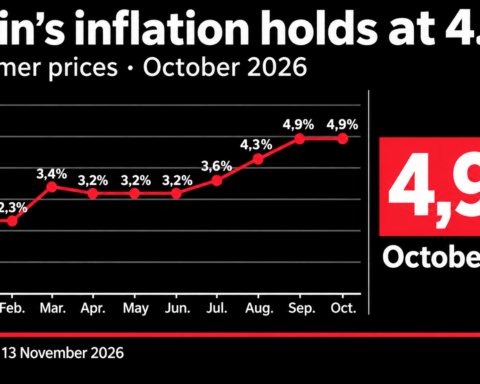
The decision also comes against the backdrop of significantly higher inflation in Spain. Spain’s National Statistics Institute (INE) revised the inflation rate for July upwards to 3.6 per cent. This was four-tenths of a percentage point higher than the previous month and marked the highest level since May 2024.
Key drivers of inflation included fuels and lubricants for personal transport, as well as electricity. Core inflation, which excludes particularly volatile components such as energy and unprocessed food, stood at 3.0 per cent.
The development highlights why rising fuel prices are becoming an increasingly important political and economic issue for the Spanish government. Higher prices at the pump do not only affect motorists directly; they can also push up transport and logistics costs, ultimately impacting the prices of many other goods and services.
Why diesel prices are currently rising so sharply
The rise in prices is also being driven by developments in international energy markets. Uncertainty surrounding the conflict between the US and Iran, as well as the situation in the Strait of Hormuz, has added further pressure to the markets. The vital shipping route is of major importance for the global transport of oil.
For Spain, this means that when international energy prices rise, the effects are eventually felt at petrol stations across the country. This is particularly noticeable for many households during the summer months, when the peak holiday season traditionally brings increased traffic and, consequently, higher demand for fuel.
What will apply from September
For motorists, the new rules can be summarised quite simply: from September, drivers of diesel vehicles will receive tax relief of 20 cents per litre, while the relief for petrol will be just five cents per litre.
The measure is a direct response to the sharp rise in diesel prices. However, this does not necessarily mean that motorists will actually pay 20 cents less per litre than they do now. The key factor will remain how international oil prices develop and, consequently, how the underlying price of fuel changes.
For diesel drivers in Spain, the decision is nevertheless good news for the time being: the planned reduction in support to five cents per litre has been avoided for now due to the sharp rise in prices.