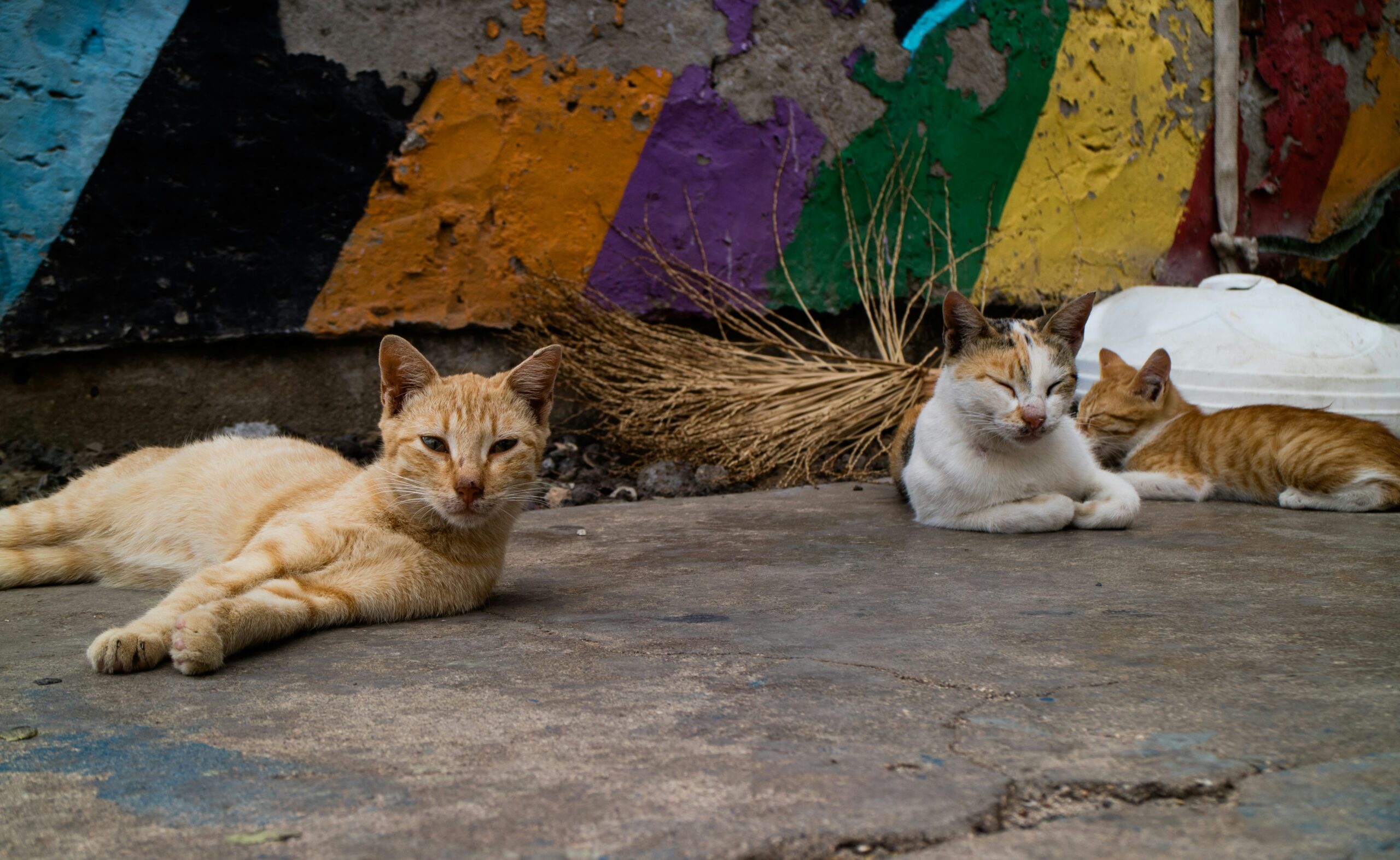
According to volunteer carers, numerous animals are missing from several cat colonies in the Spanish enclave. They have also reported finding dead cats, as well as pigeons and seagulls that had been partially eaten. The causes remain unclear.
Spain Expat Press Editorial Team
by Marlon Gallego Bosbach
The migration crisis in Ceuta has brought about another unusual side effect. Volunteer carers of cat colonies report missing cats, dead animals and changes to the animals’ habitats. Cat colonies in several parts of the Spanish enclave are said to be particularly affected, with their surroundings significantly altered since the mass border crossing at the end of July by makeshift settlements and an increased number of people.
The carers have therefore raised the alarm and are calling on the authorities to investigate the incidents. At the same time, it remains unclear what happened to the missing cats or who could be responsible for the reported deaths.
Fewer and fewer cats in the colonies
According to the volunteer carers, cat colonies near the desalination plant, Huerta Téllez, Carmelitas and Calle Goya are particularly affected. The situation is also said to have changed in the neighbourhoods of Príncipe, Sidi Embarek and Punta Blanca.
According to the carers, they continue to provide the animals with food and water every day. At the same time, they have noticed that significantly fewer cats are appearing in some areas.
According to reports, one of the carers summed up the situation by saying that cats were clearly missing, while it remained unclear what had happened to them.
The animals’ habitats are changing
One key factor appears to be the changing nature of the animals’ existing habitats. Following the large influx of migrants at the end of July, makeshift settlements were established in various parts of Ceuta. Some of these areas overlap with the habitats of the local cat colonies.
For the animals, this represents a significant change to their familiar surroundings. Cats are strongly attached to their territories. If these areas suddenly become occupied by large numbers of people, the animals may retreat or be forced to seek out new places to stay.
This also increases the risk of animals losing access to their feeding sites or being exposed to hazards such as traffic when moving into other areas.
Carers report finding dead cats
Particularly concerning are the reports of dead cats. A person responsible for one of the colonies said she had found several dead animals, some of which, according to her, showed signs of injury. There were also reports of cases of animal abuse. Pigeons and seagulls were also reportedly found partially eaten. The carers are therefore calling for the incidents to be investigated.
However, it is important to note that, according to their own statements, the carers did not witness anyone killing or eating the animals. The available reports therefore do not provide evidence identifying a specific perpetrator.
Link to the migration crisis remains unclear
The timing has sparked debate. The reported changes have occurred at a time when Ceuta is facing exceptional pressure from migration following the mass border crossing on 30 July.
The carers report that several cat colonies have been affected by the new makeshift settlements. However, this does not automatically mean that migrants are responsible for the deaths.
Current fact-checks have also warned against drawing such a conclusion. For example, a widely circulated image of a dead kitten that was linked to the incidents in Ceuta on social media was not taken in Ceuta, but in Gran Canaria. It had already been published in 2025 in connection with a suspected poisoning case.
Authorities urged to investigate the incidents
The volunteer carers are therefore calling for a more thorough investigation. They want to know what happened to the missing cats and whether the reported deaths have a common cause.
At the same time, they are calling on the authorities to provide greater support in protecting the cat colonies. In their view, the makeshift accommodation should be organised in such a way that the animals do not lose access to their shelter and feeding areas. The issue is not limited to possible deaths, however. The displacement of the animals from their existing habitats is also described as a problem.
A problem that existed before the crisis
However, the situation facing stray cats in Ceuta did not arise solely as a result of the current migration crisis. Volunteers have been caring for and supporting the cat colonies for years.
According to the carers, the current situation is exacerbating these existing problems. Feeding sites are becoming more difficult to access, habitats are changing, and some of the animals are having to move into new areas.
What is known so far – and what remains unclear
The available reports paint an unusual picture, but leave important questions unanswered. According to the volunteer carers, fewer animals are being seen in several cat colonies, while they have also reported missing cats and animals found dead. Pigeons and seagulls that had been partially eaten have also reportedly been found. At the same time, several cat colonies have been affected by changes resulting from the makeshift settlements. The carers are therefore calling for the incidents to be investigated.
However, it remains unclear what happened to the missing cats, who might be responsible for the reported deaths, and whether there is any connection between the individual cases. No direct link to the current migration situation has been established either. For this reason, it would be premature to attribute the incidents to any particular group of people.
Ceuta faces another problem
The story of the cat colonies has thus become another example of how significantly the events of 30 July have changed everyday life in Ceuta. Alongside the accommodation and provision of support for migrants, the authorities must also deal with the impact on existing infrastructure and local habitats.
For the volunteer carers, the main priority is protecting the animals. They want to ensure that the cats continue to have access to food and water and that their colonies are preserved.
What happened to the missing cats and what caused the reported deaths remains unclear for now. The carers are now hoping that the authorities will investigate the reports and provide clarity.