Spain is growing, hiring and attracting tourists, investors and foreign residents at remarkable speed. Yet behind the upbeat economic headlines lies a more unsettled country. Housing, living costs, migration, corruption and political polarisation are now among the issues dominating public debate.
Spain Expat Press Editorial Team
Spain is growing, hiring and attracting tourists, investors and foreign residents at remarkable speed. Yet behind the upbeat economic headlines lies a more unsettled country. Housing, living costs, migration, corruption and political polarisation are now among the issues dominating public debate.
But the national mood tells a more complicated story.
The latest figures from Spain’s state polling institute, the CIS, suggest that many Spaniards are no longer primarily worried about unemployment in the old sense. Instead, their concerns increasingly centre on whether a normal life remains affordable, whether institutions can still be trusted, and whether the country’s political class is capable of responding to the pressure building beneath the surface.
The latest figures from Spain’s state polling institute, the CIS, suggest that many Spaniards are no longer primarily worried about unemployment in the old sense. Instead, their concerns increasingly centre on whether a normal life remains affordable, whether institutions can still be trusted, and whether the country’s political class is capable of responding to the pressure building beneath the surface.
Housing: Spain’s New Social Fault Line
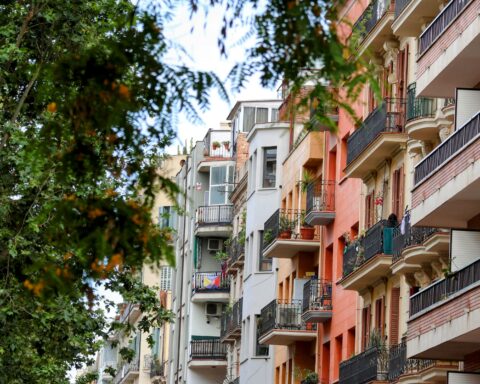
Housing has become Spain’s most urgent social concern. What was once seen mainly as a problem for young people in Madrid or Barcelona is now a national issue. Rents are rising, property prices are moving ever further away from local salaries, and access to affordable housing has become increasingly difficult in many parts of the country.
The trend is not new, but it has intensified sharply. In April, the CIS already identified housing as Spain’s most important national problem, with 41.3 per cent of mentions. In May, the figure rose to 48.8 per cent, reaching a new high. On a personal level, housing also became the main concern for respondents that month, with 30.7 per cent saying it directly affected them.
The pressure is especially visible in Madrid, Barcelona, Málaga, Valencia, the Balearic Islands, the Canary Islands and along the Costa del Sol. Several forces are colliding at once: rising demand, limited supply, tourist rentals, high construction costs and slow administration. Added to this are major migration flows — not only from third countries, but also from northern and central Europe.
Digitalisation, remote working and international employment models have allowed more people with higher incomes to live and work from Spain. In popular coastal regions, on the islands and in major cities, this has placed further pressure on the housing market. For many young Spaniards, leaving the family home has become far more difficult. For middle-income families, even renting is becoming a serious burden.
The Economy and Purchasing Power: Growth That Many Do Not Feel
On paper, Spain’s economy looks stronger than that of many other European countries. Employment is rising, the labour market is resilient, and the country continues to benefit from tourism, services and international demand. In June 2026, Spain reached a new employment record, with 22.47 million people registered with social security.
Yet the economy remains the second major concern for the public. The reason is simple: many Spaniards do not feel the benefits of growth in their daily lives.
Food, energy, rents, mortgages, insurance and services have all become more expensive. At the same time, many salaries remain too low to keep pace with the cost of living. The contradiction is striking: Spain is growing, but many households do not feel richer.
This gap between macroeconomic success and household reality is one of the defining tensions of modern Spain. Growth figures may look impressive, but real disposable income, purchasing power and housing costs continue to shape how people actually experience the economy.
For foreign observers, this matters. Spain is not simply a cheap holiday destination or an affordable country for relocation. In many regions, the cost of living has risen sharply, while wages and productivity have not always kept up.
Migration: Between Labour Needs, Integration and Political Polarisation.
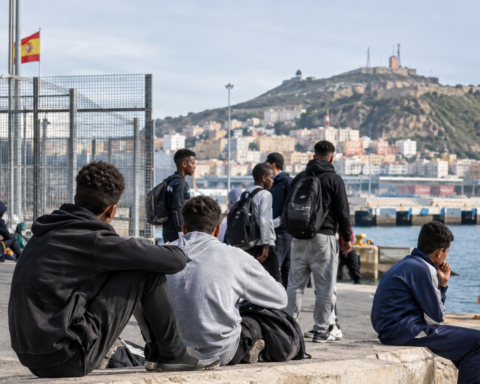
Migration has once again become one of Spain’s most sensitive political and social issues. In June, 18.9 per cent of respondents named migration as one of the country’s main problems, placing it high in the national ranking of concerns.
The issue is particularly delicate because Spain also depends heavily on foreign workers. Agriculture, care work, construction, hospitality, tourism and many service industries could no longer function without immigration. A significant part of recent employment growth has been driven by foreign workers.
At the same time, both regular and irregular migration have fuelled debates about integration, welfare, housing, schools, healthcare and public security. The current regularisation of migrants has brought further attention to the issue. In June, the number of registered unemployed foreign nationals rose slightly, a trend some experts interpret partly as a statistical effect of regularisation: people who were previously outside the system are now appearing in official labour market data.
Migration is polarising Spain more deeply than it did only a few years ago. What once seemed politically unthinkable has now become reality: the marked rise of the right-wing nationalist party Vox. Vox has built much of its message around criticism of irregular migration, border control, public security and national identity. The party has taken a particularly hard line against Muslim immigration and what it describes as failed integration policies.
As a result, migration has become one of the most emotionally charged battlegrounds in Spanish politics. The national debate is split in two. Economically, Spain needs migration. Socially and politically, however, there is growing concern over whether integration, public administration and social infrastructure can keep pace with the speed of change.
Corruption: The Most Damaging Breach of Trust for Sánchez
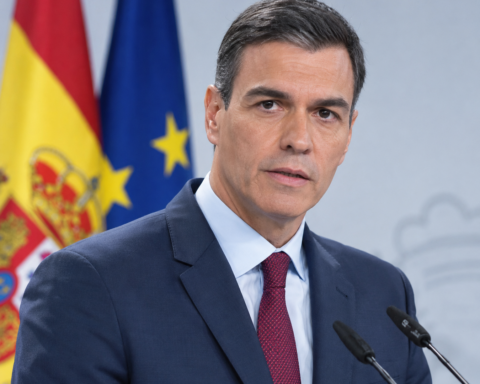
Corruption and fraud have risen sharply in the CIS ranking. In June, 18.4 per cent of respondents named them among Spain’s main concerns, placing the issue fourth. The increase comes at a time when several political scandals and investigations are placing pressure on the PSOE and the wider environment of Pedro Sánchez’s government.
The political contrast is particularly damaging. Sánchez came to power in 2018 after a successful motion of no confidence against Mariano Rajoy and the Partido Popular. At the time, he placed the corruption of the previous conservative government at the heart of his argument and presented himself as the leader who would bring political renewal, transparency and democratic regeneration.That is precisely why the current scandals are so uncomfortable for him.
At the centre of public debate are, among others, the Koldo case, former minister José Luis Ábalos, businessman Víctor de Aldama and Santos Cerdán, the former organisational secretary of the PSOE. Reports and investigative documents have referred to alleged commissions, public contracts, influence-peddling and possible networks around socialist power structures. Cerdán has been linked in a Guardia Civil report to alleged illegal commissions; he, like others involved, is entitled to the presumption of innocence.
There is also the affair surrounding Leire Díez, a former PSOE member accused of attempting to influence judicial investigations. The investigation involving Mercedes González, director of the Guardia Civil, over alleged offences connected to prevarication and obstruction of justice has further increased political tension.
For many citizens, the issue is no longer only about individual cases. It is about the credibility of a prime minister who once came to office promising to clean up Spanish politics. Sánchez now faces the accusation that, under his own government, a new web of scandals, investigations and political loyalties has emerged. Whether or not all allegations are ultimately proven, the political damage is clear: public trust in institutions has been weakened, and the opposition has been handed powerful ammunition.
Politics: Insults, Polarisation and a Collapse in Trust
Closely linked to corruption is a broader dissatisfaction with politics itself. In June, 18.3 per cent of respondents named general political problems as one of Spain’s main concerns..
This is about more than ordinary criticism of the government or opposition. Many Spaniards see the political landscape as increasingly polarised, noisy and aggressive. Between parties, public debate is often dominated by accusations, personal attacks, harsh insults and mutual obstruction. Substantive discussions on housing, migration, purchasing power or reform are frequently drowned out by partisan conflict.
Debates over Catalonia, the judiciary, corruption, parliamentary majorities, regional interests, migration and the role of Vox have left many citizens exhausted. There is also a growing sense that political camps no longer treat one another merely as opponents, but as enemies. That atmosphere reinforces the impression that politics is less interested in solving problems than in fighting for power and winning media battles.
For many people, this has created an almost complete climate of distrust towards the political class. Government, opposition, regional parties and institutions are all under scrutiny. Many citizens feel that politicians are mostly manoeuvring, blaming one another and defending their own interests while everyday problems remain unresolved.
Spain’s complicated parliamentary arithmetic adds to the sense of instability. National politics is shaped by shifting majorities, regional parties and political dependencies. For international readers, this can be difficult to understand. Spanish politics does not operate only along a left-right axis; it is also deeply influenced by regional interests from Catalonia, the Basque Country, Navarre, the Canary Islands and elsewhere.
This fragmentation reflects Spain’s diversity. But in the current climate, it can also create the impression that important reforms are being blocked, delayed or ground down by party conflict.
What does this mean for Spain?
These five issues reveal a country in transition. Spain is economically strong, internationally attractive and still one of Europe’s most desirable destinations. Yet its social reality is far more strained than the headline figures suggest.
Housing has become the central social question. Purchasing power remains under pressure. Migration divides the political debate. Corruption has damaged trust. And political polarisation is exhausting the public.
It is also striking that traditional unemployment no longer automatically dominates the national conversation. Job quality and affordability are now just as important, if not more so. The question is no longer simply: “Can I find work?” Increasingly, it is: “Can I afford a normal life even if I am working?”
A Country Between Success and Strain
Spain remains a country of opportunity, energy and quality of life. The economy is growing, employment is strong, tourism is booming and international interest in the country remains intense. But beneath those positive indicators are real concerns shaping daily life for millions of people.
For many Spaniards, the central issue is no longer just employment. It is whether an ordinary life remains affordable despite having a job. Housing, purchasing power, migration, trust in politics and confidence in public institutions now define the national mood more than many of the traditional debates of the past.