An unexpected television encounter has sparked controversy across Spain before a single question has been asked. A popular presenter associated with progressive humour is preparing to interview the leader of the right-wing Vox party, which has gained ground in opinion polls. The invitation has angered parts of the left and raised an intriguing question: can an entertainment programme handle one of Spain’s most divisive political figures?
Spain Expat Press Editorial Team
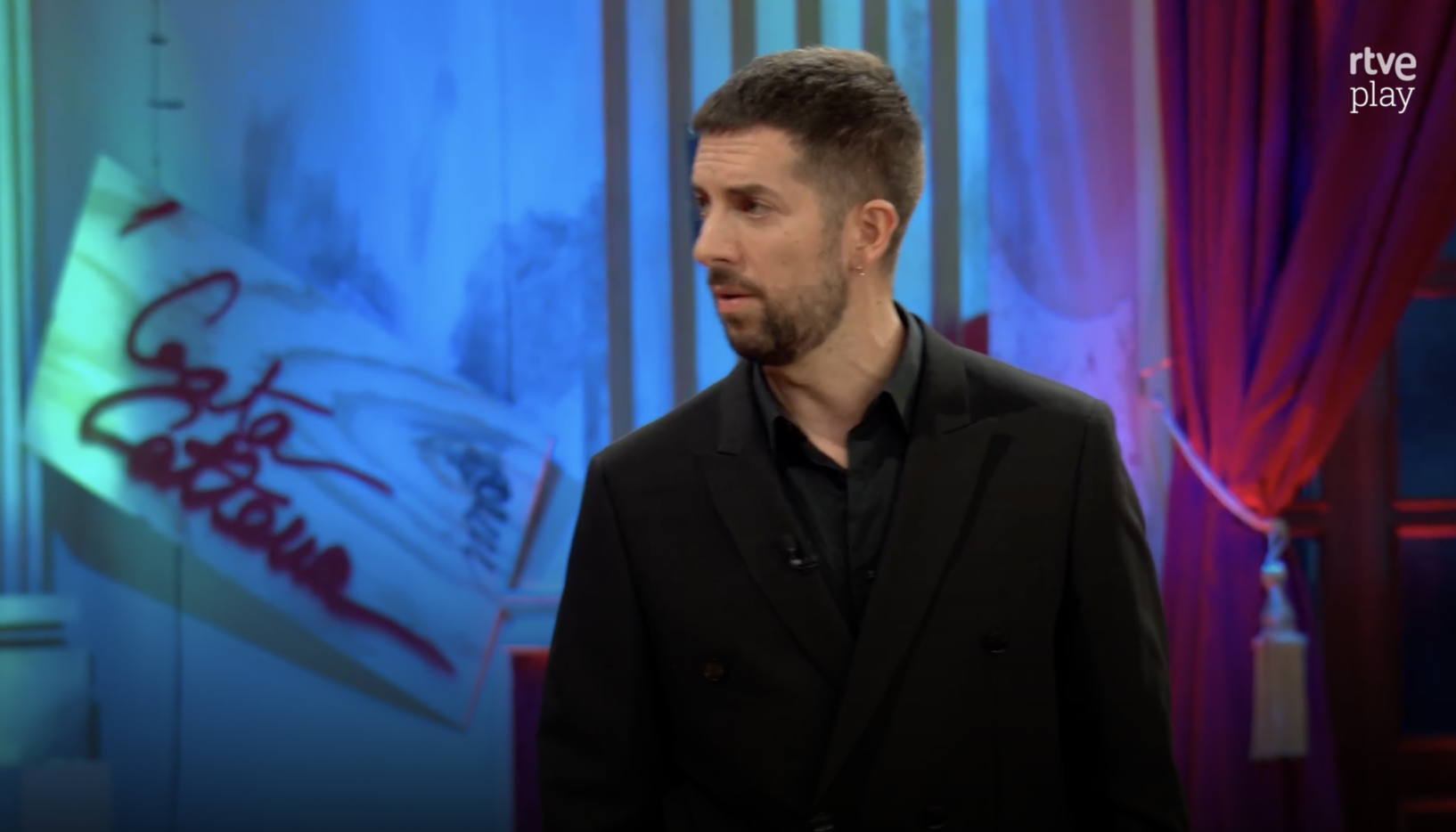
Few television announcements have generated quite as much discussion as the news that Santiago Abascal, leader of Spain’s right-wing Vox party, will appear tonight on La Revuelta, the popular late-night programme hosted by David Broncano on public broadcaster TVE.
The pairing is unusual. Broncano has built his reputation on irreverent humour, spontaneous exchanges and an easy familiarity with his guests. Abascal, meanwhile, is known for his uncompromising positions on immigration, national identity and social policy.
Their political worlds could hardly be further apart.
There is also a certain irony to the encounter. In 2019, Broncano said he would not invite Abascal onto his programme. Seven years later, the Vox leader is preparing to take a seat on his sofa.
The announcement alone has been enough to provoke controversy.
Why the Left Is Unhappy
Broncano is widely associated with a socially progressive outlook, and his programme attracts a broad audience that includes many younger, left-leaning viewers.
For some of them, the decision to invite Abascal is difficult to accept.
Critics argue that an entertainment programme, with its relaxed atmosphere and emphasis on humour, could allow the Vox leader to present a more approachable image without facing the scrutiny normally expected in a political interview.
The controversy intensified when it emerged that the usual studio audience would not be present for the recording.
Viewers who had been allocated tickets were informed that they would no longer be able to attend.
Whether the decision was made by the production company or requested by Vox has not been conclusively established.
Nevertheless, politicians on the left questioned the circumstances surrounding the interview, while others defended the broadcaster’s decision to invite a major opposition figure.
The dispute has raised a wider question about public-service television: should entertainment programmes provide a platform for controversial politicians, and if so, how should they be challenged?
Vox Is Growing – and Abascal Has an Opportunity to Reach Beyond His Supporters
The timing is particularly significant.
Vox has made substantial gains in opinion polls compared with its performance in the 2023 general election, when it secured 12.4 per cent of the vote.
Several recent surveys have placed the party at around 19 per cent, consolidating its position as Spain’s third-largest political force in polling.
That makes tonight’s appearance especially interesting.
Abascal is accustomed to political debates and confrontational interviews. Broncano’s programme offers something different: an opportunity to speak to viewers who may not normally follow Vox or consider voting for it.
Entertainment television can reveal aspects of a politician’s personality that rarely emerge during formal interviews. A joke, an unexpected question or a spontaneous exchange can shape public perceptions as much as a carefully prepared political statement.
For Abascal, appearing relaxed and personable could help challenge the image held of him by some of his critics.
It could also expose him to questions that are harder to anticipate than those in a conventional political debate.
Whether the appearance changes anyone’s political views remains to be seen.
Immigration, Public Services and Vox’s ‘National Priority’ Policy
One subject likely to attract attention is immigration.
Vox has made tougher controls on irregular migration a central part of its political programme, linking the issue to pressure on housing, healthcare and public spending.
The party argues that Spanish citizens should receive priority when certain public resources and benefits are allocated.
This principle is known as Prioridad Nacional, or “National Priority”.
In practical terms, Vox advocates preferential treatment for Spanish nationals in areas such as access to social housing and certain welfare benefits.
Supporters of the proposal argue that the state has a particular responsibility towards its own citizens.
Critics question both its fairness and its compatibility with Spanish constitutional protections, European equality legislation and international obligations.
A blanket exclusion of legally resident foreign nationals from public services would face significant legal obstacles. Emergency healthcare is also subject to specific protections.
The broader argument about immigration and public services is equally complex.
Housing shortages, hospital waiting lists and pressure on local infrastructure cannot automatically be attributed to migration. Public investment, staffing, population growth and regional planning all play important roles.
These are precisely the issues on which a detailed interview could prove revealing.
What would National Priority mean in practice? Who would qualify for preferential treatment? And how would the policy operate within existing Spanish and European law?
Can Broncano Remain Broncano?
The greatest uncertainty concerns the presenter himself.
Broncano is not a conventional political interviewer. His success rests on improvisation, irony and an ability to make even internationally famous guests abandon their rehearsed answers.
His conversations are deliberately informal, often moving from serious subjects to absurd jokes without warning.
But can that approach work with Santiago Abascal?
If Broncano treats him too gently, critics may accuse him of offering the Vox leader an uncritical platform.
If he adopts an openly hostile approach, the programme risks losing the spontaneity that has made it successful.
There is also the possibility that Abascal could turn a confrontational exchange to his advantage by presenting himself as unfairly treated.
The alternative is for Broncano to rely on his usual instincts: humour, unexpected questions and a willingness to make his guests uncomfortable without turning the conversation into a formal interrogation.
Abascal is an experienced political communicator, but he is less accustomed to the unpredictable rhythms of entertainment television.
Both men will be operating outside their usual comfort zones.
A Television Encounter with Political Implications
The interview comes at a time when Spain is debating immigration, housing affordability, the condition of public services and the increasingly polarised relationship between its political parties.
For Abascal, the appearance offers an opportunity to explain his positions to an unfamiliar audience. For Broncano, it raises questions about the responsibilities of an entertainment presenter when interviewing a prominent political figure.
For TVE, the controversy has revived the debate over the role of public broadcasting and its obligation to represent different political viewpoints.
The programme has attracted considerable attention even before transmission, although its eventual audience and political impact remain unknown.
Will Broncano maintain his familiar irreverent style? Will Abascal respond with humour or stick to his prepared political arguments? And will the conversation move beyond personalities to address the substance of Vox’s proposals?
Tonight’s fascination lies not simply in bringing two very different public figures together, but in discovering what happens when the unpredictability of entertainment television meets the discipline of political messaging.
La Revuelta is scheduled to air tonight, Monday 9 November, at 9.45pm on La 1 and RTVE Play.