The migration crisis in Ceuta continues to attract significant attention in Spain. A new survey by the Spanish polling institute CIS shows that a clear majority of the population supports stronger border security with Morocco. At the same time, many Spaniards would like to see more support from the European Union.
Spain Expat Press Editorial Team
by Marlon Gallego Bosbach
Large majority in favor of stricter border controls
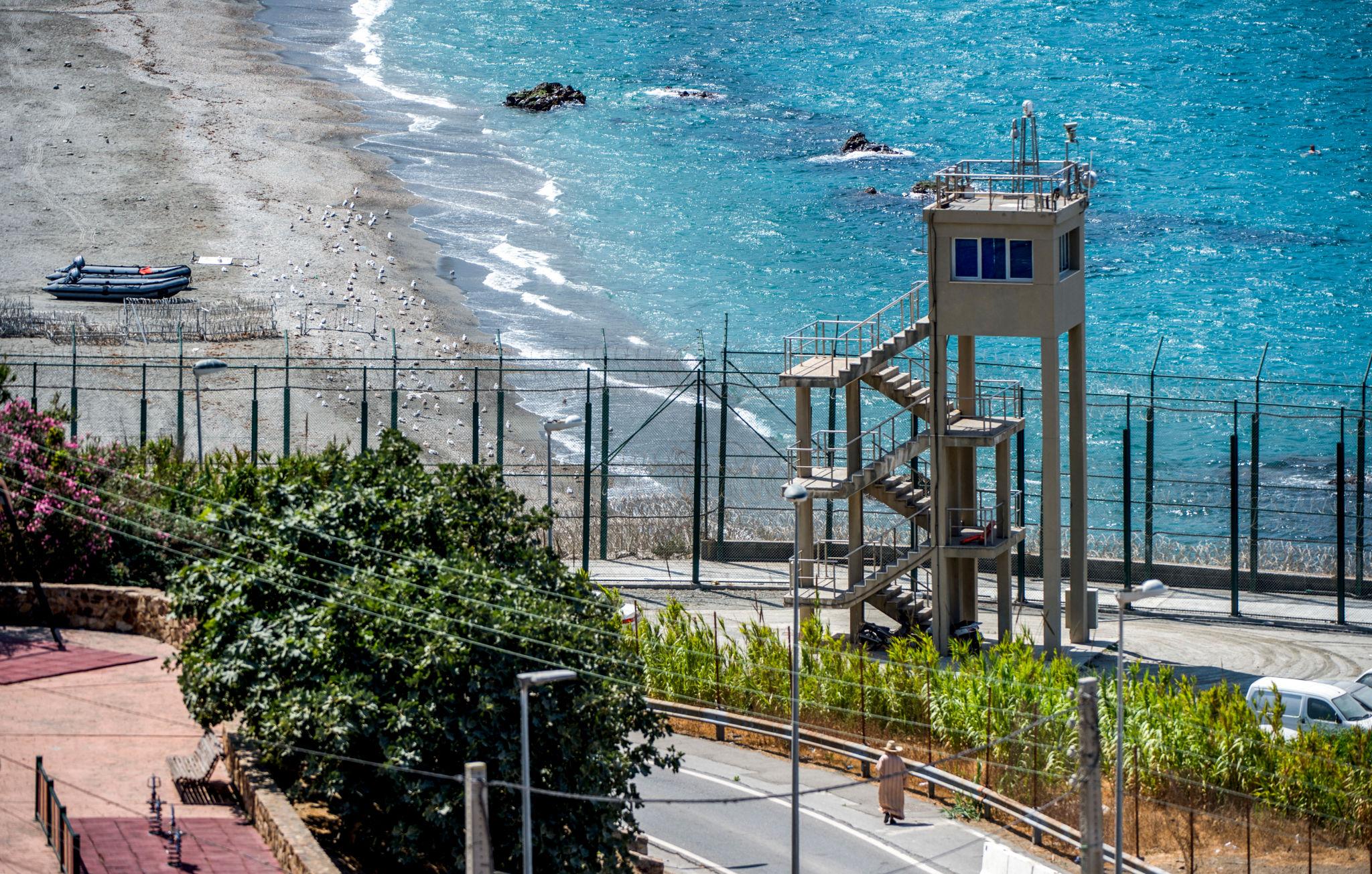
82.2 percent of Spaniards believe that the border crossings at Ceuta and Melilla should be reinforced to prevent another mass influx of migrants. Only 13.3 percent do not consider reinforcing the borders necessary.
The figures come from the latest barometer of the Centro de Investigaciones Sociológicas (CIS). The survey was conducted in early September, coinciding with a period in which the political debate continues to be dominated by the aftermath of the massive influx of migrants into Ceuta in late July.
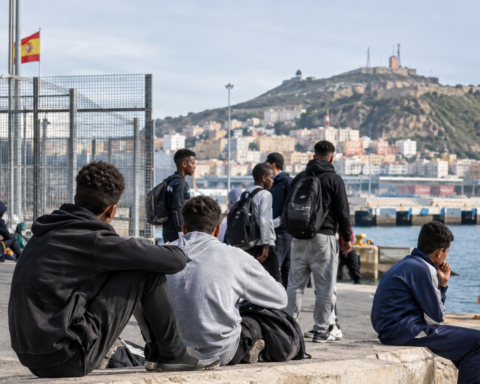
Amid the surge at the time, more than 70,000 people reached the Spanish enclave on the North African coast within a short period. Since then, this extraordinary situation has significantly intensified the debate regarding border security, migration, and cooperation with Morocco.
Almost all Spaniards have heard about the crisis
Another figure from the CIS survey illustrates the extent to which the event is preoccupying the Spanish public: 97.1 percent of respondents stated that they had heard about the situation in Ceuta. This makes the crisis one of the most widely noted political and social events of recent weeks.
Despite the significant attention it has received, however, migration has not moved more prominently to the forefront as a general political issue. On the contrary: the proportion of respondents citing immigration as one of Spain’s three most important problems fell from 23.4 percent to 19.7 percent compared to the previous CIS barometer.
Cooperation with Morocco remains important
The call for more secure borders evidently does not mean that the Spanish population desires a deterioration in relations with Morocco.
63.4 percent of respondents consider an understanding between Spain and Morocco to be “very important” regarding security at their shared border. Another 22.9 percent rate this understanding as “fairly important.”
A policy of friendship and good-neighborly relations with Morocco also enjoys broad support. 45.6 percent consider it very important, and a further 28 percent consider it fairly important.
The survey thus paints a nuanced picture: the majority advocates for stronger protection of Spain’s borders while simultaneously viewing cooperation with the neighboring country as a key component of a functioning migration and security policy.
89 percent would like more support from the EU
The call for European support is even more pronounced. 89.4 percent of respondents believe that the European Union should provide greater assistance in managing the situation.
This demand comes at a time when Ceuta’s political leadership is also lobbying in Brussels for greater European support. Ceuta’s President, Juan Jesús Vivas, is calling for, among other things, additional financial resources for border security and a special European status for Ceuta and Melilla. In his view, the current situation is not sustainable in the long term.
The two cities hold special significance for Spain: Ceuta and Melilla are Spanish territories on the North African coast and, at the same time, constitute the European Union’s only land borders on the African continent.
Many suspect the influence of international actors
The survey also contains a particularly politically sensitive aspect. 67.7 percent of respondents believe there are states, political leaders, or other international actors that might attempt to exacerbate problems between Spain and Morocco.
Various actors are cited by those who suspect such influence. The USA is mentioned most frequently, at 49.1 percent. This is followed by Morocco—or segments of Moroccan society—at 38.1 percent, Israel at 35.4 percent, and Donald Trump at 33.4 percent. Benjamin Netanyahu is named by 15.2 percent of these respondents.
However, the figures must be interpreted with caution. They do not refer to the entire Spanish population, but only to the group of respondents who had previously suspected any influence by international actors.
No assessment of the Sánchez government
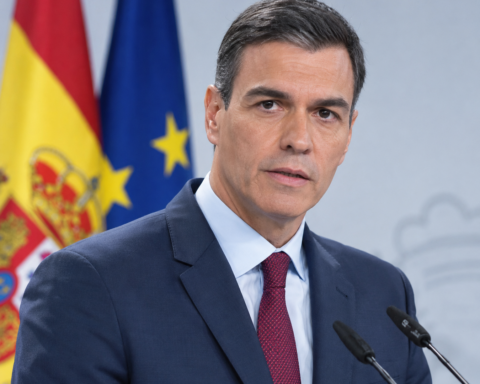
At the same time, what the CIS did not ask about is striking. The survey contains no direct question regarding how the Spanish population assesses the actions taken by Pedro Sánchez’s government during the Ceuta crisis. Nor was the question of who specifically was responsible for the mass influx in late July directly addressed.
This is politically significant, as the debate regarding the Spanish government’s role has become increasingly heated. At the same time, there is discussion about potential external influence and the role of Morocco. The government in Madrid rejects allegations that it deliberately underestimated the crisis or failed to make adequate preparations.
Ceuta remains politically volatile
The new poll arrives amidst an already tense political situation. The latest CIS barometer shows that Prime Minister Pedro Sánchez’s PSOE has lost two percentage points since July and now stands at 31 percent. The conservative PP is polling at around 25 percent, while Vox has risen to 16.6 percent.
However, the survey does not conclusively indicate whether the PSOE’s decline is directly linked to the Ceuta crisis. It merely reflects the political mood following the events in Ceuta.
One thing is certain, however: the Spanish population overwhelmingly favors stronger border protection. At the same time, they expect cooperation from Morocco and increased support from the EU. The events in Ceuta have thus sparked a debate that extends far beyond the Spanish enclave, touching upon issues of European migration policy, relations with Morocco, and the security of the EU’s external borders.