People who live in Spain know them well: the small coves, hidden beaches and long coastal stretches that shape the country. Yet away from the tourist postcards, another reality often appears. This is exactly where a young Spanish project steps in — deliberately choosing action over passivity.
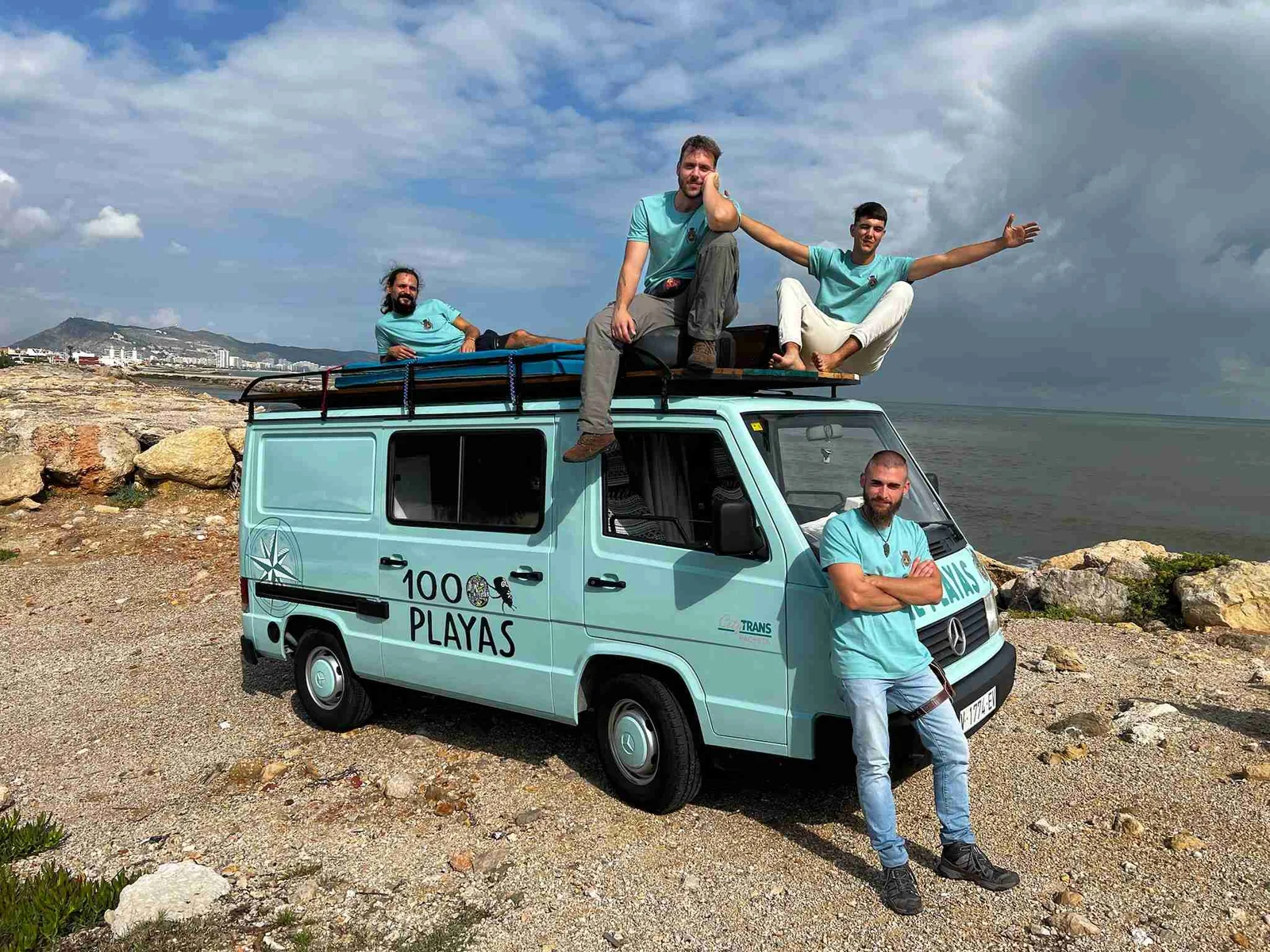
The group calls itself Mil Playas — “A Thousand Beaches.” Behind the project are four young men who have largely left their previous lives behind to dedicate themselves entirely to nature.
Their home is on the move — and their work begins where most walkers usually just keep going.
Spain Press Editorial Team
Everything sold to begin
To make this journey possible, the founders gave up most of their material possessions. They finance themselves exclusively through small voluntary contributions from people who want to support their work.
Their Instagram profile is almost a diary of daily life: sunrises by the sea, long working days, full garbage bags — but also fatigue, wind, rain and simple nights on the road. It shows both their enthusiasm for nature and the personal sacrifice the project requires.
They do not see their initiative only as an environmental project, but also as an alternative to the lifestyle many young people live today: more time outdoors, less time in front of screens, and greater responsibility for one’s surroundings.
♻️ 💚 #CostaTropical | ‘Mil Playas’ es un proyecto sostenible y comprometido que está dando la vuelta a España.
Sus protagonistas han pasado por nuestro litoral, colaborando con asociaciones locales como Coral Soul y Amigos del Mar.
Conoce la historia 👇https://t.co/J4AkpLWCUl pic.twitter.com/gGRF5TucX5
— GranadaDigital (@granadadigital) January 14, 2026
What really washes up on Spain’s beaches
Along their route across the Mediterranean and the Atlantic, they repeatedly encounter the same items: plastic fragments, packaging, fishing nets, cigarette filters and microplastics. A large portion, they explain, does not come from bathers but arrives via sea currents.
The volunteers document every cleanup. Often they return later — and find the same waste again. It makes visible what daily life hides: coastal pollution is not a one-time event but a continuous process.
Spontaneous help instead of organised campaigns
Occasionally residents or other beach visitors join them after seeing their location online. Participation is intentionally simple — no registration, no official events, no campaign structure.
That simplicity makes the project tangible: anyone can help, anytime.
Donations are equally straightforward. On their website, under “Sponsor,” supporters can freely decide how they want to contribute.
https://milplayas.org
A different image of environmental awareness in Spain
Spain has one of the longest coastlines in Europe. Millions live or holiday here every year. Projects like Mil Playas reflect a perspective many residents and expatriates recognise: nature protection often begins not with large programmes but with personal initiative.
While official measures take time, commitment here happens directly on the ground — step by step, beach by beach.
The journey continues. No schedule, no finishing date — only one clear idea: responsibility begins where you stand.