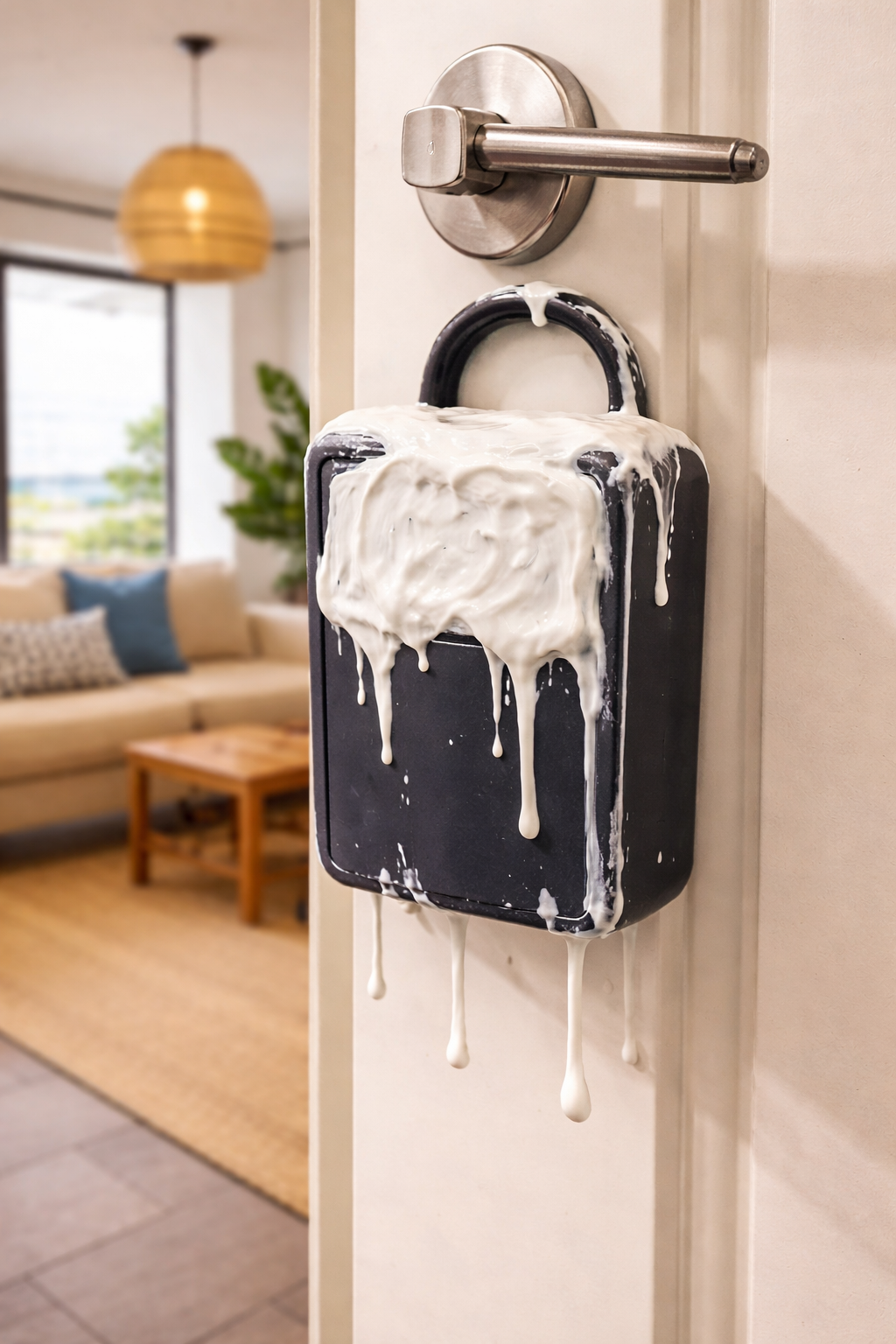
In a coordinated operation during the night leading into Wednesday, around 500 electronic lockboxes attached to the doors of holiday apartments in several central districts of Granada were deliberately damaged or rendered unusable. The historic neighbourhoods of Albaicín, Realejo and the city centre were affected, where the concentration of tourist accommodation is particularly high.
Spain Press Editorial Team
by Marlon Gallego Bosbach
According to local reports, the lockboxes – which typically contain keys for self check-ins at short-term rental properties – were covered with a superglue-like substance and thereby rendered inoperable. The perpetrators then placed stickers bearing slogans such as “Against the housing business” on the damaged devices.
“Offensive” against the housing market – activists claim responsibility
The Granada Housing Union, a local tenants’ and housing rights collective, described the action in a statement as a deliberate political protest. They referred to it as a step “on the offensive against the housing business,” intended to draw attention to the growing social tensions caused by tourist rentals.
According to the group, the high presence of holiday rentals is driving up rents, displacing long-term residents, and eroding the established character of the city. The activists also criticised existing regulations and enforcement as insufficient, arguing that authorities are not taking consistent action against illegal short-term rentals.
Reactions from the rental sector
Representatives of the local holiday rental associations reacted with outrage. The Asociación de Tourist Homes and Rural Accommodation of Granada (Avitar Granada) described the destruction as vandalism with no political legitimacy. The damage to the lockboxes alone is estimated to exceed €5,000.
Avitar emphasised that most of the affected properties are operated legally, often by small local owners, self-employed individuals, or families. The association called for an immediate police investigation, the identification of those responsible, and a public condemnation by the city and regional authorities. It also stressed that the protection of legitimate landlords must be strengthened.
Broader social context: housing market under pressure
Granada is not alone: in many Spanish cities, opposition to short-term tourist rentals is growing, with critics viewing them as a contributing factor to rising rents and housing shortages. Since 2025, stricter regulations for holiday rentals have been in place in Andalusia and across Spain, including the removal of thousands of properties from official registries if they do not hold a valid registration number. According to official statistics, more than 2,000 such holiday rentals in the province of Granada have been removed from the registers since the new rules came into effect.
These measures aim to reduce illegal rentals and make more housing available to the regular rental market – a challenge faced not only by Andalusia but by many Spanish cities. At the same time, local politicians, property owners, and tenants are debating the right balance between the economic benefits of tourism and social stability in their communities.
Impact on the ground
The night-to-Wednesday action had immediate consequences: some guests were unable to access their holiday apartments as planned because the underlying lock systems were rendered inoperable. Property owners were urged to report the incidents to the National Police (Policía Nacional) to address insurance matters and potential criminal proceedings.
The Granada city council has so far not issued an official statement on the incident. However, local politicians are under increasing pressure to find solutions to the widely criticised housing shortage and to address the conflict between tourist use and the right to affordable housing.