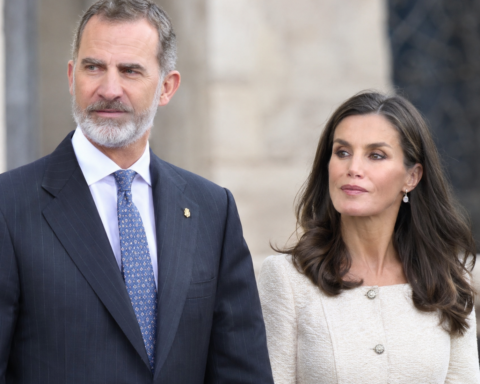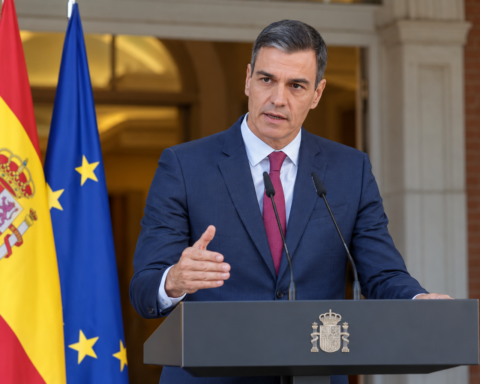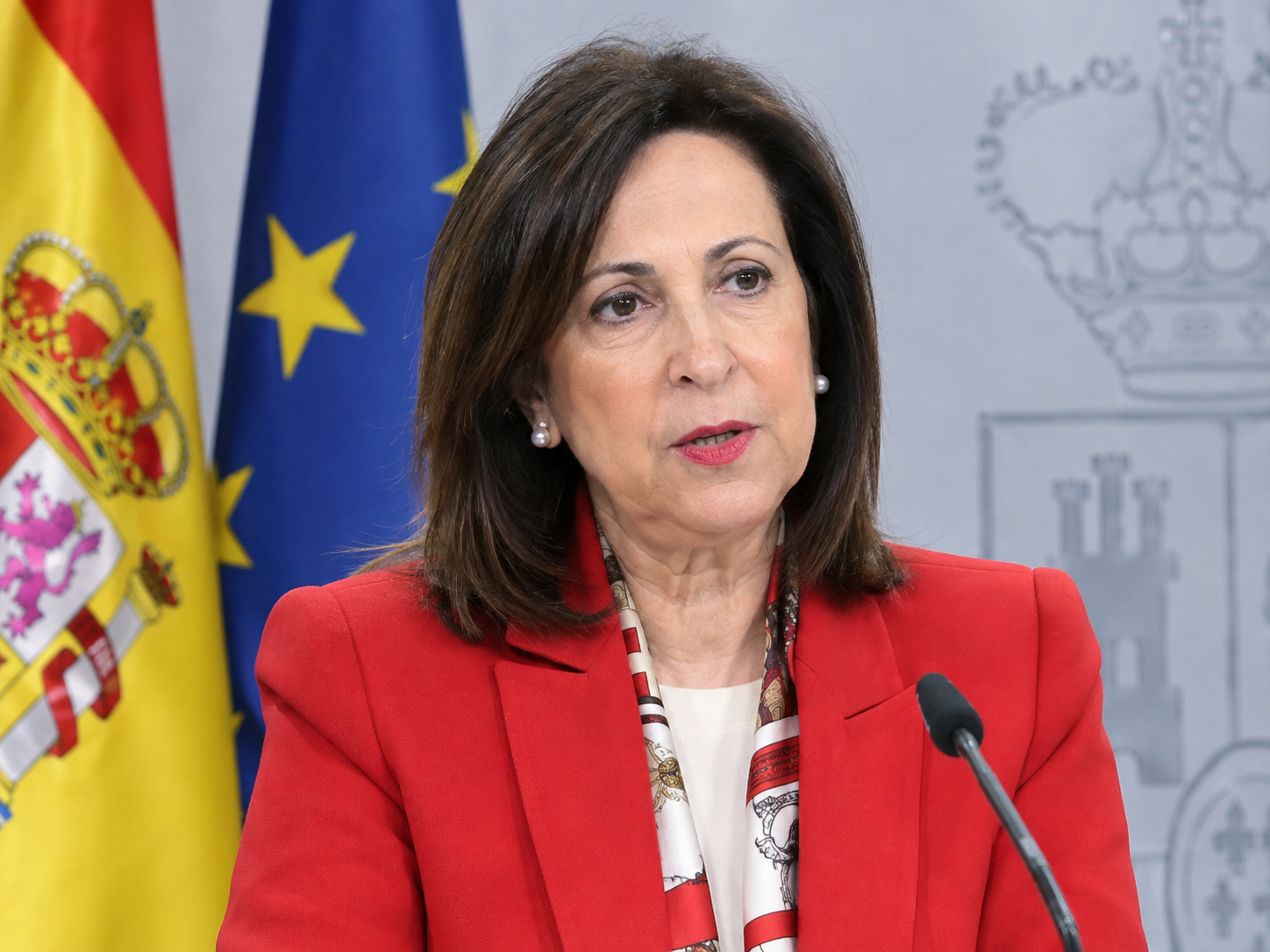
Spanish Defense Minister Margarita Robles will be the number-two candidate on the Socialist Workers’ Party (PSOE) list for Madrid in the upcoming parliamentary elections. The list is headed by Prime Minister and party leader Pedro Sánchez. The decision was confirmed by sources within the Madrid party organization.
Spain Expat Press Editorial Team
by Marlon Gallego Bosbach
With this placement, Robles moves up two spots compared to the 2023 parliamentary elections. At that time, she held the fourth position on the Socialist list for Madrid. This latest decision comes during a politically tense period, marked by recurring disagreements within the government regarding how to handle the migration crisis in Ceuta.
The PSOE’s lists of candidates are set to be definitively confirmed by the party’s federal committee this coming Saturday, October 17. The parliamentary elections are scheduled for November 29.
Robles moves up to one of the most important spots on the list
The decision to place Robles in the number two spot underscores her importance within the PSOE and the Sánchez government. The lawyer is one of the few female ministers to have served continuously in the government since the Socialist Prime Minister’s first cabinet in 2018. She has headed the Ministry of Defence since taking office.
For years, Robles has been a fixture in Sánchez’s political circle. She first ran for the Socialists in Madrid during the 2016 parliamentary elections, at which time she was one of the party’s prominent new additions. In the years that followed, she developed a distinct profile within the government – one that did not always align with the positions held by other members of the cabinet.
She now holds the second spot on the list, placing her directly behind Sánchez. Félix Bolaños – who serves as Minister for the Presidency, Justice, and Relations with the Cortes – is set to run in the third position. Pilar Sánchez Acera, the PSOE’s organizational secretary in Madrid, is slated for the fourth spot, while Interior Minister Fernando Grande-Marlaska is expected to take the fifth position.
Tensions in Ceuta following the migration crisis
This personnel decision is attracting particular attention against the backdrop of tensions within the government following the migration crisis in Ceuta. In the summer, the Spanish enclave saw a massive influx of migrants. During the subsequent political review, opinions differed regarding what information had been available to the relevant authorities prior to the event.
Robles defended the role of the National Intelligence Centre (CNI), which operates under the Ministry of Defence. According to her account, the agency had provided indications of a potential escalation of the situation even before the crisis began. In contrast, the Moncloa – the seat of government – stated that no such information had been available.
This gave rise to a conflict regarding the information available to the authorities and the question of how early the government could have responded to the situation. The conflicting statements brought the tensions between the Ministry of Defence and other parts of the government out into the open.
In doing so, Robles took a distinct stance. She also expressed self-criticism regarding the response to the events, acknowledging that not everything had gone as well as it could have. Nevertheless, the debate over the prior warnings issued by the CNI remained an issue within the government.
The fact that Sánchez has placed the Minister of Defence in one of the top spots on the electoral list, despite these differences, is therefore politically noteworthy. The decision demonstrates, at the very least, that their disagreements do not stand in the way of her prominent role in the Madrid candidacy. Robles thus remains a key political partner to the Prime Minister, with whom she has worked closely and trustfully in government for years.
An independent personality within the government
Robles differs somewhat from other cabinet members in her political demeanor. The former judge is regarded as an independent figure who, on certain issues, publicly takes positions that diverge from the norm.
Her career did not begin in party politics. Robles initially worked in the judiciary and later held various high-ranking positions within the Spanish state apparatus. Among other roles, she served as State Secretary in the Ministry of the Interior. Her legal background and her work within state institutions shaped her political profile.
In 2016, she joined the PSOE as an independent candidate and was elected to the Congress of Deputies via the Madrid party list. Since 2018, she has headed the Ministry of Defence. In this capacity, she is responsible for, among other things, the Spanish Armed Forces and the country’s defence policy.
Securing a top spot on the PSOE list once again combines continuity in government with a significant role in the election campaign. Robles is running again in the same constituency where she stood as a candidate in previous parliamentary elections.
Eleven government members on the PSOE lists
Robles is not the only minister set to run for the Socialists in the November 29 elections. In total, the PSOE plans to place eleven government members on its lists for the Chamber of Deputies.
In addition to Robles and Bolaños, this group includes, among others, Interior Minister Fernando Grande-Marlaska, Transport Minister Óscar Puente, Minister for Equality Ana Redondo, Housing Minister Isabel Rodríguez, Minister for Industry Jordi Hereu, and Finance Minister Arcadi España. Foreign Minister José Manuel Albares is also set to run for the PSOE and head the list in the Cádiz constituency.
Not all members of the cabinet, however, will run in the national election. Some are focusing on potential regional candidacies – among them Óscar López in Madrid, Diana Morant in the Valencia region, and Ángel Víctor Torres in the Canary Islands. Furthermore, Minister of Economy Carlos Cuerpo and Minister of Agriculture Luis Planas are also not expected to appear on the lists of candidates for the Congress of Deputies.
The composition of the lists shows that Sánchez is relying on several members of his cabinet for the election campaign. However, the candidacies must still go through the party’s internal procedures. Following a review by the relevant bodies, the PSOE’s federal committee is set to ratify the lists on Saturday in Fuenlabrada, near Madrid.
Decision in view of the November 29 election
Margarita Robles’ candidacy is a key element of the Socialists’ lineup for the upcoming parliamentary election. As the number two candidate in Madrid, she ranks immediately behind Sánchez, making her one of the most prominent faces of the PSOE campaign.
This move comes at a time when the government is occupied with political disputes regarding how to address the events in Ceuta. Differing assessments from Robles and other members of the government had raised questions about the flow of information between authorities. Nevertheless, by making this appointment, Sánchez has opted for a minister who has been part of his government for years and who possesses a distinct political profile within the party.
It remains undecided whether Robles will continue to serve in the cabinet after the election. For now, the focus is on her candidacy for a seat in the Congress of Deputies. The final composition of the PSOE lists is set to be confirmed on October 17, before the parties enter the next phase of preparations for the election on November 29.