Renfe is preparing a major boost to Málaga’s Cercanías commuter rail network. From 2028, seven new high-capacity trains are due to operate on the C-1 line between Málaga and Fuengirola. The new trains are primarily intended to ease chronic overcrowding on one of the Costa del Sol’s most important rail routes.
Spain Expat Press Editorial Team
by Marlon Gallego Bosbach
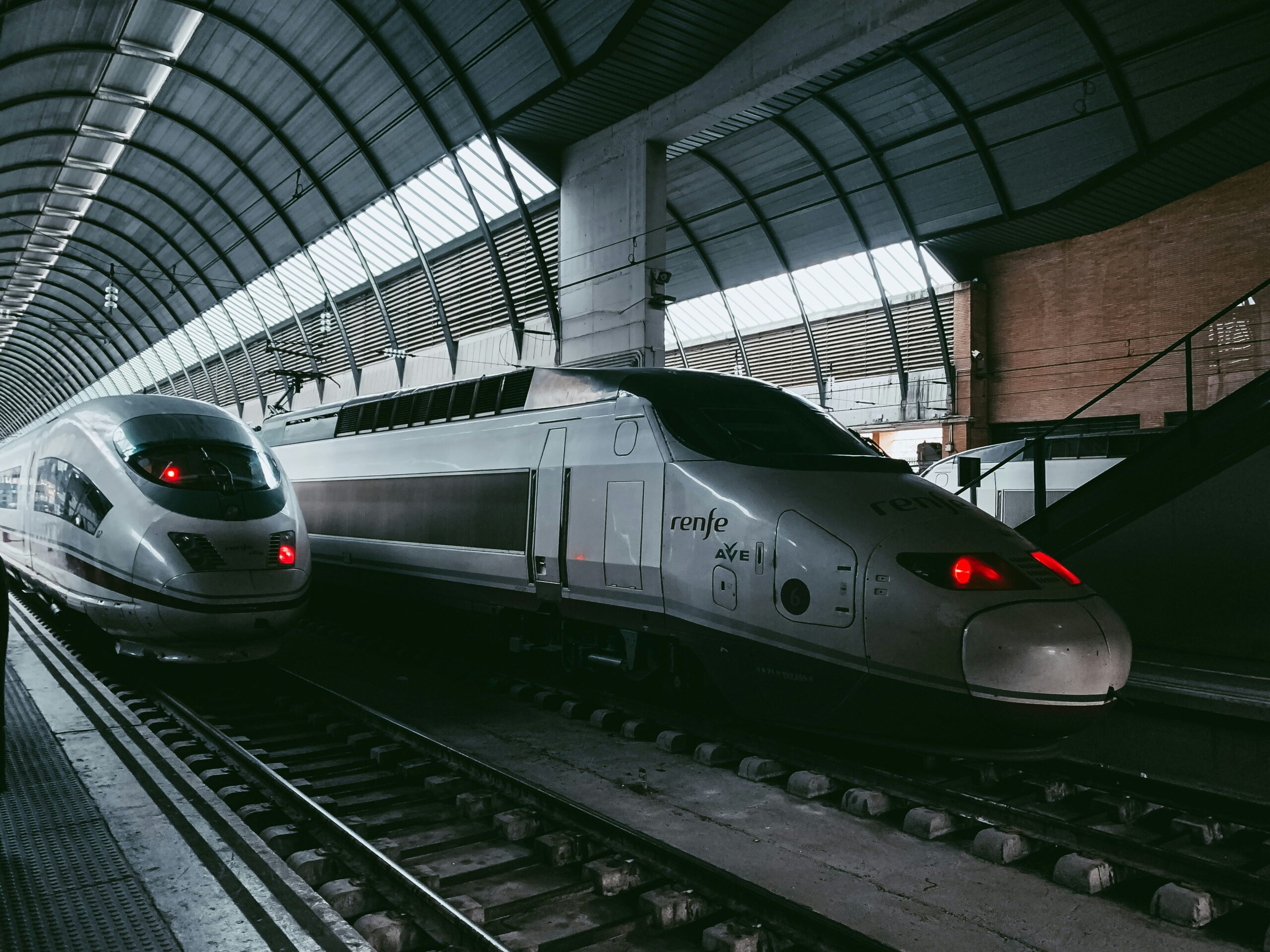
The new S452 trains, manufactured by Alstom, can carry up to 900 passengers and are primarily intended for use on the C-1 line between Málaga and Fuengirola. The investment in the seven trains amounts to €66.7 million.
The expansion comes amid a sharp increase in demand. Málaga’s Cercanías network recorded more than 15.5 million passengers in 2025. The C-1 line, which connects Málaga with the airport as well as Torremolinos, Benalmádena and Fuengirola, is particularly heavily used.
Up to 900 passengers per train
The new trains are S452 units manufactured by French company Alstom. The trains are around 100 metres long and consist of six carriages. Each train offers approximately 245 seats and can carry up to around 900 passengers in total. Depending on the configuration, the maximum capacity is stated to be as high as 927 passengers.
To accommodate as many passengers as possible, the trains combine four carriages with low-floor areas with two double-decker carriages. This allows capacity to be significantly increased without having to increase the overall length of the train accordingly.
The new trains are therefore designed above all to do one thing: transport more passengers per journey.
The C-1 is already heavily overcrowded
The connection between Málaga and Fuengirola is one of the most important public transport routes in the province. The approximately 32-kilometre line runs from central Málaga via the airport and along the densely populated and heavily visited Costa del Sol.
At present, C-1 trains generally run every 20 minutes. However, significantly reducing the intervals is not straightforward. The reason lies in the infrastructure: parts of the route still have only a single track, which limits the number of trains that can operate simultaneously.
During peak hours, high demand is already causing significant overcrowding. According to reports, trains can reach occupancy levels of up to around 150 per cent of available seating capacity. Renfe is therefore initially opting for larger trains rather than relying solely on additional services.
More capacity without necessarily increasing the number of services
For passengers, the introduction of the seven S452 trains will primarily mean more space on individual services. However, the measure does not automatically mean that the C-1 will operate every ten or 15 minutes in the future. Unless the infrastructure is upgraded accordingly, there will remain limits on the number of services that can operate.
With the new high-capacity trains, Renfe will nevertheless be able to transport significantly more people on each individual service. This could provide noticeable relief, particularly on the heavily used route between Málaga, the airport and the municipalities along the western Costa del Sol.
New €40 million maintenance facility
Alongside the seven new trains, Renfe is planning further investment in Málaga. A new maintenance facility for Cercanías trains is planned, with around €40 million to be allocated to the project. Construction is due to begin in 2027. The new facility will expand maintenance capacity in Málaga and, in particular, provide the infrastructure needed to support the additional fleet.
The project therefore involves not only the acquisition of new trains, but also the expansion of the technical infrastructure required to operate them.
Improvements to three stations
Modernisation work is also planned at three stations along the C-1 line. The stations affected are El Pinillo, Los Álamos and La Colina. A total of €6.81 million has been earmarked for the three projects.
Among other measures, entrances, platforms and facilities will be upgraded, while accessibility will be improved. Lighting and other elements of the stations will also be modernised. The aim is not only to increase train capacity, but also to improve the infrastructure along this heavily used route.
Criticism of the timetable
Despite the announced investment, it is the timetable in particular that is fuelling debate. The new trains are not due to enter service in Málaga until 2028. Given the high levels of overcrowding already seen today, the opposition is calling for a faster solution.
The Partido Popular has therefore called on Spain’s Transport Ministry to provide explanations. The party criticises the fact that, given the existing problems, users of the Cercanías network will have to wait several more years for the new high-capacity trains.
For those responsible, however, the focus is on the gradual renewal and adaptation of the Cercanías fleet.
No complete solution for the Costa del Sol
The seven new trains will significantly increase passenger capacity on the C-1. However, they will not solve the network’s underlying problems. Demand on the Málaga–Fuengirola route continues to grow, while the infrastructure is already reaching its limits in several areas. In particular, the single-track sections make it difficult to significantly increase the frequency of services.
This means that expanding the railway line itself remains one of the major challenges for public transport on the Costa del Sol. The new S452 trains therefore primarily represent an increase in capacity within the existing infrastructure. Their purpose is to allow significantly more people to travel on each individual train.
From 2028, the situation for passengers on the C-1 could improve noticeably as a result. However, whether the additional capacity will be sufficient in the long term will depend on how much demand continues to grow in the coming years – and whether the railway infrastructure between Málaga and Fuengirola is expanded at the same time.