Security has been stepped up along Spain’s southern frontier, with more than 200 additional Guardia Civil officers sent to Ceuta and Melilla as authorities prepare for possible attempts to cross from Morocco on Wednesday, 23 September. Morocco has also reinforced its side of the border amid calls circulating on social media to attempt crossings on the day of the country’s parliamentary elections.
Spain Expat Press Editorial Team
Spain and Morocco have increased security around the borders of Ceuta and Melilla amid concerns that groups of people could attempt to enter the two Spanish territories from Morocco on Wednesday.
While there is so far no indication that the calls circulating online will result in large numbers of people gathering at the border, the Spanish authorities have opted for a substantial precautionary deployment.
In Ceuta, 144 additional officers from the Guardia Civil’s Grupo de Reserva y Seguridad (GRS), a public-order and rapid-response unit, have been brought in from several parts of Spain.
Melilla has received three rapid intervention units comprising about 60 officers.
Spain’s Policía Nacional has also maintained a presence in the area, although police sources said there had been a rotation of riot-control officers rather than an increase in their overall number.
Why 23 September?
The timing of the online calls has attracted particular attention because Wednesday coincides with Morocco’s parliamentary elections.
Some messages shared on social media have suggested that Moroccan security forces would be occupied with policing the election and that surveillance around Ceuta and Melilla could consequently be reduced.
Authorities on both sides of the border appear to be preparing for precisely the opposite.
Moroccan security forces have strengthened their presence around the frontier and increased checks on roads leading towards the border areas.
According to Spanish security sources, vehicles equipped with water cannon are on standby near Castillejos, the Moroccan town close to Ceuta, in case large crowds gather.
Moroccan media have also reported increased surveillance on routes towards the area, particularly those coming from Tangier and Tétouan.
Security has been tightened at sea as well. The Moroccan Royal Navy is reported to have increased patrols off the coast to deter attempts to reach Spanish territory by water.
Focus on the maritime border
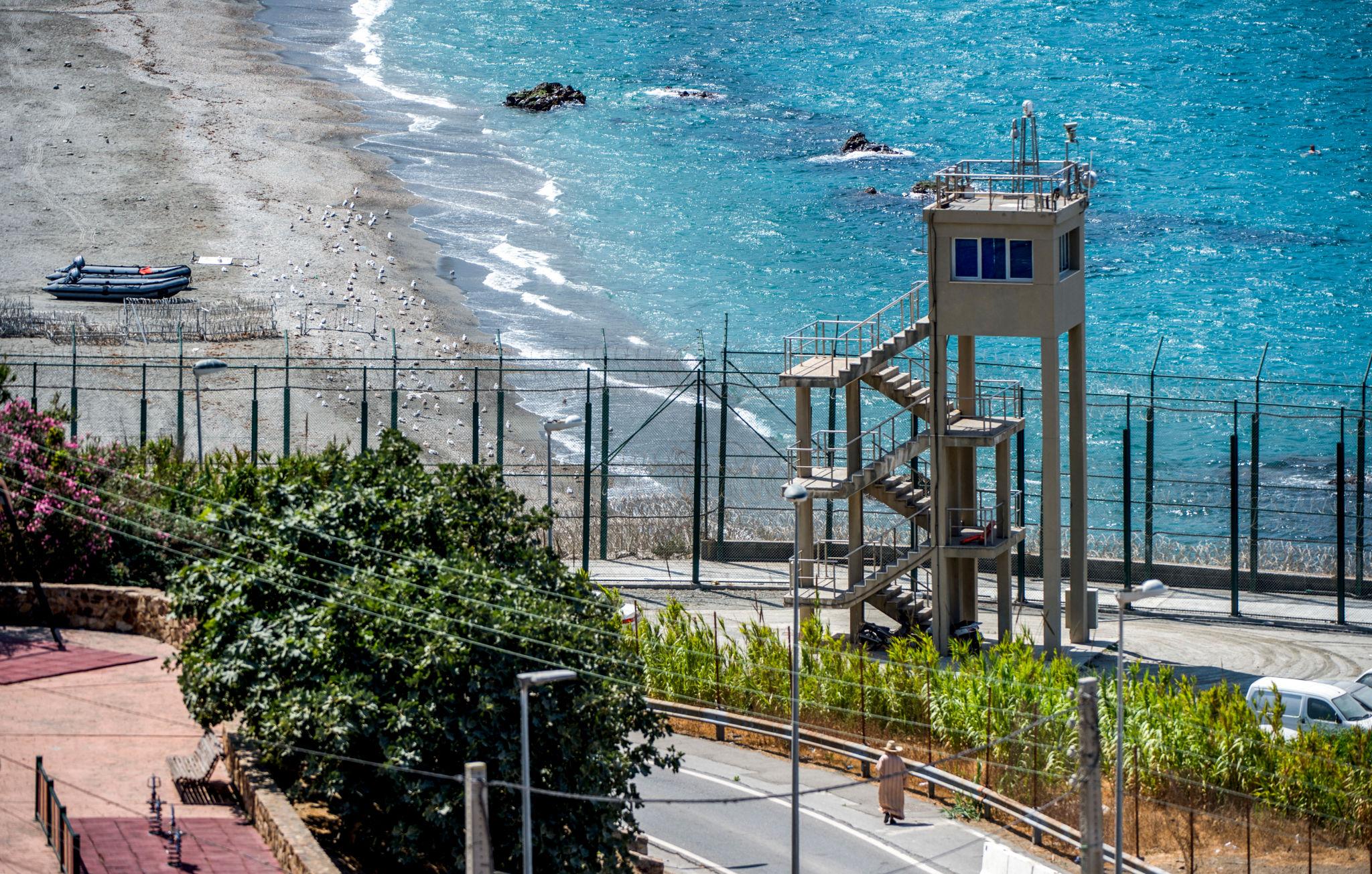
The coastline remains one of the most closely watched parts of the frontier.
Floating barriers have been installed around the Tarajal breakwater in Ceuta, while similar measures are in place at Melilla’s southern breakwater. The barriers are intended to make swimming around the border infrastructure more difficult and allow security forces to respond more quickly.
Spain’s interior ministry has also increased maritime surveillance around other Spanish territories off the north African coast.
Spanish government seeks to play down fears
Despite the visible security build-up, the Spanish government has sought to avoid creating unnecessary alarm.
Spain’s foreign minister, José Manuel Albares, has said that the online calls do not appear to be gaining significant traction.
Guardia Civil sources have also pointed out that numerous similar messages have circulated on social media since late July without resulting in mass attempts to cross the border.
Sabrina Moh, the Spanish government’s representative in Melilla, has urged calm, saying surveillance remains permanent and security measures can be adjusted according to developments on the ground.
Nevertheless, the scale of the preparations shows that neither Madrid nor Rabat is prepared to take chances.
More than 200 additional Spanish officers have been deployed, Morocco has strengthened controls on its side of the frontier and surveillance has been intensified both on land and at sea.
On Wednesday, as Moroccans head to the polls, the borders surrounding Ceuta and Melilla are likely to be among the most closely watched stretches of the EU’s southern frontier.