For Spaniards, it is an everyday ritual. For foreign visitors, digital nomads and expats, it has become one of the simplest surprises of the Spanish summer
Spain Expat Press
In Spain, some traditions are so ordinary that nobody bothers to explain them. One of them arrives quietly on café terraces every summer: a hot coffee, a separate glass filled with ice, and a small ritual that locals perform without thinking twice.
It is called café con hielo — coffee with ice — and while Spaniards have been drinking it for generations, foreign visitors are now discovering it with the enthusiasm usually reserved for hidden beaches, secret tapas bars or the perfect sunset spot.
Across social media, tourists, expats and digital nomads have begun sharing their surprise at the way iced coffee is served in Spain. Those expecting a large cold brew, a sweetened iced latte or a heavily branded takeaway cup often find something far more modest on the table: an espresso or cortado, still hot, accompanied by a glass of ice cubes.
The method is simple. First, the coffee is sweetened if desired, while it is still hot and the sugar can dissolve properly. Then comes the crucial moment: the coffee is poured into the glass of ice. Done correctly, it is quick, elegant and refreshing. Done badly, it may involve a small flood across the table — a rite of passage for many newcomers.
qva los psicopatas como sulvia beben cafe con hielo aunque haga -4 grados https://t.co/Dv2b1N1uyG
— ego dy (@3602215dd) April 3, 2024
For Spaniards, there is nothing remarkable about it. In summer, when temperatures climb and mornings quickly become heavy with heat, the café con hielo is simply the practical answer to a familiar problem: how to keep drinking coffee without surrendering to the weather.
But for many foreign residents and visitors, it feels like a discovery. It is not quite an iced coffee in the Anglo-American sense. There is no whipped cream, no flavoured syrup, no towering plastic cup, no complicated menu language. It is coffee, ice and timing. Nothing more.
That simplicity is precisely its charm.
In Britain or the United States, iced coffee is often treated as a separate drink altogether. It is prepared cold, sold cold and usually served in a way that feels closer to a lifestyle product than a morning habit. In Spain, the starting point remains the traditional coffee of the bar: short, strong, hot and social. The ice is merely the summer adaptation.
The result is a drink that says a great deal about Spanish daily life. It is unpretentious, efficient and wonderfully unfussy. It belongs on a terrace beside a newspaper, in a neighbourhood bar after lunch, or next to a laptop as a digital nomad takes a break between video calls.
In cities such as Madrid, Barcelona, Valencia, Málaga and Palma, as well as across the islands and the Costa del Sol, the café con hielo has become part of the working summer rhythm for many international residents. It is cheap, quick, widely available and unmistakably local. For those trying to live less like tourists and more like residents, learning how to order one feels almost like unlocking a small Spanish code.
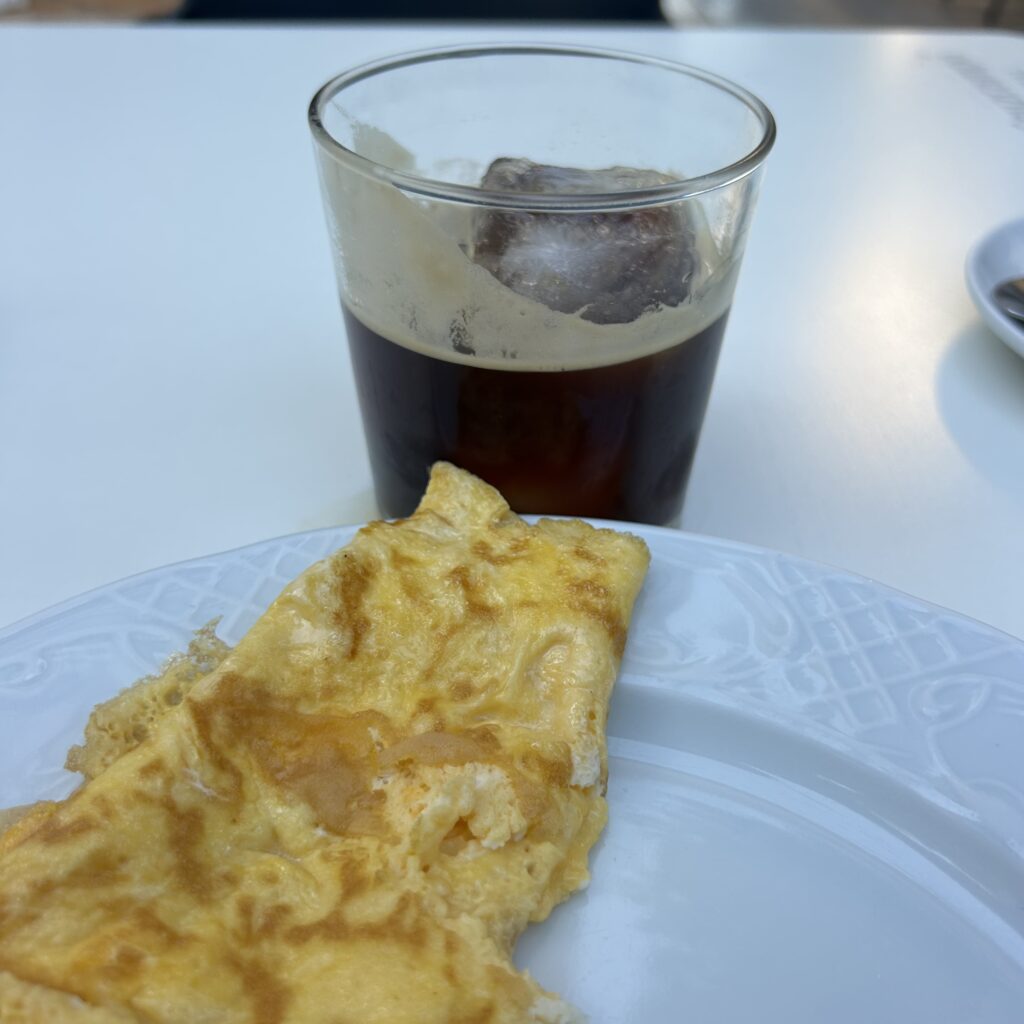
There are regional variations too. In Valencia, the café del tiempo is a well-known summer classic, often served with ice and sometimes with a slice of lemon. Elsewhere, the formula is more straightforward: ask for a café con hielo and the waiter will usually know exactly what is required.
Naturally, every bar has its own version. Some serve the ice in a small glass, others in a larger tumbler. Some offer two neat cubes, others a generous handful. Some tourists pour with caution; Spaniards tend to do it in one swift movement. Like so many things in Spain, the ritual is simple — until one tries to imitate it.
The growing fascination with café con hielo also reveals something about modern tourism. Visitors are no longer interested only in monuments, beaches and restaurant recommendations. Increasingly, they want to understand the small codes of everyday life: how Spaniards order coffee, why lunch happens late, what tardeo means, or why a hot espresso and a glass of ice might arrive together on a scorching July morning.
These are the details that make a country feel real. The café con hielo is not a culinary revolution, nor is it a new invention dressed up for tourists. It is an old habit newly noticed by people who have arrived in Spain with smartphones, curiosity and a desire to live, even briefly, as the locals do.
Perhaps that is why it works so well online. It is visual, easy to explain and faintly surprising. A hot coffee poured over ice should not feel like a revelation — and yet, for many visitors, it does.
In the end, café con hielo is Spain in miniature: practical, relaxed, resistant to unnecessary fuss and perfectly adapted to the heat. It may not be sophisticated in the way international coffee chains understand the word, but it does not need to be.
Spaniards have known the trick for generations. Tourists and expats are only just catching up.